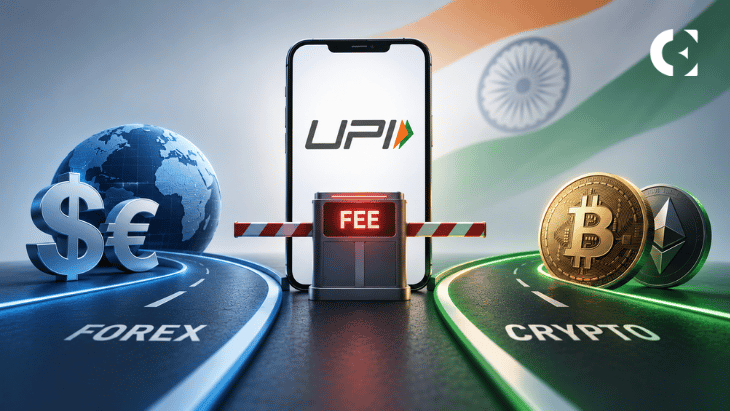

- New UPI MDR rules take effect on October 15, 2026, with a 0.4% charge on certain transactions.
- Forex and crypto traders in India will not directly pay a 0.4% trading tax.
- INR liquidity and payment costs are key factors to watch as platforms respond to the new rules.
UPI is one of the first modern payment systems that became popular in India before Bitcoin or stablecoins. For years, Indians have been turning to the system to move money online, from everyday purchases to larger financial transactions. But now, the payment channel is facing a significant change, which could affect the way traders move money into and out of forex and crypto markets.
New UPI Charges Could Change Trading Costs in India
New Merchant Discount Rate (MDR) rules will take effect on October 15, 2026, with India’s UPI payment system facing a significant change in transaction charges. It doesn’t mean that a trader should pay tax every time they make a transaction. Instead, certain UPI transactions involving large merchants, with payments exceeding ₹2,000, will face a 0.4% MDR. Finance Minister Nirmala Sitharaman stated, “MDR charges on UPI transactions above ₹2,000 are neither a Tax nor a Cess. This is an effort to mislead the Indian public.”
However, not all UPI transactions will be affected by the MDR rules. It is worth noting that Indians can continue sending money to friends and family members for free. They can also send funds less than ₹2,000 to merchants. If payments involve small vendors with less than monthly earnings of ₹1 lakh, they will not face charges.
What the UPI Changes Mean for Forex Traders
For forex traders, the new UPI charges are mainly about the cost of moving money rather than the cost of placing trades. Before accessing foreign currency markets, traders need to transfer INR to their broker or payment provider. If these payments fall under the new MDR rules, the additional cost may affect how brokers and payment providers handle deposits and withdrawals.
Even if forex traders become subject to the new rules, they may not be paying 0.4% tax directly on every trade. The actual impact will depend on whether the platforms absorb the MDR or pass the cost through other charges.
How the UPI Changes Could Affect Crypto Traders?
Significantly, the latest UPI charge changes will also affect crypto traders. Many Indian crypto users rely on UPI to deposit INR into crypto platforms before buying assets such as Bitcoin, USDT, or USDC.
Here too, crypto traders may not be expected to pay an additional 0.4% tax on every crypto transaction. The charge applies at the payment level, and its impact will depend on how crypto exchanges and payment providers classify and handle these transfers.
UPI Changes Could Add Friction to INR Trading
Notably, there is a major issue for Indian traders regarding the new UPI charges, apart from the concern of another tax. Traders are mostly worried about the complications and costs involved in the transfer of money between the INR and the financial market systems. They mainly consider the cost of depositing and withdrawing, as well as foreign exchange rates and other payment transactions. While the new charges do not necessarily mean increased costs for traders, they may cause substantial alterations in the deposit and withdrawal methods.
Liquidity is another factor to watch. Traders have been entering and exiting positions easily without delays or higher costs over the past years. But now, driven by the new changes, if the platforms change their deposit method, it could affect how quickly traders can move funds.
(adsbygoogle = window.adsbygoogle || []).push({});What Indian Traders Should Watch Next
As of now, the UPI changes have not taken effect, and thus, the real impact is not seen yet. The actual implications will be visible when brokers, crypto exchanges, and payment providers start responding to the changes.
The first thing to watch is whether the platforms and exchanges will absorb the additional trading costs. They may also make changes to their deposit and withdrawal options. If traders have fewer convenient ways to move INR into and out of platforms, it could create additional friction, affecting liquidity.
Currently, the MDR cannot be treated as a direct tax on forex or crypto trading. The focus should be on how the charges will impact payment costs, INR liquidity, and the overall trading experience.
Related: India Crypto Tax Stays at 30% as New VDA Reporting Rule Takes Effect
Disclaimer: The information presented in this article is for informational and educational purposes only. The article does not constitute financial advice or advice of any kind. Coin Edition is not responsible for any losses incurred as a result of the utilization of content, products, or services mentioned. Readers are advised to exercise caution before taking any action related to the company.