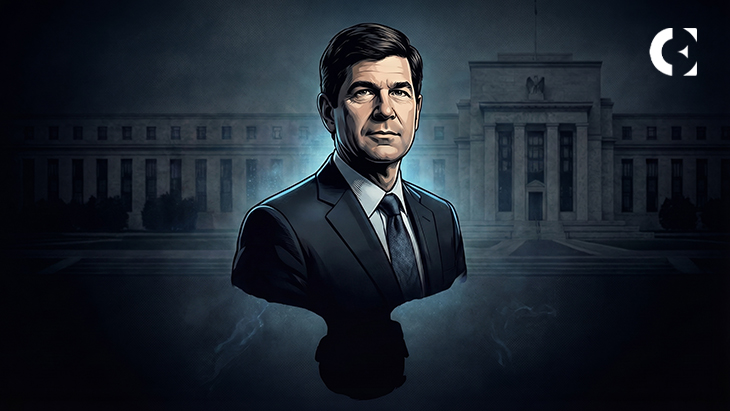

- Rising CPI at 3.8% limits Fed easing options as inflation expectations rise.
- Kevin Warsh faces pressure between Trump’s rate-cut push and markets demanding tight policy.
- Bitcoin gains traction as Fed uncertainty boosts demand for decentralized assets.
Kevin Warsh appears set to become the next leader of the U.S. Federal Reserve during one of the most difficult inflation periods in years. Fresh consumer inflation data now threatens to trap the incoming chair between political pressure from President Donald Trump and financial markets demanding tighter policy.
The latest Consumer Price Index report showed inflation accelerating sharply. Headline CPI climbed to 3.8%, marking its highest reading in three years. Meanwhile, Core CPI rose to 2.8%, its highest level in eight months. Consequently, investors immediately reduced expectations for interest rate cuts during 2026.
Markets now increasingly expect the Federal Reserve to keep rates elevated for longer. Additionally, traders started pricing in growing odds of another rate hike before year-end. Rising oil prices and persistent supply pressures continue fueling concerns about another inflation wave across the U.S. economy.
Warsh Faces Pressure From Both Markets and Washington
Trump selected Warsh partly because he supported lower interest rates and his criticism of aggressive monetary tightening. However, the new inflation figures complicate that strategy significantly. Warsh may now inherit a central bank with little flexibility to ease financial conditions.
Investors worry that cutting rates too early could reignite inflation across housing, energy, and consumer goods. Hence, many analysts believe the Fed may need to maintain restrictive policy longer than expected. That stance could pressure stocks, crypto assets, and broader risk markets during the second half of 2026.
Besides inflation concerns, Warsh also triggered debate during his Senate confirmation hearing. He signaled support for reducing the Fed’s massive balance sheet while narrowing the central bank’s role in international finance. Those comments unsettled several overseas policymakers and financial institutions.
Foreign central banks increasingly fear that U.S. dollar liquidity tools could become political instruments under the Trump administration. For years, Fed swap lines provided emergency dollar funding during global financial stress. Those facilities played critical roles during the 2008 financial crisis and the COVID-19 pandemic.
However, Warsh suggested the Federal Reserve should coordinate more closely with the White House and Congress on international financial matters. Consequently, many global finance officials now question whether future dollar support would remain automatic during emergencies.
Bitcoin Gains Attention as Confidence Shifts
At the same time, Warsh’s generally favorable stance toward Bitcoin has attracted attention across crypto markets. Some digital asset investors believe tighter control over traditional finance could strengthen demand for decentralized alternatives. Moreover, uncertainty surrounding Federal Reserve independence may encourage investors to seek assets outside the conventional banking system.
Related: Bitcoin Slips Below $81K After Higher-Than-Expected CPI Report
Disclaimer: The information presented in this article is for informational and educational purposes only. The article does not constitute financial advice or advice of any kind. Coin Edition is not responsible for any losses incurred as a result of the utilization of content, products, or services mentioned. Readers are advised to exercise caution before taking any action related to the company.