
- India’s GDP grew 7.8%, while foreign investors withdrew ₹44,166 crore from equities.
- The RBI introduced measures to ease rupee pressure as the currency weakened.
- Musk’s Starlink dispute raises questions about India’s satellite internet regulations.
India wants to show that the economy still remains strong, but recent developments tell a different story. The rupee is under pressure, foreign investors are pulling out funds from Indian stocks, and Elon Musk has questioned the treatment of Starlink in the country. The developments together put the country’s economy in focus.
The Meme Says India Is in Control. The Markets Tell a More Complicated Story
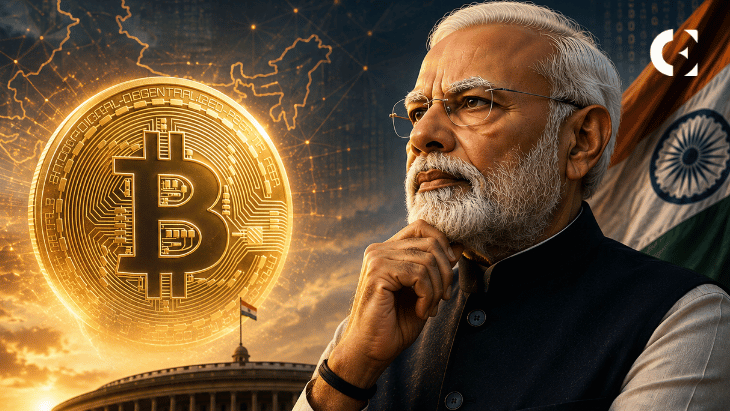
According to a recent X post shared by BJP Jammu & Kashmir, India is presenting itself as a strong and growing economy. A meme shared in the post portrays the Modi government as protecting the country from political opponents and international pressures, including Elon Musk and Donald Trump.
However, India is still facing its own economic challenges. The rupee is under pressure, and foreign investors are selling Indian shares. At the same time, Musk’s dispute over Starlink’s entry into the Indian market has also added to the pressure. This raises questions about how the country balances national interests, economic stability, and fair competition.
GDP Growth, Rupee Support and Falling Stocks: Why the Indicators Can Diverge
Despite the Indian government’s efforts to highlight the economy’s strength, it is clear that the country is still facing challenges. According to the Ministry of Statistics and Programme Implementation, India’s real GDP grew by about 7.8% year-on-year in April–June 2026. Nominal GDP surged by 10.3%. But this hasn’t stopped foreign investors from selling their Indian stocks.
Foreign portfolio investors pulled out ₹44,166 crore from Indian equities in October through October 11. This is driven by rising crude oil prices, higher US bond yields, a stronger dollar, and a falling rupee.
The rupee is now under significant pressure, with the value reaching ₹95.74 per US dollar on October 12. In 2026, the value has declined by about 6.5%. Indian foreign exchange reserves also fell to $734 billion as of October 2, down from a September peak of $785 billion.
These figures show how economic indicators move in different directions. While GDP measures economic activity, stock prices reflect corporate earnings expectations, valuations, and investor sentiment. Meanwhile, the rupee reacts to dollar demand, oil prices, and capital flows. Thus, India can maintain strong economic growth even as its currency faces pressure and foreign investors reduce their exposure to the stock market.
Why the RBI Had to Step In—and What the Rupee’s Rebound Actually Means
Amid the rupee’s struggle to maintain its value, the Reserve Bank of India (RBI) has taken significant steps to ease the pressure. While rising oil prices, foreign investor outflows, and strong demand for dollars added to the pressure, the RBI has introduced five measures, as CoinEdition reported.
Today, the rupee has slightly recovered by around 1% against the USD. But this doesn’t mean that the problems surrounding the rupee are over. While the RBI’s intervention can limit sharp currency movements, a sustained recovery will also depend on broader economic conditions.
Musk vs Ambani: Is Starlink Facing Regulation or a Competitive Barrier?
Another major issue is Elon Musk’s Starlink dispute in India. It has raised concerns about India’s balancing between regulation and market competition. Musk has recently questioned the delays surrounding Starlink’s entry into the Indian market. Reports pointed to tensions involving Reliance Industries chairman Mukesh Ambani and the country’s satellite rules.
While Starlink needs to meet India’s licensing, security and spectrum requirements, Musk asked whether the country’s regulatory processes are carried out fairly. He has also raised concerns about the influence of established players in the telecom sector. Elon Musk’s allegations have renewed debate over competition in India’s satellite internet market.
India’s Satellite Internet Rules: What the Government Says and What the Evidence Shows
According to the Indian government, Starlink, Reliance Jio, and Eutelsat OneWeb should come under the same rules. They should meet the same regulatory requirements before launching satellite internet services.
Although Starlink received key licenses, security clearance and spectrum approvals remain pending. The government doesn’t want to favor domestic companies, and there is no public evidence proving that Reliance caused the delay.
(adsbygoogle = window.adsbygoogle || []).push({});The Bigger Contradiction: Economic Sovereignty Versus Market Competition
The challenge for India is how to ensure national interests and competition at the same time. The country is witnessing very strong growth in terms of GDP. But on the other hand, there are weak spots in terms of currency issues and capital withdrawal by foreign investors. The issue of Starlink calls into question the consistency of regulatory standards.
Related: Foreign Investors Are Pulling Billions Out of India. What Could Make Them Come Back?
Disclaimer: The information presented in this article is for informational and educational purposes only. The article does not constitute financial advice or advice of any kind. Coin Edition is not responsible for any losses incurred as a result of the utilization of content, products, or services mentioned. Readers are advised to exercise caution before taking any action related to the company.