

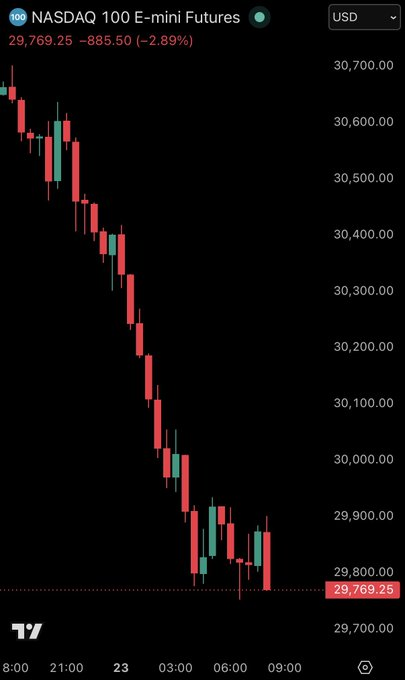
- Nasdaq 100 futures fell close to 3% as the technology sell-off gained momentum.
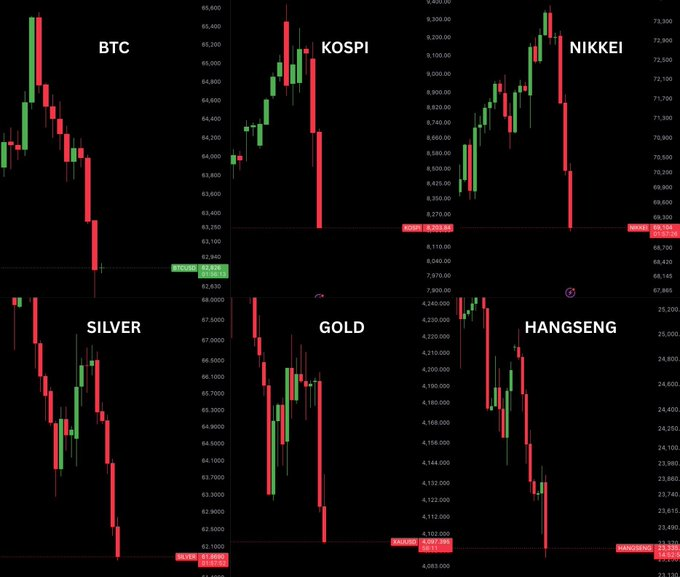
- South Korea’s KOSPI dropped 10%, led by sharp losses in major chipmakers as Japan’s Nikkei declined more than 3%, while Bitcoin fell below $63,000.
- Analysts linked the retreat to crowded AI trades, high valuations, and hawkish Fed expectations.
A sharp unwind in artificial intelligence and semiconductor shares spread across global markets on Tuesday, sending Nasdaq 100 futures down nearly 3% and triggering a 10% fall in South Korea’s KOSPI.
Selling also reached Japan, cryptocurrencies, and precious metals. The synchronized decline showed investors reducing exposure across several of the year’s strongest-performing assets rather than reacting to one isolated company or economic release.
Semiconductor Sell-Off Spreads From Asia
South Korea recorded the steepest decline, with the KOSPI falling almost 10% one day after reaching a record. Samsung Electronics and SK Hynix each dropped more than 12%, placing heavy pressure on an index dominated by technology exporters.
Japan’s Nikkei 225 lost about 3.6%, while Hong Kong shares also moved lower. The decline then carried into U.S. trading, where chipmakers including Micron, AMD, Intel, and Marvell faced heavy selling.
Source: X
Nasdaq 100 futures fell to around 29,770 in the shared chart, nearly 900 points below the previous level. Candles formed a steady sequence of lower highs and lower lows, showing that early rebound attempts attracted fresh selling.
The Philadelphia Semiconductor Index later fell more than 7%, reflecting broad pressure across memory, processor, and equipment companies.
Related: US Inflation Expectations Fall as Markets Track Progress in Iran Talks
Crowded AI Positions Face Rapid Unwind
Analyst Ash Crypto described the move as a broad reduction in exposure to AI, technology, and semiconductor stocks after a powerful rally.
Many of those shares entered the session with substantial year-to-date gains. Investors had priced in continued spending on data centers, chips, and AI infrastructure, leaving valuations sensitive to doubts over future returns.
Concerns have now shifted toward the amount of debt being used to fund that expansion. Questions around possible memory-chip oversupply have also emerged after large gains in Samsung, SK Hynix, and Micron.
Meanwhile, higher interest-rate expectations added another layer of pressure. A more hawkish Federal Reserve increases borrowing costs and reduces the present value of earnings expected far into the future, directly affecting highly valued growth stocks.
Related: Japanese Yen Slides Toward Two-Year Low as Tokyo Repeats Intervention Warning
Bitcoin and Metals Join Broader Decline
Bitcoin fell below $63,000 as the retreat moved beyond equities. The shared charts placed the cryptocurrency near $62,800 after it lost support above $64,000.
Gold and silver also declined, despite their usual defensive roles. Gold fell toward $4,100, while silver dropped close to $62 after a short-lived rebound.
Source: X
Such simultaneous selling can occur when investors need cash, cut leverage, or reduce portfolio risk. In those conditions, liquid assets may be sold together even when their underlying market drivers differ.
Notably, defensive equity sectors gained as money moved away from technology. The rotation showed that investors were not leaving every part of the stock market equally.
Attention now turns to incoming U.S. inflation data, Micron’s earnings, and further Federal Reserve signals as markets assess whether the move is a temporary correction or a wider reduction in AI-related exposure.
Disclaimer: The information presented in this article is for informational and educational purposes only. The article does not constitute financial advice or advice of any kind. Coin Edition is not responsible for any losses incurred as a result of the utilization of content, products, or services mentioned. Readers are advised to exercise caution before taking any action related to the company.