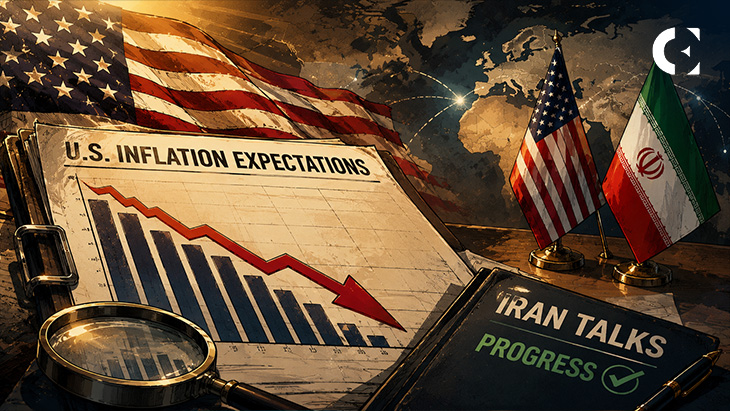

- U.S. market-based inflation expectations have declined from their March highs.
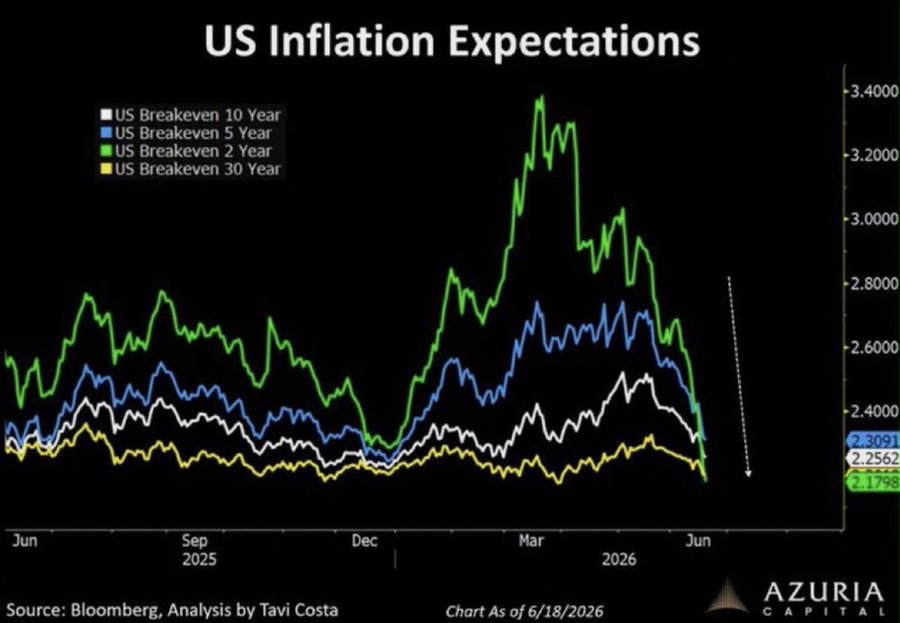
- The five-year breakeven rate fell to about 2.31% by June 17. and the ten-year measure declined to approximately 2.26%.
- JD Vance said U.S.-Iran negotiations established a foundation for further technical talks.
Market-based measures of U.S. inflation expectations have moved sharply lower, challenging earlier concerns that the Iran conflict would produce a sustained surge in consumer prices.
Anthony Pompliano highlighted the decline in a post on X, arguing that the war has not driven inflation expectations to extreme levels. His comments followed a broad retreat across two-year, five-year, ten-year, and thirty-year breakeven rates after they climbed earlier in 2026.
Inflation Expectations Retreat From March Highs
The shared chart shows the largest reversal in the two-year breakeven rate. That measure rose above 3.3% around March as markets assessed energy disruptions and the possible inflation impact of the conflict.
By June 18, it had fallen to about 2.18%, placing it below the longer-term readings shown on the chart. Shorter-duration measures usually respond more quickly to immediate changes in fuel prices, supply conditions, and economic policy.
Source: X
Five-year inflation expectations also declined to around 2.31%. Meanwhile, the ten-year measure moved toward 2.26%, while the thirty-year rate stood slightly lower.
Breakeven rates represent the difference between yields on conventional Treasury securities and inflation-protected government bonds. They reflect the market’s estimate of average inflation across a particular period, though trading conditions and risk premiums can also affect them.
Notably, the decline suggests bond markets are assigning less weight to a prolonged inflation shock than they did earlier in the year. It does not show that current price pressures have disappeared.
Related: US and Iran Agree 60 Day Roadmap in Switzerland as Oil Falls
Iran Negotiations Reduce Immediate Uncertainty
Diplomatic developments added to the change in market expectations. Vice President JD Vance said the first round of talks with Iranian officials in Switzerland produced substantial progress and established a foundation for a final agreement.
Discussions covered nuclear inspections, regional ceasefires, and arrangements intended to keep the Strait of Hormuz open. Technical teams are expected to handle the remaining details over the coming days and weeks.
Vance also said Iran had agreed to permit inspectors from the International Atomic Energy Agency to return. Tehran had not publicly confirmed that specific commitment at the time of the statement.
Maintaining access through the Strait of Hormuz remains important to global energy markets. A prolonged interruption could restrict oil shipments, lift transportation costs, and feed into consumer inflation through fuel and production expenses.
Related: JD Vance Says Talks Between The USA and Iran Are Going Well
Market Pricing Stays Near the Fed’s Target
Even so, the five-year and ten-year breakeven rates remain above the Federal Reserve’s 2% inflation objective, but they are far below the peaks reached during the earlier geopolitical shock.
Pompliano compared the movement with inflation fears surrounding U.S. tariffs, arguing that neither development has produced the extreme market expectations previously discussed.
Meanwhile, the latest U.S.-Iran negotiations have reduced part of the immediate geopolitical premium embedded in energy and bond markets. Future inflation pricing will still respond to oil flows, wage growth, fiscal policy, and incoming consumer-price data.
Disclaimer: The information presented in this article is for informational and educational purposes only. The article does not constitute financial advice or advice of any kind. Coin Edition is not responsible for any losses incurred as a result of the utilization of content, products, or services mentioned. Readers are advised to exercise caution before taking any action related to the company.