

- RBI’s net short dollar position in forward contracts hit $200.06B by the end of August.
- Driven by diaspora inflows to support the rupee as Nifty falls 6% and foreign investors sell ₹10,148 crore.
- For Indian crypto traders, tracking the USD/INR pair is just as crucial as watching Bitcoin price charts.
The Reserve Bank of India’s (RBI) net short dollar position in forward contracts surged above $200 billion by the end of August, driven by diaspora deposit inflows to support reserves and the rupee (INR) amid intense macroeconomic pressures.
Against this backdrop, tracking the USD/INR pair becomes just as crucial as watching Bitcoin (BTC) price charts for Indian cryptocurrency traders, as rupee moves can affect INR-based crypto returns.
RBI’s $200B Dollar Short: Why Indian Crypto Traders Should Care About USD/INR
At the end of August 2026, RBI’s outstanding net short dollar position in its FX forward book hit a record $200.06B, marking a sharp rise of about $63.3B from the $136.77B high recorded at the end of July. Nearly $176.6B of the short position carries a maturity of more than one year.
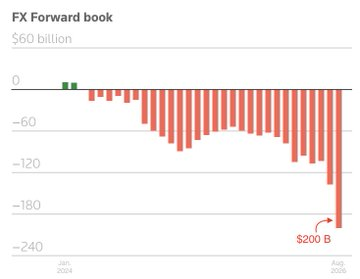
The surge was mainly driven by RBI’s special USD-INR swap facility for Foreign Currency Non-Resident (Bank), or FCNR(B), deposits and overseas borrowing, which led to significant inflow of dollars in the banking system.
For Indian crypto traders, USD/INR is emerging as a second variable as the final returns are in rupees. A Bitcoin position is virtually leveraged to BTC/USD × USD/INR, and so a rupee movement can alter the value of an INR position, even when the dollar price of Bitcoin is held constant.
Similarly, any fluctuation in USD/INR will impact the value of USDT holdings in INR, even when the stablecoin is pegged near $1. With the RBI managing a record forward dollar position through swaps and other FX operations, USD/INR becomes an important market variable for Indian crypto traders.
BTC Flat in Dollars, but Different in Rupees: The Hidden USDT-INR Trade in Crypto Positions
Bitcoin can stay flat or even fall slightly in dollar terms, but still show different numbers for Indian traders when calculated in INR. The difference comes entirely from the USD/INR rate. At press time, BTC was trading at $83,585.58, up roughly 6–6.5% in September in USD terms. However, the INR value of one BTC was close to ₹8.01-8.03M, depicting the varying returns of a BTC price for Indian traders.
Since the rupee had depreciated in the previous months, with USD/INR hovering around the 95.8-96.2 levels by late September, the same BTC price action resulted in a higher return on INR than in pure USD. The math is simple: BTC-INR return = BTC-USD return + USD/INR change. The same currency effect is reflected in the USDT-INR trade.
Meanwhile, the USDT token is created to keep a $1 value, so its price in INR follows the price of USD/INR. This means that a lower rupee can cause the INR value of the USDT holdings to be even higher without a USDT value change, even if USDT is near $1.
What RBI Intervention Could Mean for INR-Based Trading
Market participants expect the RBI to continue using sell/buy swaps both to drain liquidity and bring forward some of its longer-dated short positions. That process is likely to keep the RBI active in the USD/INR market for months.
For traders whose performance is measured in Indian rupees, this means USD/INR is not background noise. It is a live risk factor and sometimes an opportunity, in addition to the price of Bitcoin itself.
What Indian Traders Should Watch Next: Key USD/INR, BTC/USD and USDT/INR Signals
Indian crypto traders should set their alerts near the recent highs and lows of USD/INR, check the daily USDT/INR premium/discount, and check BTC/USD only after adjusting for the currency move. The overall large short position of RBI means that its moves will continue to have an impact on the returns of crypto assets in INR for the foreseeable future.
Moreover, treating USD/INR and USDT-INR as core signals, along with Bitcoin, is no longer optional for Indian crypto traders, but a necessity for accurate measurement of performance, and measuring only half the trade.
Related: Rupee Strength Is Backing Bitcoin Into a Different Trade for Indian Investors
Disclaimer: The information presented in this article is for informational and educational purposes only. The article does not constitute financial advice or advice of any kind. Coin Edition is not responsible for any losses incurred as a result of the utilization of content, products, or services mentioned. Readers are advised to exercise caution before taking any action related to the company.