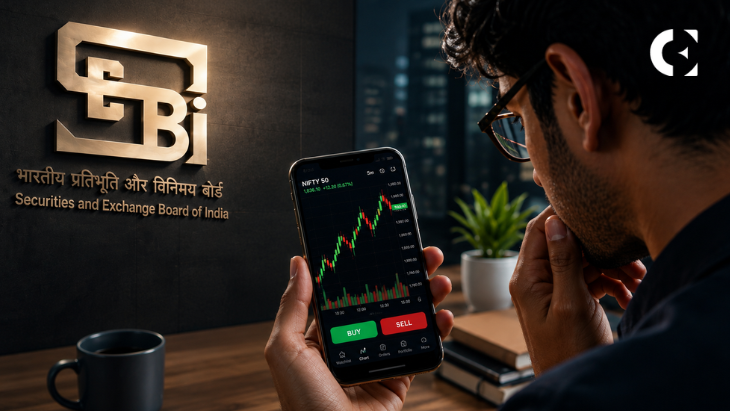

- SEBI has warned against live trading tips on social media platforms.
- The agency cautions that following these calls could lead to significant losses.
- Traders must distinguish between risky advice and SEBI-registered sessions.
The Securities and Exchange Board of India (SEBI) has recently raised concerns over live trading tips and real-time stock market calls on social media. Investors see these sessions as a quick way to learn trading, which in turn pushes them to make impulsive buy or sell decisions. As Indian investors continue to face severe losses in the futures and options market, SEBI has strengthened its efforts to curb risky trading practices.
SEBI Warns Indian Investors Against Live Trading Tips
India’s SEBI released a press release on Monday, cautioning investors against “live trading sessions” and “real-time strategies” on social media platforms. The agency warned that these sessions could involve live market data and unregistered investment advisory services, which could lead investors to make risky and impulsive decisions.
Notably, live trading tips are broadcasts held during market hours on YouTube and other social media platforms. Influencers or hosts may present live price charts and trading positions, explaining their expectations about the assets’ potential move. They may also share entry and exit points, price targets, trading positions, and strategies, encouraging traders to follow their calls.
According to SEBI, these sessions are playing a major role in India’s trading markets. They go beyond just educational purposes, becoming more like real-time trading recommendations. After watching these sessions, investors may take quick trading decisions without doing their own research. SEBI added,
“These persons portray themselves as experts in the securities market, provide detailed analysis of when to invest, when to exit, strategies to be followed and the positions to be taken on market indices. Some of these persons claim that they trade real-time while showcasing the performance of their trades, patterns that the market is forming based on live data and the target expected to be reached.”
Retail Investors Continue to Take Heavy F&O Losses
The SEBI’s warning comes amid increasing losses in the Indian trading markets. Retail investors continue to face notable losses in the futures and options (F&O) spaces despite the SEBI’s increasing efforts to reduce excessive speculation. For example, in FY26, traders lost around ₹91,685 crore, which highlights the inherent risks of short-term derivatives trading.
What is more noteworthy is that these significant losses come despite a notable decline in individual participation in the derivatives market. As per reports, traders participating in derivatives trading have dropped by about 20%. But as the losses continue to surge, it suggests that many existing investors are taking high-risk bets in F&O.
Can Live Trading Tips Fuel FOMO and Overtrading?
Significantly, live trading sessions can create an impression among traders that they should react immediately to the fast-moving markets. When investors see an influencer entering a trade and getting profits, they may feel forced to make a similar move before the opportunity is lost. This can obviously lead to FOMO, especially among new traders who do not have clear plans.
Another possible issue is overtrading. When a trader frequently attends live trading tips and follows them, overtrading can happen. Traders may be forced to keep entering and exiting positions based on every market movement shown in the session, instead of waiting for the right opportunity. Such impulsive decisions can often lead to risks of losing money.
SEBI Advises Investors to Stay Safe from Risky Advice
In addition to the warning, SEBI has also advised Indian traders not to blindly trust claims or trading calls made in live social media trading sessions. Instead of following all sessions, the agency has asked traders to deal only with SEBI-registered intermediaries. For SEBI, this could help investors to stay informed and make thoughtful decisions in the securities market.
“It is observed that these live trading sessions are being viewed by a substantial number of viewers and live chats are also enabled beside the session where unregistered advisory services are being exchanged,” said SEBI. This highlights the importance of distinguishing between financial education and actual investment advice. Social media sessions are just for information. But most traders mistake this for real-time calls, making quick trading decisions and incurring significant losses.
(adsbygoogle = window.adsbygoogle || []).push({});How Can Investors Spot Risky Trading Advice?
It is important for investors to be careful about risky trading advice on social media. Beyond an educational purpose, if a host is giving instructions to act quickly before the opportunity exits, traders should understand it as risky. Other major warning signs include guaranteed returns, “sure-shot” tips, quick profits, and high accuracy.
The most significant thing to note before receiving trading advice is to check whether the person or firm is registered with SEBI. If the investment adviser is genuine, he should be able to provide the details of his SEBI registration. Investors can verify SEBI’s official records before making any investment choice.
Related: Jane Street Just Lost $15B. Should Crypto Investors Worry About Liquidity Next?
Disclaimer: The information presented in this article is for informational and educational purposes only. The article does not constitute financial advice or advice of any kind. Coin Edition is not responsible for any losses incurred as a result of the utilization of content, products, or services mentioned. Readers are advised to exercise caution before taking any action related to the company.