

- KOSPI lost $425 billion after falling 10.3% from its recent all-time high in three sessions.
- Foreign investors accelerated selling in AI and semiconductor stocks after strong market gains.
- Analysts say prolonged KOSPI weakness may redirect retail capital back into crypto markets.
South Korea’s KOSPI index fell 3.9%, as investors sold technology shares. The decline erased about ₩235 trillion ($160 billion) in market value in one session. Analysts linked the drop to profit-taking in AI and semiconductor stocks and foreign fund outflows.
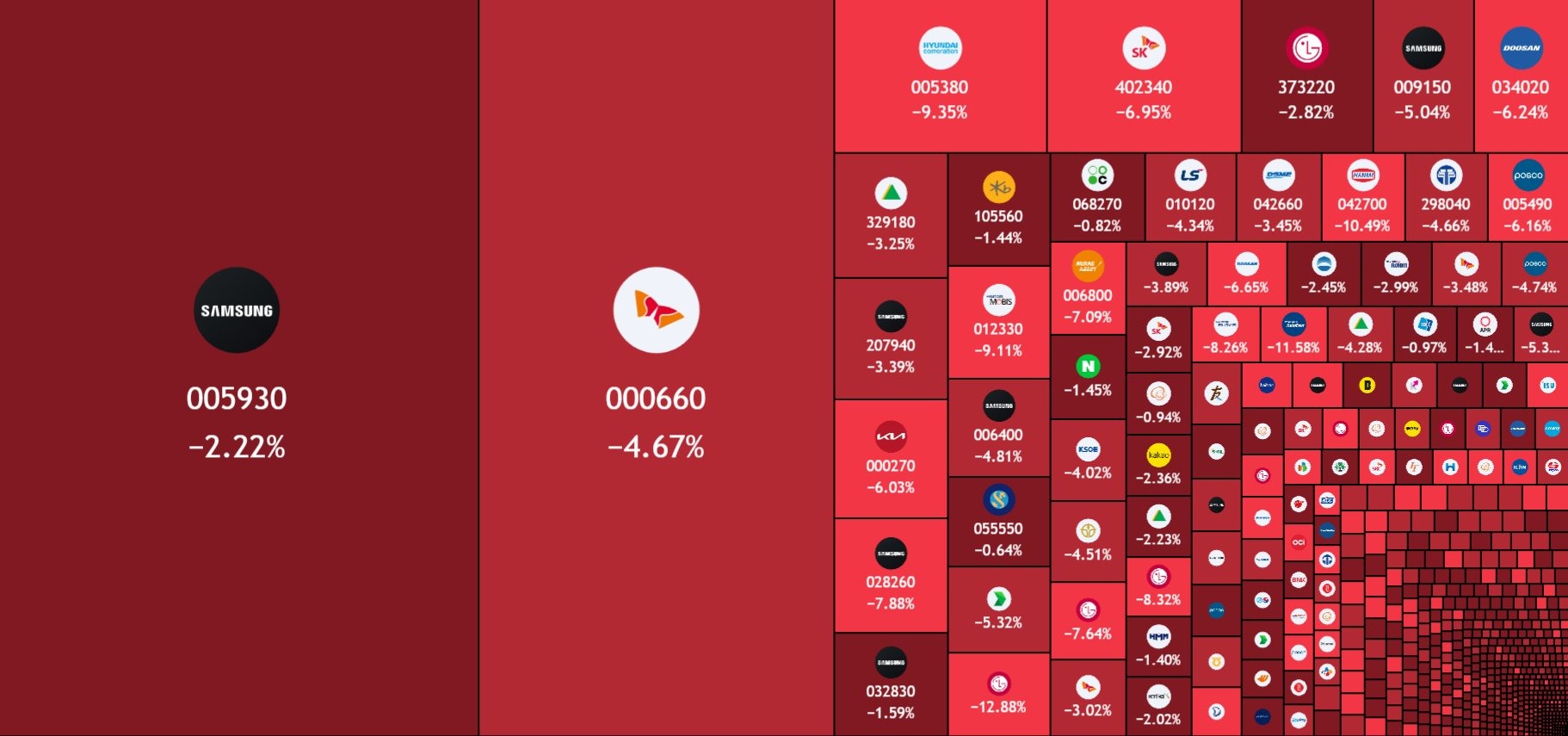
The decline, which wiped out roughly ₩629 trillion, or about $425 billion, in market value over three trading sessions, is linked to investors selling their shares. Notably, these shares are tied to artificial intelligence and semiconductor companies after months of strong gains.
Market participants said foreign investors accelerated the sell-off as concerns about stretched valuations and slowing momentum spread across Asian equities.
AI and Chip Stocks Lead Losses
The downturn followed a strong rally in Korean technology shares driven by global demand for AI-related investments. South Korean markets had attracted international capital as investors searched for alternatives to expensive U.S. technology stocks.
Crypto analyst Bull Theory described the move as a continued “bloodbath” in Korean equities. The analyst said the sell-off reflected heavy profit-taking in overheated AI and chip stocks alongside sustained foreign outflows.
Meanwhile, market commentator Anyx compared the KOSPI downturn to trends seen in international markets since late 2024. The analyst said investors had moved capital into markets such as South Korea when U.S. stock valuations became elevated.
According to the analyst, weakness in the KOSPI could signal broader pressure across global equity markets if liquidity conditions continue to tighten.
Analysts Split on Market Outlook
Another financial analyst, KiiChain, described the decline as a “post-rally consolidation phase” rather than a broader financial crisis. He noted that volatility often rises when foreign investors exit concentrated markets dominated by a few sectors.
Kiichain added that the current downturn appears to be a liquidity reset following rapid gains in AI and semiconductor stocks.
Other analysts expressed deeper concerns about market conditions. MarketRhythm said the scale of losses pointed to rapid deleveraging and possible investor capitulation. They added that institutional and foreign selling likely accelerated the decline.
Can Crypto Markets Benefit from the Downside?
The decline has also renewed attention on South Korea’s cryptocurrency market. During the equity rally, many retail investors reportedly shifted capital from digital assets into stocks.
Reports circulating among traders showed that crypto holdings among Korean retail investors fell sharply during the stock market rally. Meanwhile, the Kimchi Premium, the price difference between cryptocurrencies traded in South Korea and on global exchanges, remained near 1%, signaling weaker speculative demand.
Analysts said prolonged weakness in Korean equities could eventually redirect some retail capital back into cryptocurrencies. However, short-term sentiment across both stocks and digital assets remains cautious as investors monitor global liquidity conditions and movements in technology shares.
Related: South Korea Crypto Law Case Heads To Appeal Over $5.1M Gains
Disclaimer: The information presented in this article is for informational and educational purposes only. The article does not constitute financial advice or advice of any kind. Coin Edition is not responsible for any losses incurred as a result of the utilization of content, products, or services mentioned. Readers are advised to exercise caution before taking any action related to the company.