
- Roughly 20% of world petroleum consumption relies on transit through the Strait.
- Vessel crossings reportedly fell from about 120 a day to fewer than 10 daily.
- Trump called the two term limit law very strong without challenging it directly.
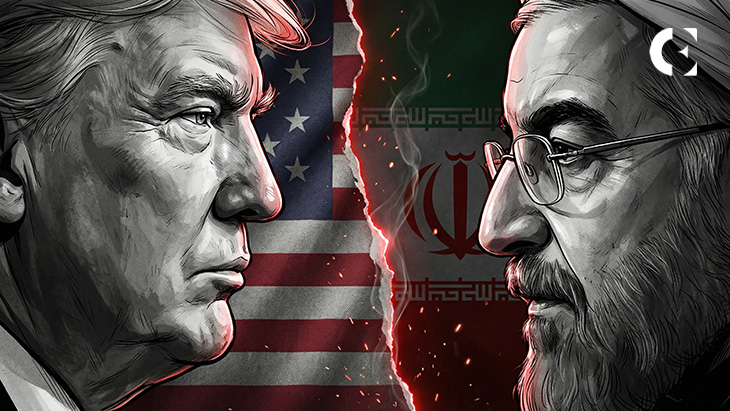
President Trump laid out a two-track strategy toward Iran this week, mixing continued military pressure with a pivot toward economic exhaustion, while separately fielding questions about a possible third presidential run that he answered without ruling out or confirming.
Where US Policy Toward Iran Stands
Speaking to reporters and in a phone interview with Real America’s Voice, Trump described Washington’s current approach as flexible between two options. “Do what I’m doing now: just bop along and look how bad they’re doing,” he said, describing an alternative of hitting Iran “really, really hard” if needed.
He framed the strategy as economic as much as military. “We control their money,” Trump said, referring to frozen Iranian assets, adding that the US was acting as Iran’s de facto banker. He also raised a new demand: that Tehran pay compensation for American personnel killed in roadside bombings and regional conflict over the past 50 years, a counter to Iran’s own demands for war damages.
On the Strait of Hormuz specifically, Trump said, “We totally control the Strait of Hormuz,” he said. “Nobody else, only us.” Asked whether he trusted Iran, his answer was, “I don’t trust Iran.”
Why the Strait Matters So Much
The Strait of Hormuz isn’t just a regional flashpoint. Roughly 20% of world petroleum consumption relies on transit through the Strait, making it one of the most closely watched chokepoints in global energy markets.
Vessel crossings reportedly fell from about 120 a day to fewer than 10 daily during the conflict, according to reports, a disruption sharp enough to repeatedly send Brent and WTI crude prices spiking and rattle broader equity and bond markets each time tensions flare.
The Strait of Hormuz crisis triggered severe market volatility across energy, equities, and crypto. Brent crude spiked from $72 to $126 a barrel before cooling to $80. Shipping through the corridor fell over 90%, freight costs jumped 50%, and Gulf insurance became nearly unavailable.
Bitcoin tracked the tension closely, spiking above $78,000 during de-escalation before falling back toward $64,000–$65,000. Iran also began demanding crypto payments for safe maritime passage. As of August 2026, Brent remains near $80–$84, with markets highly reactive to Iran-Oman deal developments.
Inflation Risk Building Underneath
The International Energy Agency has described the disruption as one of the worst energy crises on record, and analysts have warned that prolonged shipping constraints could push oil prices past $100 a barrel, adding pressure to global supply chains and consumer prices well beyond the region.
Inside Iran, the economic toll has been described as severe, with sanctions and blockade pressure driving steep inflation domestically, even as Trump downplays the financial strain on Americans tied to the standoff.
What Trump Said About 2028
Trump was also pressed on whether he’d consider seeking a third term in 2028, a question he’s fielded repeatedly amid chants of “2028” at recent events and a novelty hat referencing the idea. His response stopped short of a clear answer either way.
“I’d love to run, but the law is very strong,” he said. Trump called the two term limit law very strong without challenging it directly, an answer that leaned on acknowledging the 22nd Amendment’s restriction rather than suggesting any plan to contest it.
The amendment, ratified in 1951, bars any person from being elected president more than twice, and changing it would require a constitutional amendment passed by two-thirds of Congress or a constitutional convention, followed by ratification from three-fourths of the states.
More Complicated Picture Behind the Scenes
Separately, the Washington Post reports that Trump has privately urged donors to back Vance, according to reporting on internal party dynamics, even as Trump continues publicly floating his own name for 2028 in interviews and at events.
The contrast between his public teasing and reported private direction toward Vice President JD Vance has added a layer of ambiguity to how seriously his 2028 comments should be read, with observers divided on whether the remarks reflect genuine intent or simply keeping the political conversation focused on him.
Related: Trump Warns U.S. Risks Losing Crypto Lead as CLARITY Act Talks Stall
Disclaimer: The information presented in this article is for informational and educational purposes only. The article does not constitute financial advice or advice of any kind. Coin Edition is not responsible for any losses incurred as a result of the utilization of content, products, or services mentioned. Readers are advised to exercise caution before taking any action related to the company.