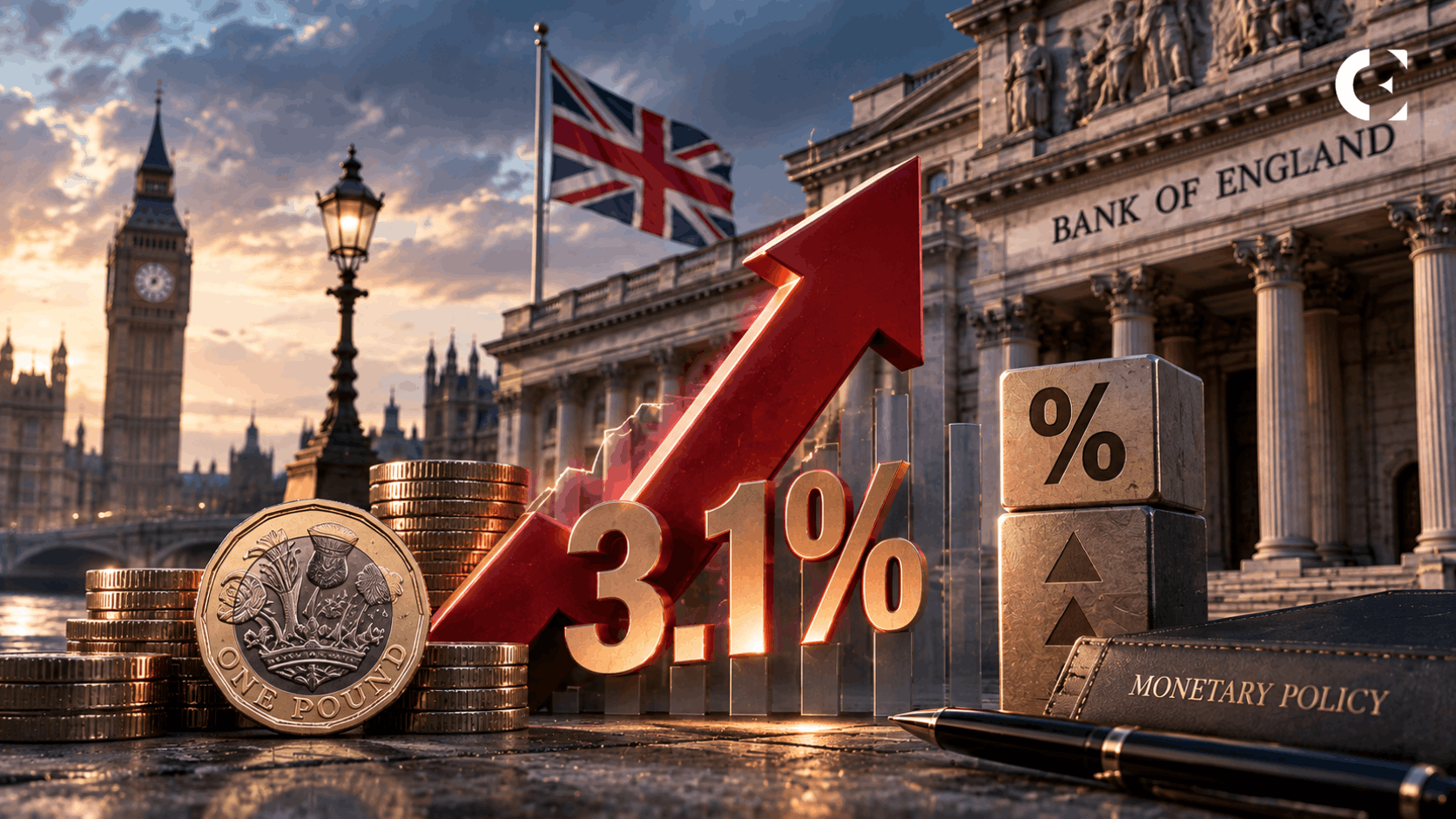

- UK inflation rose to 3.1% in August, up from 2.9% in July and above the BoE’s 2% target.
- Markets expect the BoE to hold rates at 3.75%, while traders price possible hikes later.
- Higher rates may push bond yields up and pressure risk assets like stocks.
UK inflation rose to 3.1% in August, up from 2.9% in July and still above the Bank of England’s 2% target. According to the Office for National Statistics (ONS), the figure was in line with market expectations.
Prices rose 0.5% during the month, compared with 0.3% in July. Core inflation, which excludes food and energy prices, stayed at 2.6%.
The data was released one day before the Bank of England’s interest-rate decision. This makes the inflation figures important for markets, as traders watch for clues about UK interest rates, the Pound and other financial markets.
The Pound’s reaction was limited, with GBP/USD around 1.3483, up 0.04% on the day, though it briefly dipped after the release.
Does 3.1% Inflation Change the BoE Rate Outlook?
Higher inflation does not necessarily mean the Bank of England (BoE) will raise interest rates at its next meeting. Markets expect the BoE to keep rates at 3.75%.
A Reuters poll of 65 economists found that all expected rates to stay unchanged, with most expecting them to remain at 3.75% until the end of the year.
However, financial markets are expecting rates to rise later. Morningstar data shows markets are pricing in a possible rate increase as early as November, with three increases expected by mid-2027.
Meanwhile, what is driving inflation also matters. Core inflation stayed at 2.6%, but investors will closely watch services inflation and other measures to see whether higher energy costs are pushing up prices across the economy.
The BoE is also divided on rates. Three of its nine policymakers voted for a 0.25 percentage-point rate increase at the July meeting, compared with two at the previous meeting.
Why UK Inflation Matters for Risk Assets
High inflation affects more than just the Pound. If inflation stays high, traders may expect interest rates to remain higher for longer. This pushes UK bond yields higher and increases borrowing costs, which may put pressure on stocks and other riskier assets.
For Bitcoin and other cryptocurrencies, the impact would likely come indirectly through changes in global liquidity, interest-rate expectations and investor risk appetite.
The Federal Reserve’s interest-rate decision is another factor for GBP/USD and global markets. If the BoE is expected to keep rates high while the Fed takes a different approach, the gap between UK and US interest rates could influence the Pound and the Dollar.
Related: Trump’s $5,000 Dividend and Bitcoin: Could $1.35T Fuel a Risk-On Rally or Inflation?
Disclaimer: The information presented in this article is for informational and educational purposes only. The article does not constitute financial advice or advice of any kind. Coin Edition is not responsible for any losses incurred as a result of the utilization of content, products, or services mentioned. Readers are advised to exercise caution before taking any action related to the company.