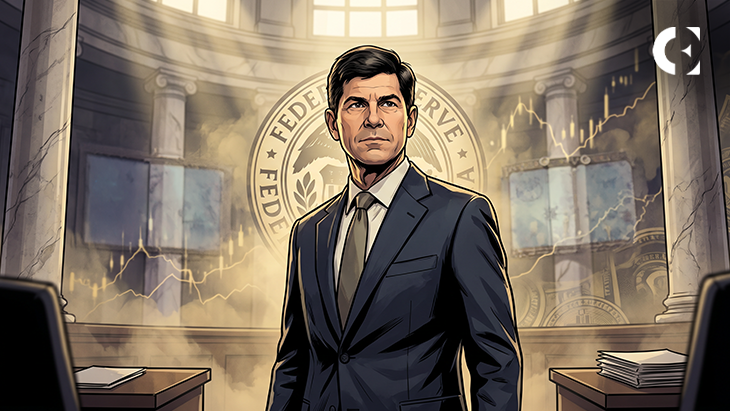

- In zeal to avoid signaling interest rates, Kevin Warsh obscured how he would react to economic challenges.
- Wall Street investors and analysts now want Warsh to share his direct economic views, not rate guidance.
- Warsh testifies Tuesday and Wednesday as investors watch for clues on inflation, labor market, and growth.
On July 13, 2026, Wall Street urged Federal Reserve Chairman Kevin Warsh to share clearer U.S. economy views after moving away from traditional forward guidance on interest rates and shortening Federal Open Market Committee (FOMC) statements. Investors are now looking to Warsh’s congressional testimony for critical clues on how the Fed will respond to inflation, labor market shifts, and slowing economic growth.
Kevin Warsh Obscures His Response to Economic Challenges
In his determination to reduce forward guidance and limit market-moving signals on interest rates, Kevin Warsh has left investors, analysts, and lawmakers with limited insight into how the central bank might respond to evolving economic pressures. Since taking office in May 2026, Warsh has prioritized data over policy signaling.
At his first FOMC meeting in mid June, the Fed kept interest rates at 3.50% to 3.75% while issuing a shorter statement that removed forward guidance. Warsh also kept his dot plot forecast and did not indicate any rate move in July, leaving markets uncertain on what the Fed will do in response to inflation, labor market and economic growth.
Wall Street Demands Direct Views on Economy Over Rates Guidance
Wall Street is pressing Federal Reserve Chairman Kevin Warsh for clearer views on the U.S. economy as his decision to reduce forward guidance on interest rates has left investors with fewer insights into how the Fed would respond to changing economic conditions. Markets want a better framework for interpreting future policy decisions beyond interest rate signals.
Related: Kevin Warsh Unveils New Fed Streamlining and Guidance
Although Warsh has kept interest rates unchanged and reaffirmed the Fed’s 2% inflation target, his limited communication has heightened uncertainty over the central bank’s reaction to inflation, labor market conditions, and economic growth. Investors and analysts are now looking for real economic commentary to better gauge the Fed’s approach to policy without relying on explicit rate guidance.
What’s Next?
Kevin Warsh will testify before Congress on Tuesday and Wednesday, with investors closely watching for fresh insights into inflation, the labor market, and the U.S. economic outlook. Although Warsh is expected to avoid signaling future interest rate moves, markets will scrutinize his remarks for clues on the Federal Reserve’s policy direction.
In addition, investors and analysts will be monitoring the Consumer Price Index (CPI) on Tuesday and the Producer Price Index (PPI) on Wednesday, with headline inflation projected at 3.8% and core inflation at 2.9%. Warsh’s testimony, combined with the latest inflation data, could reset expectations for the July FOMC meeting and the Federal Reserve’s next interest rate decision.
Related: Kevin Warsh Leads First Fed Meeting With Inflation Back Above 4%
Disclaimer: The information presented in this article is for informational and educational purposes only. The article does not constitute financial advice or advice of any kind. Coin Edition is not responsible for any losses incurred as a result of the utilization of content, products, or services mentioned. Readers are advised to exercise caution before taking any action related to the company.