
- Fed votes 12-0 to hike rates 25 bps as inflation stays above its 2% PCE target.
- Strong jobs and spending support tightening as the year-end rate forecast hits 4.1%.
- Treasury yields and the dollar rise after the Fed hike, pressuring stocks and crypto.
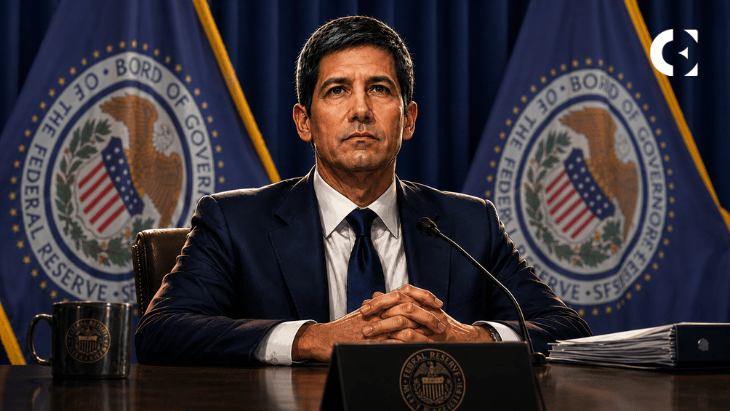
Federal Reserve Chair Kevin Warsh signaled that interest rates could stay higher for longer after policymakers unanimously approved a quarter-point increase, citing persistent inflation despite a strong U.S. economy. The September 16 decision lifted the benchmark range to 3.75%–4.00%, while updated projections kept another increase in play before year-end.
Strong Economy Supports Fed Rate Hike
The Federal Open Market Committee voted 12-0 to raise rates by 25 basis points, marking its first increase since July 2023. Inflation remains above the Fed’s 2% personal consumption expenditures target.
Warsh pointed to a strong labor market, hotter-than-expected consumer and producer price data, and renewed geopolitical escalation as reasons for the decision. Meanwhile, resilient domestic spending and healthy credit flows strengthened the economy’s underlying strength.
Those conditions also impacted his assessment of monetary policy. Warsh said he was “hard-pressed” to call financial conditions restrictive, adding that officials widely shared that view. He described the move as removing some accommodation.
The September projections reflected that resilience. Officials raised their 2026 growth forecast to 2.3% from 2.2% and lowered their unemployment forecast to 4.1% from 4.3%.
Another Rate Increase Remains Possible
Against that backdrop, the median year-end interest rate projection rose to 4.1%, consistent with another quarter-point increase to a 4.00%–4.25% range.
However, the projection corresponds to policymakers’ expectations, not a commitment to act. Warsh offered no personal guidance on further increases and emphasized economic trends over individual data releases.
Officials also raised their 2026 headline PCE inflation forecast to 3.7% from 3.6%. Their projections did not show inflation returning fully to the 2% target until 2029.
Price Stability Takes Priority
Warsh acknowledged that the Fed cannot directly control food or oil prices. Instead, he said policy can prevent those increases from spreading across the broader economy.
That distinction framed his response to President Donald Trump’s push for lower rates. Warsh maintained that price stability remained the objective and said lower-income Americans benefit most from stable prices. “Plain fact is inflation is too high and has been for too long,” he said.
Yields and Dollar Rise as Risk Assets Struggle
Following the decision, the two-year Treasury yield reached 4.74%, while the dollar strengthened about 0.7% against major currencies. Equities faced pressure, and cryptocurrency markets experienced liquidations.
Warsh also linked higher Treasury yields partly to competition for capital between government borrowing and hyperscalers, while noting that yields reflected economic strength.
Related: Fed Rate Decision: What It Means for Bitcoin and Gold Prices
Disclaimer: The information presented in this article is for informational and educational purposes only. The article does not constitute financial advice or advice of any kind. Coin Edition is not responsible for any losses incurred as a result of the utilization of content, products, or services mentioned. Readers are advised to exercise caution before taking any action related to the company.