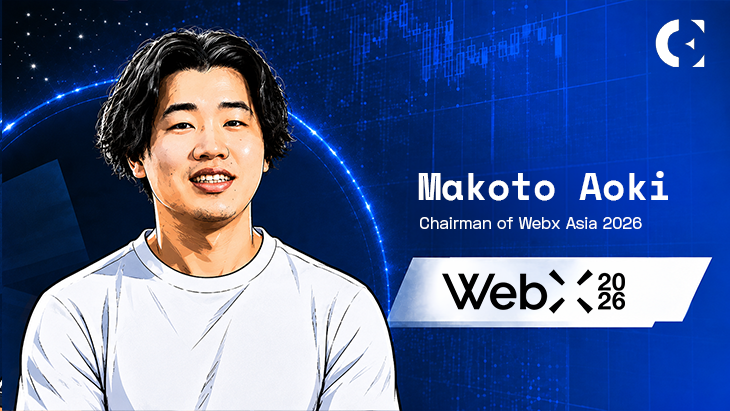

CoinEdition spoke with WebX Chairman Makoto Aoki ahead of WebX Japan 2026 to discuss the conference’s role in bringing together global Web3 leaders. In this interview, Aoki shares what makes WebX unique, why policy and innovation must go hand in hand, and how the event is creating opportunities for builders, investors, and institutions shaping the future of the industry.
1. WebX has grown into one of Asia’s biggest Web3 gatherings, bringing together founders, investors, regulators, and global enterprises under one roof. What do you think makes WebX stand out from other blockchain conferences around the world?
When we launched WebX, it was at a time when many international projects were interested in entering Japan. However, many struggled due to language barriers, cultural differences, and an unfamiliar regulatory environment. We wanted WebX to serve as a platform that could help bridge that gap.
Today, WebX brings together global leaders from crypto, finance, technology, and government with a unique Japanese lens and context. It provides opportunities for international attendees to engage directly with Japanese innovators, enterprises, and policymakers while also spotlighting local projects on the global stage.
Our goal is for WebX to become fertile ground for meaningful partnerships, where ideas from different markets come together to shape the next phase of the industry.
2. This year’s agenda places a strong emphasis on policy discussions alongside innovation. Why is it so important to have regulators, policymakers, and industry leaders in the same room, and how can those conversations help shape the future of Web3?
Digital assets have matured considerably; institutional participation runs deeper, regulatory clarity is clearer in more jurisdictions, and conversations are no longer speculative. What’s needed now are dialogues with key players across Japan’s Web3 ecosystem to drive and shape the future of Web3.
Japan has demonstrated that innovation and consumer protection are bedrocks to the success of the industry. WebX extends this understanding as we bring together industry leaders and regulators to exchange lived experiences. Over the last four editions of WebX (2023-2026), we have found that the value of these conversations lies in the mutual understanding and trust built for the betterment of the industry in the long term.
3. For startups and emerging crypto projects, conferences can be much more than networking events. What opportunities does WebX create for builders looking to connect with investors, strategic partners, and global markets?
Web3 has always been shaped by its communities, and businesses get built the same way. WebX puts builders in one room with the decision-makers shaping the future of digital assets, with Japan at the centre of gravity.
4. Japan has been steadily positioning itself as a leader in responsible Web3 innovation. How does WebX help showcase Japan’s ecosystem to the global blockchain community, and what message do you hope international attendees take home?
WebX puts global players from crypto, financial services, and beyond in direct proximity with Japanese developers, innovators, and policymakers. That includes surfacing emerging Japanese Web3 projects that international audiences would otherwise struggle to find.
Our panel discussions are curated to place Japanese and international speakers on the same stage. This is deliberately designed to appeal to international audiences to connect better with the Japanese ecosystem and vice versa.
Japan’s crypto and Web3 journey is one of resilience and long-term commitment. The industry was once undermined by bad actors, but the industry has been able to adapt and reform on our terms. That discipline is why Japan sits today as one of the world’s leading crypto hubs.
5. Institutional adoption, stablecoins, tokenization, and AI are some of the biggest themes at WebX 2026. Which of these trends do you believe will create the biggest opportunities for the industry over the next few years, and why?
Institutional adoption is, and will continue to be, one of the key drivers for the industry. As regulatory frameworks mature, we’re seeing greater participation from banks, asset managers and tech providers, bringing more capital, credibility and long-term confidence into the ecosystem. That participation is the undercurrent beneath every other trend, including stablecoins and tokenization.
AI is also an exciting area, and while adoption is still in its early stages, its long-term potential is significant. With estimates of it expanding into a trillion-dollar market, it could very well be another structural driver in reforming the financial services industry.
6. If you’re speaking to a crypto founder or Web3 startup that’s considering attending WebX for the first time, what would you tell them? What kind of opportunities, partnerships, or long-term goals?
I would highly recommend anyone and everyone to come to WebX with curiosity, and not just a target list. The most valuable connections are rarely planned meetings, but rather organic conversations that spark new perspectives and fresh ideas.
Whether the goal is entering the Japanese market, connecting with institutional partners, or collaborating with developers and investors, WebX puts the full stack of the Web3 industry in one room, helping to spark conversations that are meant for long-term partnerships.
Disclaimer: The information presented in this article is for informational and educational purposes only. The article does not constitute financial advice or advice of any kind. Coin Edition is not responsible for any losses incurred as a result of the utilization of content, products, or services mentioned. Readers are advised to exercise caution before taking any action related to the company.