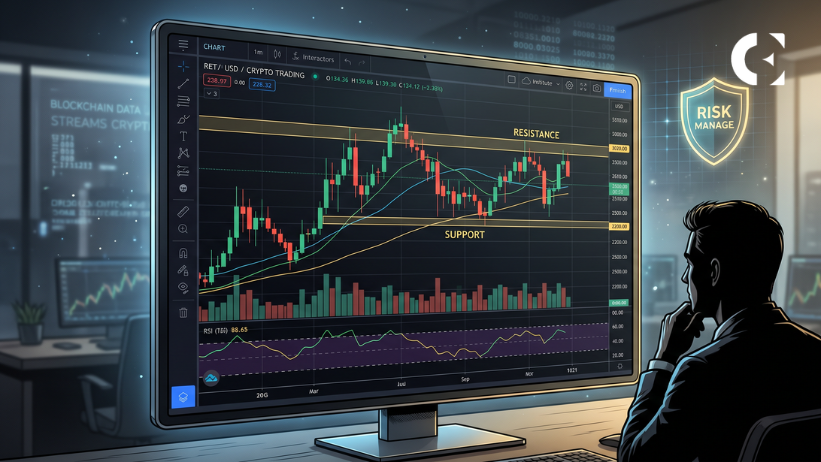

If you’ve ever placed a large trade and watched the price move against you before it even filled, you’ve felt the exact problem dark pools were built to solve.
The Problem With Public Order Books
Most exchanges and stock markets use a public order book. Every buy and sell order is visible to anyone watching, including the size and the price.
That transparency sounds good in theory. In practice, it creates a hidden tax on big trades. The moment you place a large order, other traders can see it sitting there. Some will trade ahead of it, buy up the asset first, then sell it back to you at a higher price once your order starts filling. This is sometimes called front-running, and it’s a natural side effect of everyone being able to see everyone else’s intentions.
For an individual buying a small amount, this barely matters. For an institution trying to move millions of dollars, it can be extremely costly. Every large order leaks information, and that information gets used against the person who placed it.
So What Is a Dark Pool?
A dark pool is a trading venue where orders are hidden until they’re executed. You can place a large buy or sell order, but nobody else sees its size or price until after the trade is matched and done.
Dark pools started in traditional finance, mainly for institutional investors like pension funds, mutual funds, and hedge funds. These players routinely need to buy or sell large blocks of stock, and doing that on a public exchange would move the price against them before the trade even completes.
By keeping the order hidden, a dark pool lets a big trade happen quietly. The price only becomes public after the fact, once the trade is already settled. This protects the trader from being front-run and helps them get a fairer average price.
How Dark Pools Actually Work
The mechanics are fairly simple, even if the concept sounds mysterious:
- A trader submits an order to the dark pool, specifying what they want to buy or sell and at what price.
- The order sits privately, unseen by other participants.
- The dark pool’s matching system looks for an opposing order — someone willing to sell what you want to buy, or buy what you want to sell.
- When a match is found, the trade executes.
- Only after execution is the trade reported publicly, usually with a delay.
No one watching from the outside can see the order building up, so there’s nothing to trade against ahead of time.
Why Dark Pools Exist
The core reason dark pools exist is fair execution, not secrecy for its own sake:
- Large trades get better prices. Without information leaking out, big orders don’t move the market against themselves.
- Institutions can manage risk properly. Pension funds and asset managers need to rebalance portfolios without alerting the whole market to their strategy.
- It reduces market impact. A £50 million order dumped onto a public order book can crash the price temporarily. A dark pool avoids that shock.
Critics, on the other hand, worry that dark pools reduce overall market transparency, make prices harder to discover, and can be used to hide activity that regulators would otherwise scrutinize. This is why dark pools in traditional finance are regulated and their volumes are reported, just with a delay.
Dark Pools Are Coming to Crypto
Public blockchains take transparency to the extreme. Every wallet, every transaction, every order on a decentralized exchange is visible to anyone who looks. That’s great for verifying that a chain is honest, but it’s rough for anyone trying to trade real size.
On a fully transparent chain, placing a large order is like announcing your trade to the entire market before it happens. Bots and other traders can see it in the mempool or on the order book and position themselves to profit at your expense. This is one reason DeFi has struggled to attract serious institutional trading volume — every intention leaks the moment it’s placed.
The crypto industry is now building an on-chain version of the same idea: confidential order books. Instead of showing order size and price to everyone, the details are encrypted. A matching engine can still find a counterparty and settle the trade, but outside observers only see that a match happened, not the details that led up to it.
This isn’t about hiding wrongdoing. It’s about giving traders the same protection institutional investors have always had in traditional markets the ability to place a large order without broadcasting it to everyone who might trade against them.
In Sum
Dark pools exist because full transparency has a cost when you’re trying to trade at scale. They let large orders execute privately, protecting traders from being front-run, while still reporting trades publicly after the fact.
Disclaimer: The information presented in this article is for informational and educational purposes only. The article does not constitute financial advice or advice of any kind. Coin Edition is not responsible for any losses incurred as a result of the utilization of content, products, or services mentioned. Readers are advised to exercise caution before taking any action related to the company.