
- Robert Kiyosaki defended his financial prepping strategy against critics calling him overly pessimistic.
- He compares Bitcoin, gold, silver, and oil wells to car insurance, favoring assets governments cannot print.
- Kiyosaki argues these assets can protect purchasing power from money printing and rising global debt.
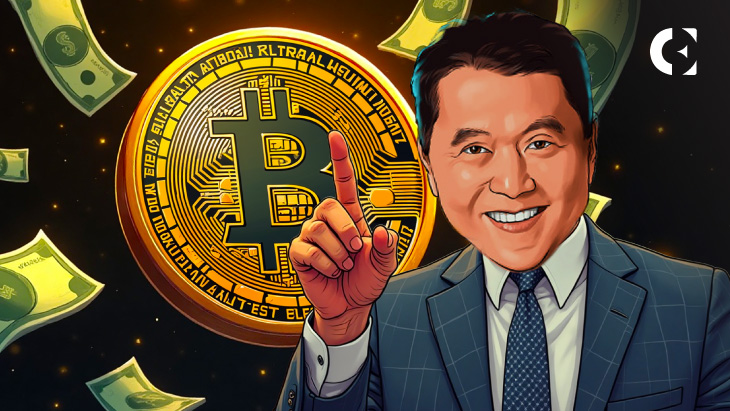
Robert Kiyosaki, a crypto investor and financial educator, defended his “financial prepping” strategy against critics who label the mindset as overly pessimistic.
Kiyosaki compared acquiring Bitcoin (BTC), gold, and silver to buying car insurance, arguing that these assets can help individuals protect their wealth against inflation, rising national debt, and declining purchasing power.
What Does Robert Kiyosaki Mean by “Financial Prepper”?
Kiyosaki explained why he calls himself a “financial prepper,” a mindset of preparing financially for economic risks, especially the erosion of fiat currency’s value.
Kiyosaki shared his experience talking to an audience when one woman asked him if being a prepper was pessimistic and if positive thinking was healthier. He responded with a simple answer: “Do you have insurance on your car?” When she confirmed she did, he asked if she was hoping for an accident. She said no; the insurance was “just in case.”
He used the same reasoning with money, asking whether she owned gold, silver, or BTC. Kiyosaki questioned what happens to cash when the economy crashes and the government prints more money, reducing purchasing power through inflation. He argues this effectively transfers wealth from savers through inflation and taxation. Kiyosaki’s conclusion is direct: “he only wants money the government cannot print,” favoring scarce assets and oil wells.
Why Does Kiyosaki Advocate Ownership of Bitcoin, Gold and Silver Against Inflation?
Kiyosaki recommends holding Bitcoin, gold, and silver as these assets have mathematical or physical scarcity, which ensures the wealth is not destroyed by currency debasement. Current macroeconomic conditions provide the backdrop against which this view is tested.
U.S. inflation remains above the Fed’s 2% target, and public debt has topped 40T. The ongoing shortfalls and rising debts keep monetary accommodation on the agenda, strengthening Kiyosaki’s worry about money creation and eroding purchasing power.
But Kiyosaki does not say that these assets will increase in the short term. Price action has been mixed in recent days. At press time, gold was trading at $4,165.11 after falling from earlier 2026 highs of above $5,400, silver at $61.66, and Bitcoin at $86,302.30.
As DXY approaches the $103 mark, Kiyosaki’s argument is long-term: fiat money can increase indefinitely, but gold, silver, and Bitcoin cannot. According to him, that distinction renders the latter a rational hedge to the foreseeable strains of money creation and debt-financed spending.
What’s Next for BTC, Gold and Silver Amid Inflation, Debt and Dollar Risks?
BTC is highly sensitive to risk appetite, ETF flows and global liquidity, and can trade more like a high-beta risk asset than a pure safe haven. Gold is a traditional global store of value and, as such, cannot be created, while silver is a monetary-industrial metal and is susceptible to both precious-metals sentiment and economic growth data.
In the short term, BTC, gold, and silver will tend to respond to the U.S. economic data, Fed signals, and dollar movements. In the longer term, high debt, inflation above target, and the scarcity of gold, silver, and BTC preserve their applicability as possible safeguards against currency debasement.
That is why Kiyosaki is a financial prepper, although short-term performance may still vary with macroeconomic factors.
Related: Robert Kiyosaki: Fed’s $1T Print Is Why You Should Own Bitcoin Now
Disclaimer: The information presented in this article is for informational and educational purposes only. The article does not constitute financial advice or advice of any kind. Coin Edition is not responsible for any losses incurred as a result of the utilization of content, products, or services mentioned. Readers are advised to exercise caution before taking any action related to the company.