
- XRP utility grew in Q1 2026 as XRPL transactions jumped 35% and institutional adoption expanded.
- RLUSD market cap rose 45% to $340M, while XRPL’s tokenized RWA market surged 124% to $2.25B.
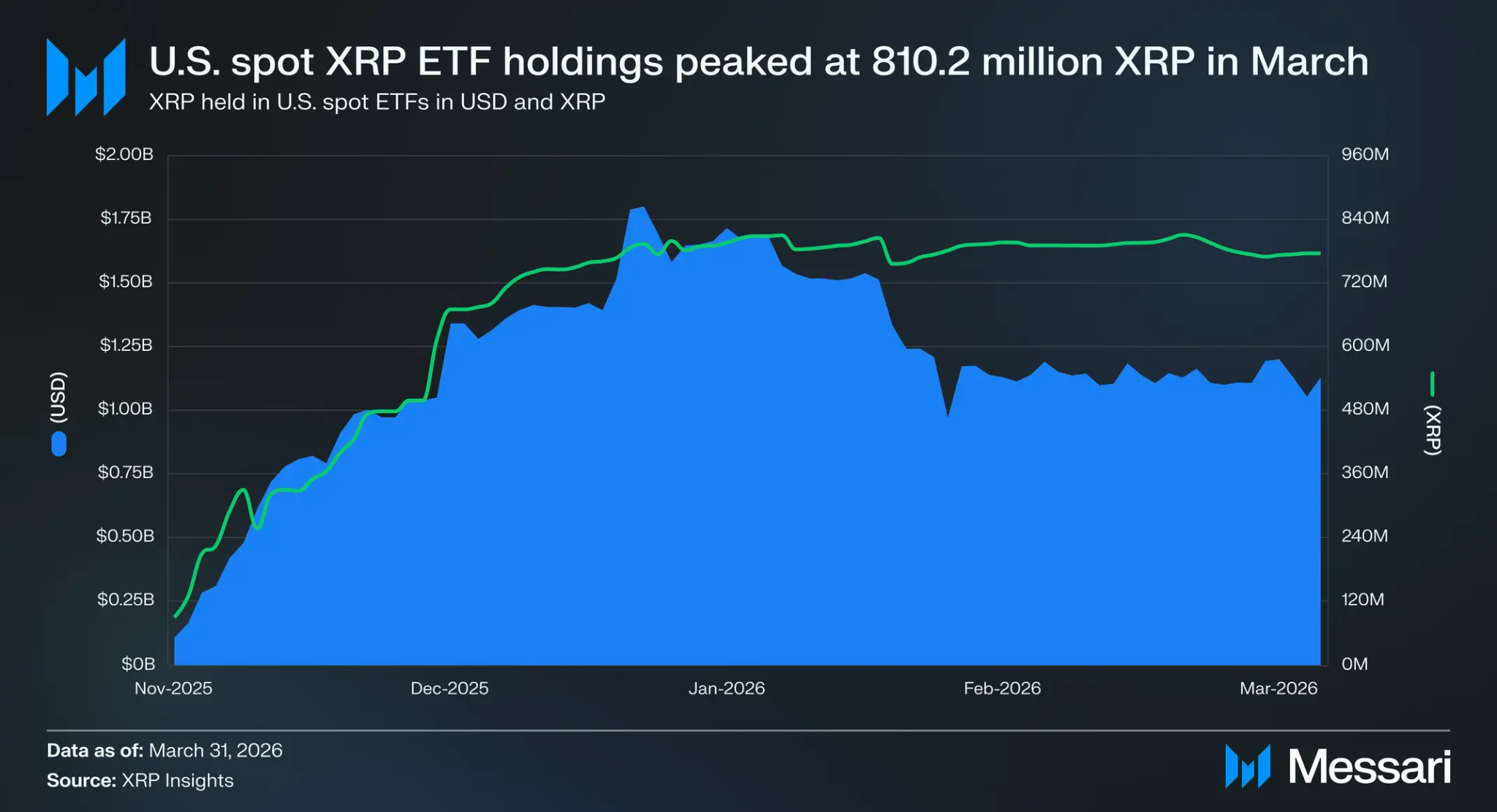
- U.S. spot XRP ETFs held 775M XRP by quarter-end, even as spot and futures trading volumes declined.
A new report from crypto analytics firm Messari highlights the growing utility of XRP and the XRP Ledger (XRPL). The growth comes from rising institutional adoption and expanding use cases in tokenized assets, stablecoins, and decentralized finance (DeFi).
According to Messari’s State of XRP Q1 2026 report, the XRP ecosystem posted growth across several key metrics. These included ETF holdings, transaction activity, stablecoin adoption, and real-world asset (RWA) tokenization.
XRP Remains a Top Crypto Asset
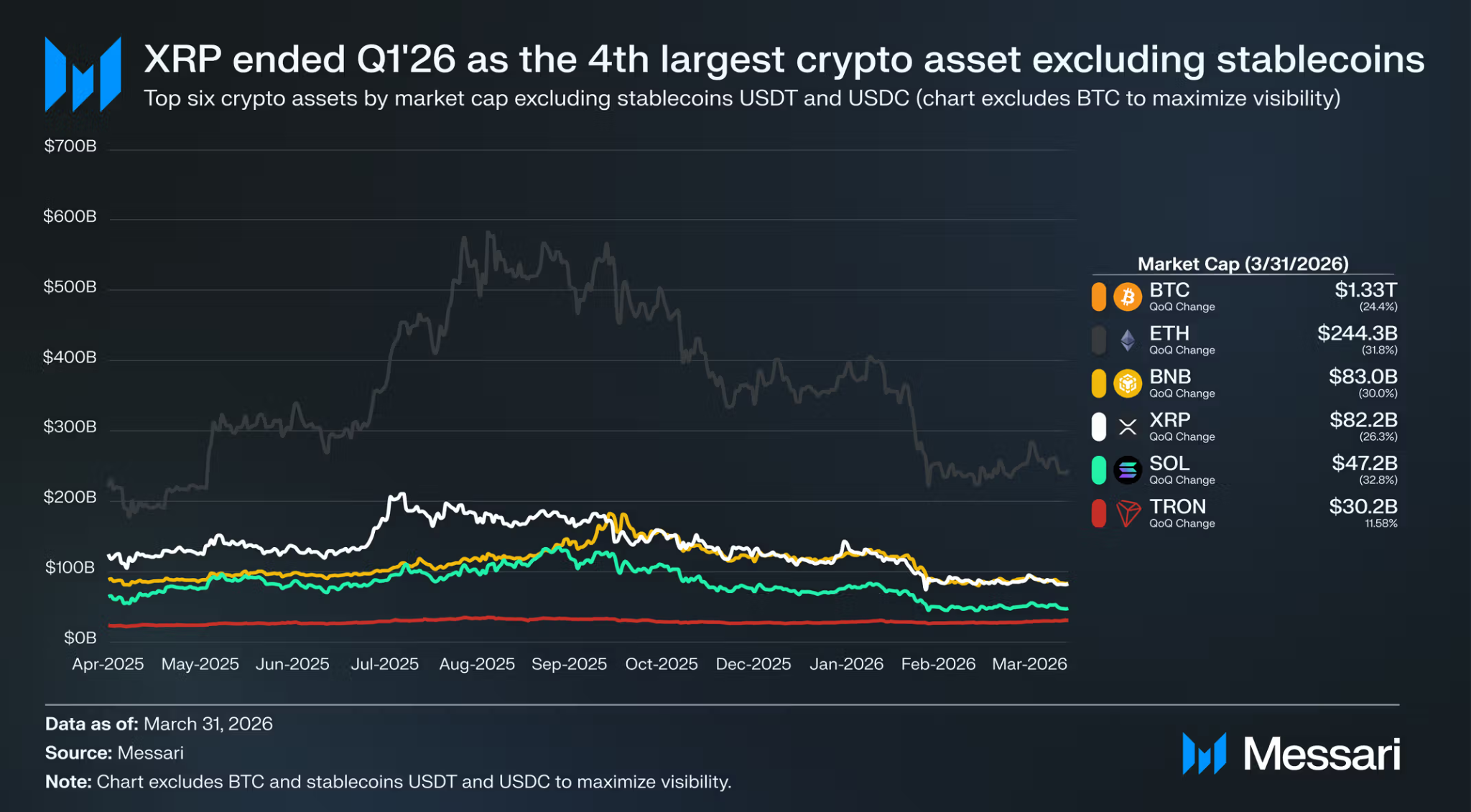
Messari noted that XRP finished Q1 2026 as the fourth-largest non-stablecoin cryptocurrency by market capitalization. Only Bitcoin, Ethereum, and BNB ranked higher.
XRP ended the quarter with a market capitalization of $82.21 billion. This represented a 26.3% decline from the previous quarter. The report noted that XRP’s decline was broadly in line with losses recorded by Bitcoin, Ethereum, and BNB during the same period.
Messari also highlighted XRP’s dominance among blockchain networks that use federated consensus. XRP accounted for 93.7% of the total market capitalization of native assets in this category.
Institutional Adoption Drives Network Growth
The report attributed much of XRP’s expanding utility to new institutional-focused features being developed on the XRPL.
Messari pointed to ongoing work on identity, compliance, and privacy tools. These features are designed to support greater institutional participation. As adoption grows, more XRP is expected to be used for reserve requirements, transaction fees, and cross-asset bridging.
Network activity reflected this trend. Average daily transactions rose 35.3% quarter-over-quarter, increasing from 1.83 million to 2.48 million transactions per day.
The report also highlighted the upcoming native lending protocol on XRPL. The feature will allow users to lend and borrow XRP directly on the network, adding another layer of utility for the asset.
RLUSD and RWA Markets Post Strong Gains
Ripple’s U.S. dollar-pegged stablecoin, RLUSD, continued to expand rapidly during the quarter. RLUSD’s market capitalization on XRPL increased 45% quarter-over-quarter to $340.3 million. This made it the largest stablecoin on the network.
The tokenized real-world asset market grew even faster. XRPL’s RWA market capitalization surged 124% to a record $2.25 billion.
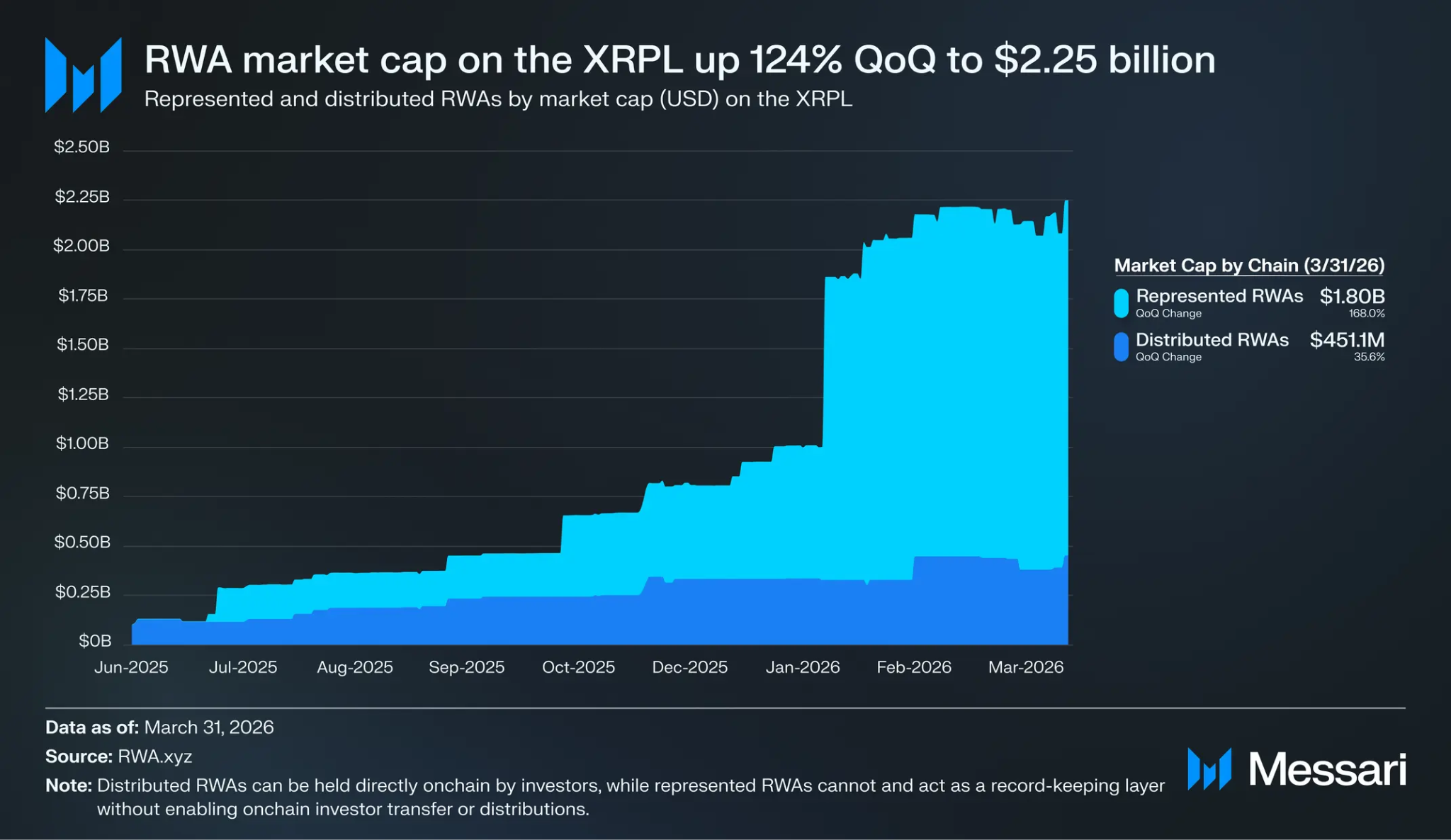
Messari said this growth initially made XRPL the seventh-largest blockchain by RWA value at the end of Q1. By the time the report was published, however, the network had climbed to fourth place among all blockchains.
U.S. Spot XRP ETFs Increase Holdings
U.S. spot XRP exchange-traded funds continued accumulating XRP throughout the quarter.
By the end of Q1 2026, the ETFs collectively held 775.4 million XRP. This represented about 1.26% of the circulating supply. Holdings increased 1.9% from the previous quarter and reached a peak of 810.2 million XRP on March 3.
Messari said ETF ownership was relatively evenly distributed among four major funds: Canary Capital’s XRPC, Bitwise’s XRP ETF, Franklin Templeton’s XRPZ, and 21Shares’ TOXR. Each fund held more than 100 million XRP at quarter-end.
The report noted that spot XRP ETFs only became possible after Ripple’s legal dispute with the U.S. Securities and Exchange Commission was resolved in August 2025. That outcome cleared the path for regulatory approval.
Trading Activity Declines Alongside Market Pullback
Despite stronger adoption metrics, XRP trading activity slowed during the quarter. Average daily perpetual futures volume fell 28.6% to $2.99 billion. Average daily spot trading volume also declined, dropping 32% to $2.69 billion.
Messari said the decline largely reflected XRP’s lower market capitalization during the quarter.
Even so, decentralized exchange (DEX) volume involving XRP increased 9.4% quarter-over-quarter. Daily DEX volume reached $11.7 million, suggesting steady growth in on-chain trading activity.
XRP Burn Mechanism Continues Reducing Supply
Transaction fees on the XRP Ledger remain extremely low. However, every fee paid on the network is permanently burned. During Q1, transaction fees measured in XRP declined 12% quarter-over-quarter to 50,750 XRP.
Since the XRPL launched, about 14.3 million XRP have been permanently removed from circulation through fee burning. While the burn rate remains relatively small because transaction costs are low, the mechanism continues to exert long-term deflationary pressure on XRP’s fixed supply of 100 billion tokens.
Related: XRP North Star Thesis Explained as Ripple Sharpens Utility Push
Disclaimer: The information presented in this article is for informational and educational purposes only. The article does not constitute financial advice or advice of any kind. Coin Edition is not responsible for any losses incurred as a result of the utilization of content, products, or services mentioned. Readers are advised to exercise caution before taking any action related to the company.