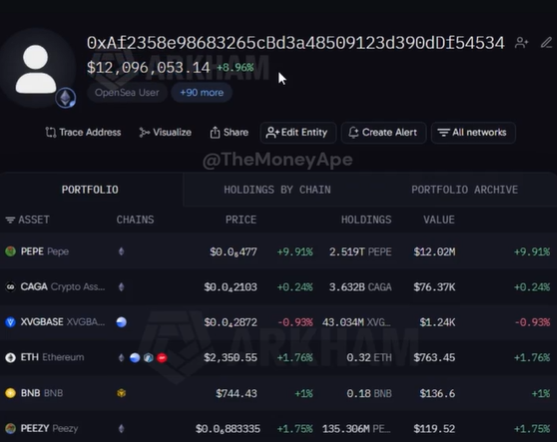
- A wallet holding 2.5T PEPE (now ~$12M) was blacklisted in 2023, preventing any transfers.
- Renouncing PEPE’s contract prevented new edits but left existing blacklists active.
- Canary’s SEC filing confirms PEPE’s immutability despite an active legacy wallet freeze.
A PEPE investor who reportedly paid just $27 for trillions of tokens is back in the spotlight, showing the dangers of developer-controlled crypto contracts. The wallet is now worth about $12 million on paper, but a blacklist restriction stops the owner from moving the tokens, which raises questions about decentralization and investor protection.
The wallet picked up about 2.5 trillion PEPE in April 2023, and got blacklisted just eight minutes later. The tokens were visible on-chain, but the restriction blocked any normal transfers.
An October 23 investigation by Panther independently verified the wallet and reported a balance of approximately 2.519 trillion PEPE. The address still appears on the contract’s blacklist.
Renouncing Ownership Didn’t Unlock the Tokens
This case points to a key difference in how smart contracts are built. A blacklist feature can stop certain addresses from sending or receiving tokens, which gives whoever controls it a lot of power over holders.
PEPE’s contract ownership was eventually renounced, so the usual owner-only function couldn’t be used to change the blacklist anymore. But giving up ownership didn’t automatically remove a restriction that was already in place.
Panther’s investigation found the wallet was still blacklisted, even though the contract now lists a zero address as its owner.
Follow us on X for real-time crypto updates.
What This Means for Crypto Decentralization
The incident is a reminder that decentralization involves more than distributing tokens across thousands of wallets. Investors also need to look into who holds the power to edit contract rules and whether hidden admin tools remain turned on. Knowing whether existing account bans can ever be undone is also important.
In a filing with the US Securities and Exchange Commission (SEC), Canary Capital calls PEPE’s contract immutable and says no administrator can change its code or block transfers.
Still, the fact that this specific wallet remains blocked shows why giving up creator control isn’t the same thing as wiping out restrictions that were already part of the blockchain history.
For investors, the main takeaway is simple: just seeing coins in the wallet doesn’t mean they are transferable or sellable. Before buying into a project, taking time to check for hidden contract rules and blocklist features is just as important as looking at the coin’s price and market cap.
Subscribe to our YouTube channel for the latest crypto news.
Related: A Few Cents Can Freeze Crypto Accounts: Kraken Dust Attack Linked to HTX Wallets
Disclaimer: The information presented in this article is for informational and educational purposes only. The article does not constitute financial advice or advice of any kind. Coin Edition is not responsible for any losses incurred as a result of the utilization of content, products, or services mentioned. Readers are advised to exercise caution before taking any action related to the company.