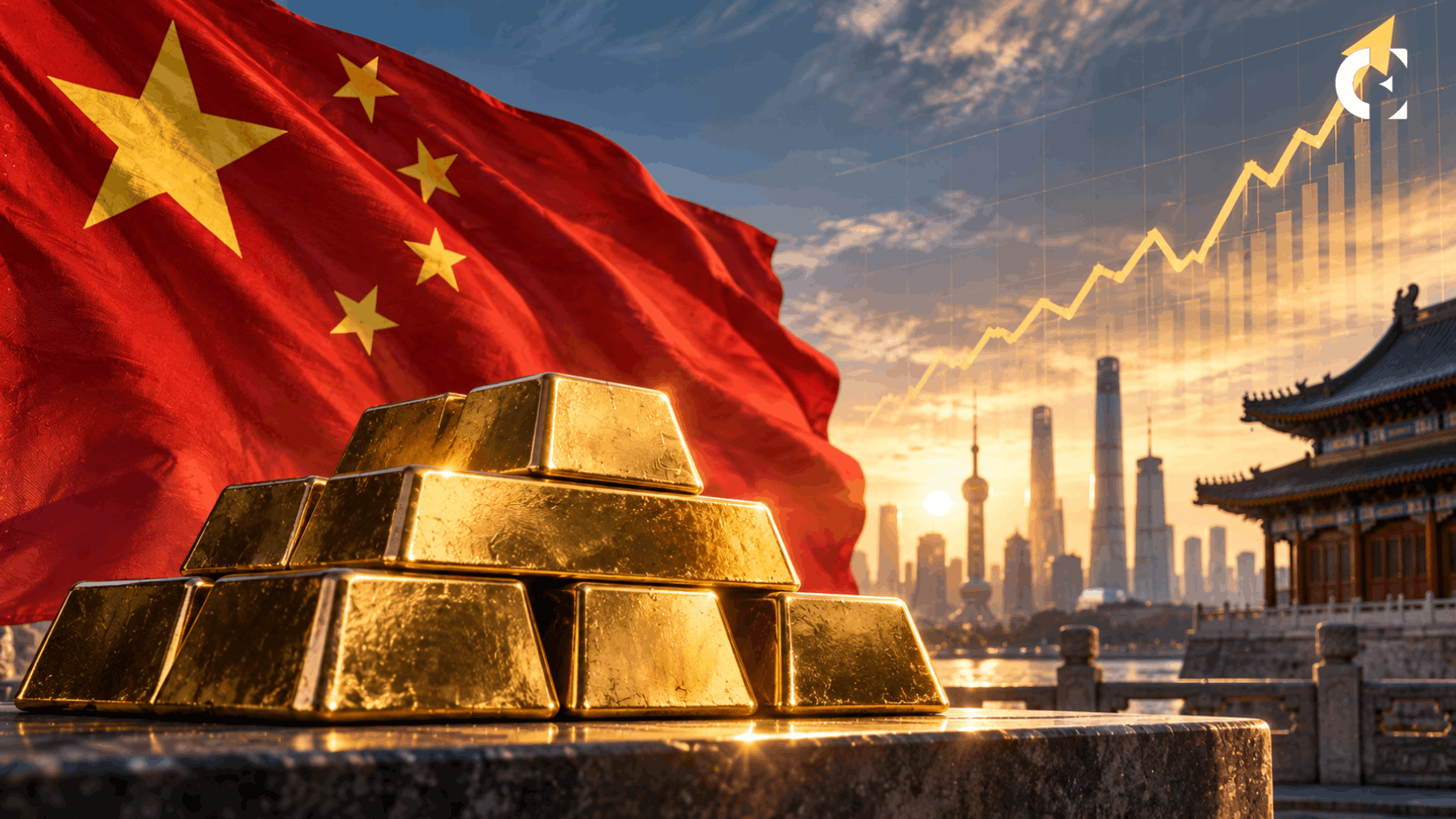

- The PBOC has now added roughly 650,000 ounces of gold to its reserves in August.
- China’s gold-buying streak has now extended to 22 consecutive months.
- China’s US Treasury holdings have now fallen to their lowest level in 18 years.
China’s central bank isn’t waiting for gold prices to cool off before buying. The People’s Bank of China (PBOC) added roughly 650,000 ounces, about 20.2 tonnes, to its gold reserves in August, its largest single-month increase since October 2023, even as prices sat near record highs.
A 22-Month Buying Streak
That August purchase extended China’s continuous gold-buying run to 22 straight months. Official reserves now stand at 76.73 million ounces. China’s continued buying despite elevated prices is the real signal here; this doesn’t look like opportunistic bargain hunting. It looks like a structural, long-term strategy that isn’t especially sensitive to price.
The gold buying is happening alongside a steady retreat from US government debt. China’s holdings of US Treasuries have fallen to roughly $651 billion to $682.6 billion, depending on the reporting period, down sharply from a peak above $1.3 trillion in past years and now sitting near an 18-year low.
Why Beijing Is Making This Shift
A few forces appear to be driving the reallocation. The freezing of Russia’s central bank assets by Western governments showed reserve managers worldwide that dollar-denominated holdings can be frozen or weaponized in a geopolitical dispute; gold held domestically doesn’t carry that same risk.
Rising US government debt and persistent fiscal deficits have fueled concern among central banks about the long-term purchasing power of the dollar. Officials reportedly also cited concerns that rising US government debt could expose bank balance sheets to heightened volatility, effectively prompting a reassessment of whether Treasuries still deserve their traditional status as a risk-free asset.
Why This Matters for Traders
Central bank demand isn’t like typical retail or investor buying that reacts to short-term price swings. It tends to be steady and driven by reserve strategy rather than technical entry points. If China keeps accumulating regardless of price, and other central banks follow a similar path, that creates a form of demand that doesn’t disappear when prices get expensive, a structural tailwind that’s different from the kind of buying that typically fades during a rally.
Because Treasuries play such a central role in global pricing mechanisms, reduced demand from China’s banking sector could spill over, including pressure on equities, increased currency volatility, tighter liquidity conditions, and greater sensitivity across risk assets more broadly.
Related: More Indians Own Gold Than Crypto, But Is That Changing? 97.5M Users Signal a Shift
Disclaimer: The information presented in this article is for informational and educational purposes only. The article does not constitute financial advice or advice of any kind. Coin Edition is not responsible for any losses incurred as a result of the utilization of content, products, or services mentioned. Readers are advised to exercise caution before taking any action related to the company.