

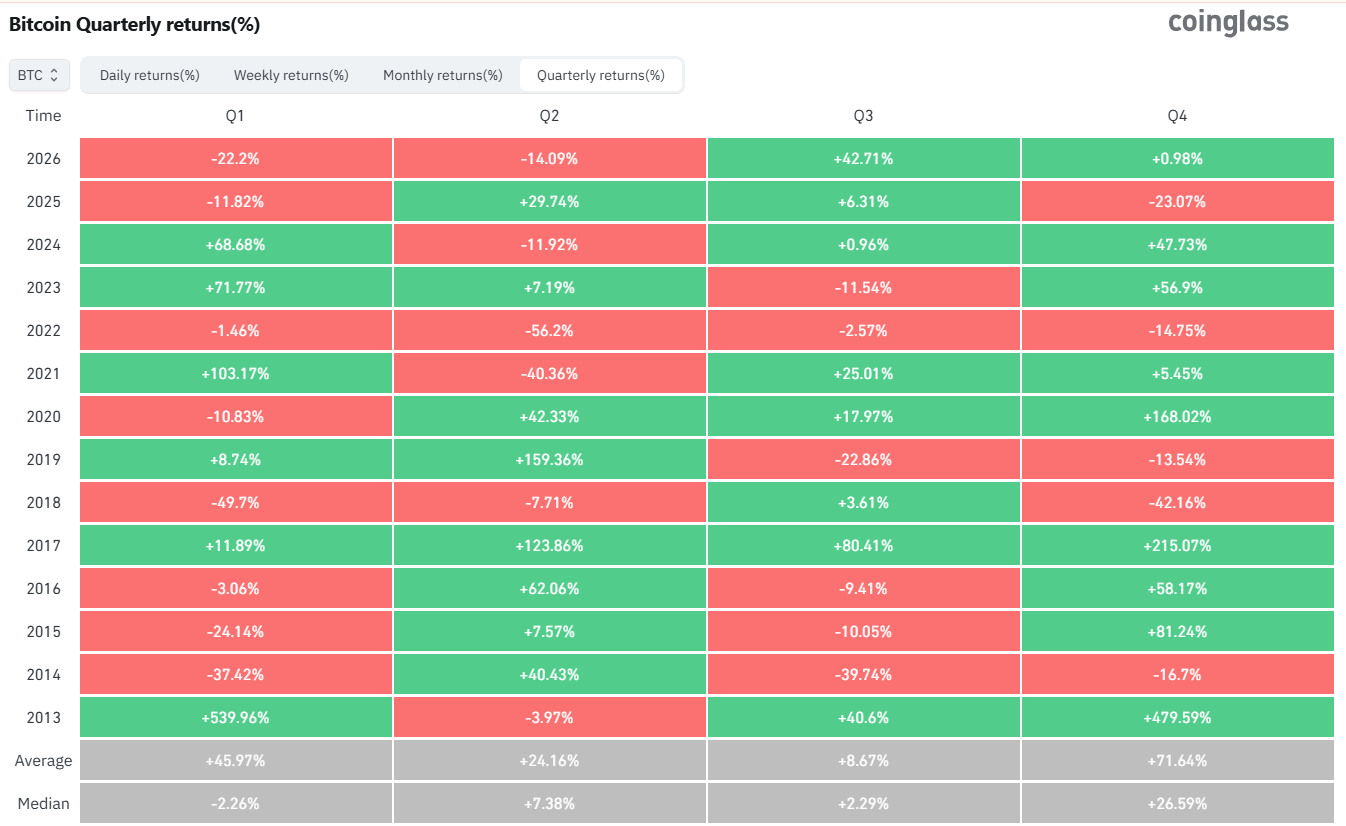
- Bitcoin starts Q4 with renewed ETF demand after gaining nearly 43% in the last quarter.
- Gold draws support from central-bank buying, while high real yields limit its appeal.
- Slower U.S. hiring boosts Fed pause hopes as gold and Bitcoin face key Q4 policy tests.
Gold and Bitcoin enter Q4 2026 with different sources of strength. Bitcoin’s rebound has drawn fresh ETF money, while reserve buying supports bullion. High bond yields and the Federal Reserve’s rate path remain the main tests for both assets.
Bitcoin gained almost 43% during the third quarter, recovering from a weak first half. Gold’s momentum faded late in the quarter, with spot prices falling more than 6% in September.
By October 2, gold traded near $4,140 an ounce. Bitcoin had retreated toward $84,000 after an earlier move above $87,000. Those intraday reversals showed that renewed buying still faced selling pressure.
QCP’s October 2 note linked Bitcoin’s resilience to investment flows and market positioning. StoneX’s September 28 outlook identified central-bank buying as support for gold. It also highlighted higher interest rates and a stronger dollar as headwinds.
High Real Yields Complicate the Q4 Outlook
Interest rates connect those separate demand trends. The Fed raised its benchmark range to 3.75%–4% on September 16. Officials described inflation as elevated and maintained their focus on the 2% target.
The latest employment report then added pressure for a pause. September payrolls increased by 29,000, while unemployment reached 4.2%. Downward revisions removed another 60,000 jobs from July and August.
Wage growth also slowed. Average hourly earnings rose 3% from a year earlier and just 0.1% over the month. That gave policymakers fresh evidence of weaker labor-market pressure alongside slower hiring.
Yet softer employment data has not removed competition from bonds. The Fed’s October 2 release showed a 5.24% yield on 10-year Treasuries for October 1. The 10-year inflation-protected yield stood at 2.88%.
That second rate matters because it represents a return above inflation on government debt. Neither physical gold nor Bitcoin pays interest. Investors holding either asset give up the income available from bonds.
A pause would stop another rate increase while leaving existing borrowing costs in place. This distinction matters for Q4: expectations of easier policy and an actual decline in market yields are separate developments.
Gold’s Reserve Demand Faces a Rate Barrier
Gold has buyers whose decisions extend beyond short-term returns. Central banks bought a net 289 tonnes in Q2, the highest second-quarter total on record. The World Gold Council linked demand to reserve diversification and geopolitical uncertainty.
The broader picture was less uniform. First-half purchases totaled 345 tonnes, the lowest first-half figure since 2022. Strong Q2 buying followed substantial selling earlier in the year.
China’s subsequent purchases showed that official demand continued into August. The People’s Bank of China added 20.2 tonnes, its largest monthly increase since October 2023. Its reported gold holdings rose for a 22nd consecutive month.
Investment funds also rebuilt exposure during the summer. Global gold-backed ETFs attracted $18 billion in August, the second-largest monthly inflow in dollar terms. North American and European funds accounted for most of the buying.
However, that inflow preceded September’s decline. Gold ETFs then lost 1.6 tonnes in the week ending September 25. The change shows why reserve purchases and private investment flows need separate attention.
StoneX analyst Fawad Razaqzada remained cautiously optimistic about Q4. He cited continued official buying while naming tighter monetary policy as a major obstacle. A stronger dollar adds pressure by making bullion more expensive in other currencies.
Bitcoin’s ETF Rebound Needs Staying Power
Investment flows are also central to Bitcoin’s recovery, with daily fund data showing sharp changes in demand. U.S. spot Bitcoin ETFs attracted about $2.39 billion during September 21–25. Almost $1 billion arrived on September 21 alone.
Purchases then slowed before turning negative. The funds lost $148.7 million on September 30, followed by a $102.7 million inflow on October 1. These reversals matter when assessing whether fresh demand is lasting.
Buying was also concentrated. BlackRock’s IBIT attracted $195.6 million on October 1, while withdrawals from other products reduced the overall gain. The positive headline total therefore masked differences across funds.
QCP’s October 2 assessment described Bitcoin’s advance as more consistent with concentrated buying than a broad improvement in macro conditions. It also warned that flows change quickly, leaving the rally exposed when demand weakens.
Which Asset Has the Stronger Macro Setup?
The evidence supports a narrower verdict than an outright Q4 winner. Bitcoin has stronger recent momentum and renewed ETF demand. Gold has an established reserve-buyer base, though high real yields continue to challenge its investment appeal.
However, persistent inflation presents a harder outcome for both. Further tightening would increase competition from interest-bearing assets and put renewed pressure on market liquidity. Gold’s defensive role and Bitcoin’s recent momentum would each face another test.
The Fed’s October 27–28 and December 8–9 meetings are the next policy checkpoints. Until then, real yields and fresh buying offer firmer evidence than either asset’s safe-haven label.
Related: What Happens to Bitcoin, Gold and Stocks When Bond Yields Rise?
Disclaimer: The information presented in this article is for informational and educational purposes only. The article does not constitute financial advice or advice of any kind. Coin Edition is not responsible for any losses incurred as a result of the utilization of content, products, or services mentioned. Readers are advised to exercise caution before taking any action related to the company.