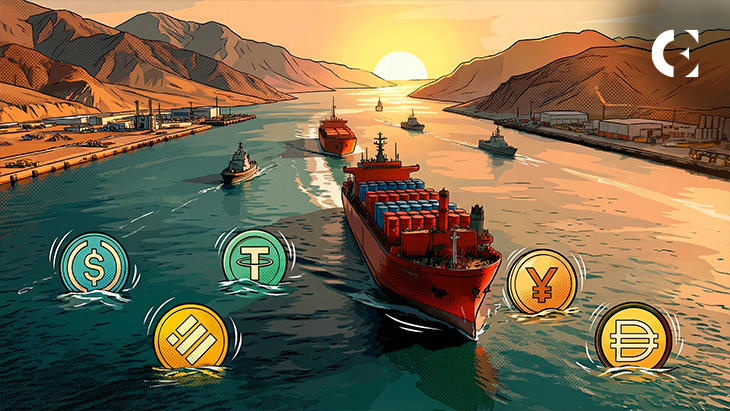

- MARISKS says scammers are posing as Iranian officials and messaging shipping companies.
- Security analysts say the scheme works so well because it mirrors real‑life conditions.
- According to MARISKS, at least one ship was influenced by scam messages.
A fresh wave of cyber fraud is hitting one of the world’s busiest shipping lanes as scammers are targeting ships stuck near the Strait of Hormuz, promising “safe passage” in return for crypto payments.
Maritime risk management firm MARISKS says unknown scammers are posing as Iranian officials and messaging shipping companies, demanding crypto like Bitcoin or Tether for fake clearance through the strait.
MARISKS stressed that these particular messages are a scam and have nothing to do with any official Iranian authorities.
Crypto Scamers Offering Safe Hormuz Transit
The scam is happening in the middle of the ongoing Hormuz crisis, where hundreds of ships and about 20,000 sailors are still stuck in the Gulf. The strait has seen closures, military threats, travel limits, and a brief mid‑April reopening ended with ships getting shot at and forced to retreat.
The Strait of Hormuz is a key shipping lane that usually carries about 20% of the world’s oil, so any disruption has huge ripple effects across global markets.
So far, no official comments from Iranian officials have been given regarding the scam.
How the Scam Works
The scam messages usually pretend to be from Iranian officials, promise safe passage through blocked waters, demand crypto paid in advance as a transit fee, and aim at ships stuck west of the strait.
Security analysts say the scheme works so well because it mirrors real‑life conditions, including talks of transit tolls, active ceasefire negotiations, and general confusion about which routes are actually safe.
According to MARISKS, in at least one case, a ship that tried to move during a brief reopening (possibly swayed by one of these messages) was reportedly shot at, highlighting the danger of trusting unverified info.
Scams involving crypto have been quite prevalent recently. For instance, last week, Kraken, one of the biggest cryptocurrency exchanges, revealed it was targeted by an insider-led extortion scheme. Workers leaked an internal system video and demanded payment to stop the data from coming out. About 2,000 accounts may have been exposed, but customer funds were not affected.
Also, last week, Musician G. Love lost his entire $424,000 BTC savings after the attack came from downloading a fake Ledger wallet app.
Related: Iran Restricts Hormuz Again as Trump Maintains Blockade
Disclaimer: The information presented in this article is for informational and educational purposes only. The article does not constitute financial advice or advice of any kind. Coin Edition is not responsible for any losses incurred as a result of the utilization of content, products, or services mentioned. Readers are advised to exercise caution before taking any action related to the company.