

- IMF reports $59B crypto inflows in Nigeria from July 2023 to June 2024, driven by stablecoin use in payments.
- Stablecoins gained traction due to naira depreciation, high inflation, forex constraints, and low costs.
- The IMF warns that stablecoins could undermine naira demand and urges stronger regulation and oversight.
The International Monetary Fund (IMF) has reported that stablecoins have become a significant cross-border payments tool in Nigeria, with $59 billion in crypto inflows from July 2023 to June 2024. Households and small firms are using stablecoins via smartphones for quick remittances and supplier payments, easing frictions amid naira volatility.
IMF Reports Nigeria’s Growing Use of Stablecoin in Cross-Border Payments
On June 16, 2026, the IMF published an article titled “Stablecoins in Nigeria: A Growing Cross-Border Channel,” highlighting the rapid adoption of stablecoins in Nigeria for cross-border payments. Nigerian households and small firms are increasingly relying on smartphones, digital wallets, and US dollar–pegged stablecoins for remittances and international transactions.
Since 2019, Nigeria has accounted for roughly 60% of stablecoin inflows across Sub-Saharan Africa, highlighting its dominant role in regional crypto adoption. Nigeria received approximately $59 billion in crypto-asset inflows between July 2023 and June 2024.
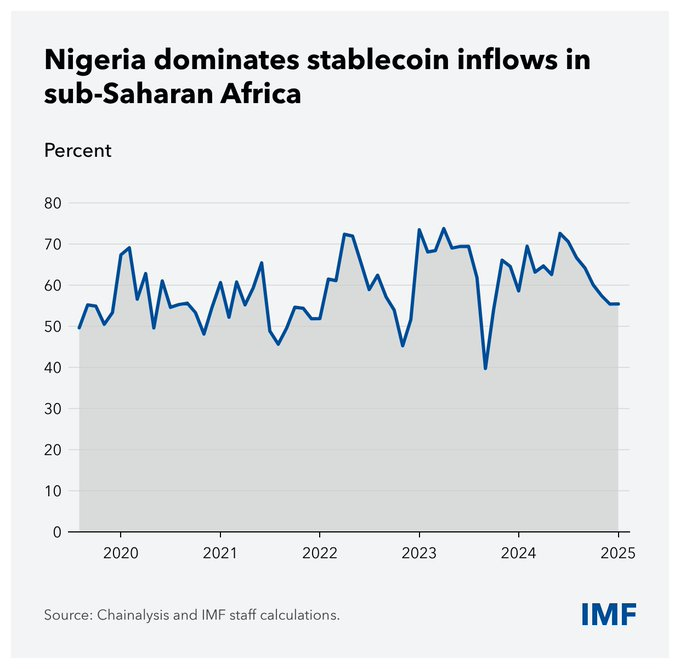
Source: IMF NEWS
Nigeria ranked second globally on Chainalysis’s 2024 Global Crypto Adoption Index and sixth in 2025. Nigeria has also introduced a regulated naira-pegged stablecoin (cNGN), though dollar-backed options continue to dominate due to user preference for stability.
Why Stablecoins Are Gaining Traction in Nigeria
Stablecoins are gaining traction in Nigeria due to persistent macroeconomic instability. High inflation, naira depreciation, and foreign exchange shortages have reduced confidence in the local currency. As a result, users increasingly turn to dollar-pegged stablecoins to preserve value and maintain purchasing power in an uncertain economic environment.
High cross-border payment costs also drive adoption. Traditional remittance channels charge around 8–9 percent, making transfers expensive and slow. Stablecoins offer near-instant settlement at significantly lower fees, often under 1–2 percent. This efficiency makes them attractive for remittances, freelance income, trade payments, and international business transactions.
Financial access constraints further reinforce usage. Limited banking infrastructure and past restrictions on crypto-related services pushed users toward peer-to-peer platforms. Combined with smartphone penetration, stablecoins became easily accessible, enabling unbanked and underbanked populations to participate in digital payments, savings, and cross-border commerce using only mobile devices.
What’s the Impact on Naira Demand?
The IMF warns that the rapid growth of U.S. dollar–pegged stablecoins in Nigeria could contribute to digital dollarization, which reduces demand for the naira and poses monetary risks. This dynamic could impair the transmission of domestic monetary policy, making it harder for the Central Bank of Nigeria to influence economic activity through interest rates and other tools.
As a result, the IMF emphasizes that the most effective response is not prohibition but strengthening confidence in the naira through sound macroeconomic policies, while bringing stablecoin activities under appropriate regulation.
Related: KuCoin Selected as Sole Global Exchange in Nigeria CBN Crypto Pilot
Disclaimer: The information presented in this article is for informational and educational purposes only. The article does not constitute financial advice or advice of any kind. Coin Edition is not responsible for any losses incurred as a result of the utilization of content, products, or services mentioned. Readers are advised to exercise caution before taking any action related to the company.