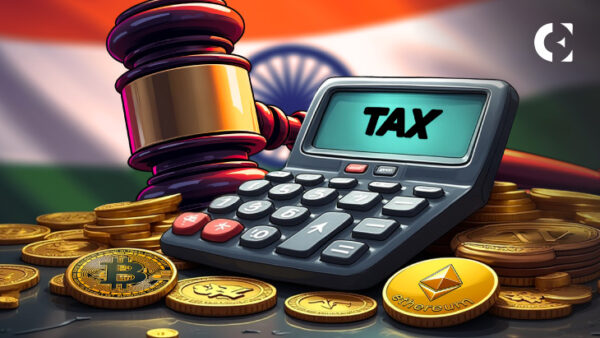

- Indian authorities review crypto to gift card channels that allow Indians to convert crypto for everyday use.
- Digital vouchers and gift cards have emerged as a backdoor for Indian users to buy groceries, and even gold.
- This mechanism creates tax, AML and cross-border payment issues since it skips the traditional banking rails.
The Indian government is investigating the rising popularity of offshore crypto to gift card platforms that allow Indians to convert crypto into vouchers for everyday spending. This mechanism allows Indian crypto users to spend Bitcoin (BTC) and other digital assets on groceries, fuel, food, mobile recharges and even gold. The development has sparked concerns about tax reporting, anti money laundering monitoring (AML), and gaps in tracking crypto funded
Why India Is Investigating Offshore Crypto-to-Gift-Card Channels
Indian authorities are investigating offshore platforms that offer crypto to local gift cards and vouchers. Digital South Trust, a Vellore-based blockchain research and policy organisation, raised a red flag on the mechanism to the Ministry of Finance and the Ministry of Home Affairs.
The central issue is that these channels enable the residents to convert virtual digital assets into real-world purchasing power within India. They can do this without transacting through domestic banking rails or Indian crypto exchanges, sparking concerns about tax reporting, AML regulation and foreign exchange control checks.
In addition, this mechanism provides an opportunity for Indian users of cryptocurrencies to transfer stablecoins like USDT from their wallets to foreign platforms, which in turn issue Indian gift cards or digital vouchers. These vouchers can be redeemed for everyday goods and services, including groceries, fuel, food, mobile recharges and gold. Offshore platforms can also partner with Indian voucher issuing and aggregator companies to identify or create these codes.
How Crypto Gift Cards Raise Tax and AML Concerns in India
The tax issue is whether purchasing gift cards is a crypto disposal event. Under Section 115BBH of the Income tax Act, income arising from the transfer of a Virtual Digital Asset (VDA) is taxed at a flat 30%, plus applicable surcharge and cess. When an Indian resident transfers USDT or another VDA to an offshore platform and gets gift cards or voucher codes in response, the transfer is usually considered to be a transfer of the VDA. The gift card itself is not a VDA. The gift cards and vouchers were not included in the definition of VDA by CBDT Notification No. 74/2022.
India’s AML monitoring is also complicated by offshore platforms. In 2023, India introduced Virtual Digital Asset Service Providers under Prevention of Money Laundering Act. These organizations should enroll in FIU IND and establish KYC and AML measures. They must also file Suspicious Transaction Reports and other prescribed reports.
From Bitcoin Trading to Everyday Spending: What It Means for Indian Crypto Users
Digital assets like BTC are no longer stuck on screens and order books only. They are silently being sold out, sometimes as groceries, fuel, food delivery, mobile recharges and even gold. This symbolizes a fundamental shift in the dynamics of interactions between digital assets and the Indian economy. Previously, to realize the value of crypto, one had to sell on an exchange, convert to INR and remit the proceeds via the banking system.
The exchange process left an evident trail of exchange reports and TDS under Section 194S, bank statements and Schedule VDA disclosures. Gift cards rails short cut the greater part of that sequence. Users can transfer stablecoins or other VDAs in their personal wallets to foreign ones in real time, accept closed loop Indian vouchers and redeem them at mainstream merchants without an intermediate withdrawal in domestic banking or exchange books.
What Indian Traders Should Watch Next
Indian crypto merchants should monitor Clarification on CBDT on taxation of crypto gift cards and vouchers under Section 115BBH, whilst cross border data sharing and CARF preparedness by April 2027 may intensify attention. Offshore Visa and Mastercard crypto cards pose similar AML and tax considerations, and any clarification of foreign exchange regulations by the RBI or Finance Ministry could influence the future of crypto payments in India.
Related: Bitcoin Gifts in India: Can the Taxman Trace Who Sent the Crypto?
Related: India Issues New Crypto Reporting Guidelines for Exchanges Under CARF
Disclaimer: The information presented in this article is for informational and educational purposes only. The article does not constitute financial advice or advice of any kind. Coin Edition is not responsible for any losses incurred as a result of the utilization of content, products, or services mentioned. Readers are advised to exercise caution before taking any action related to the company.