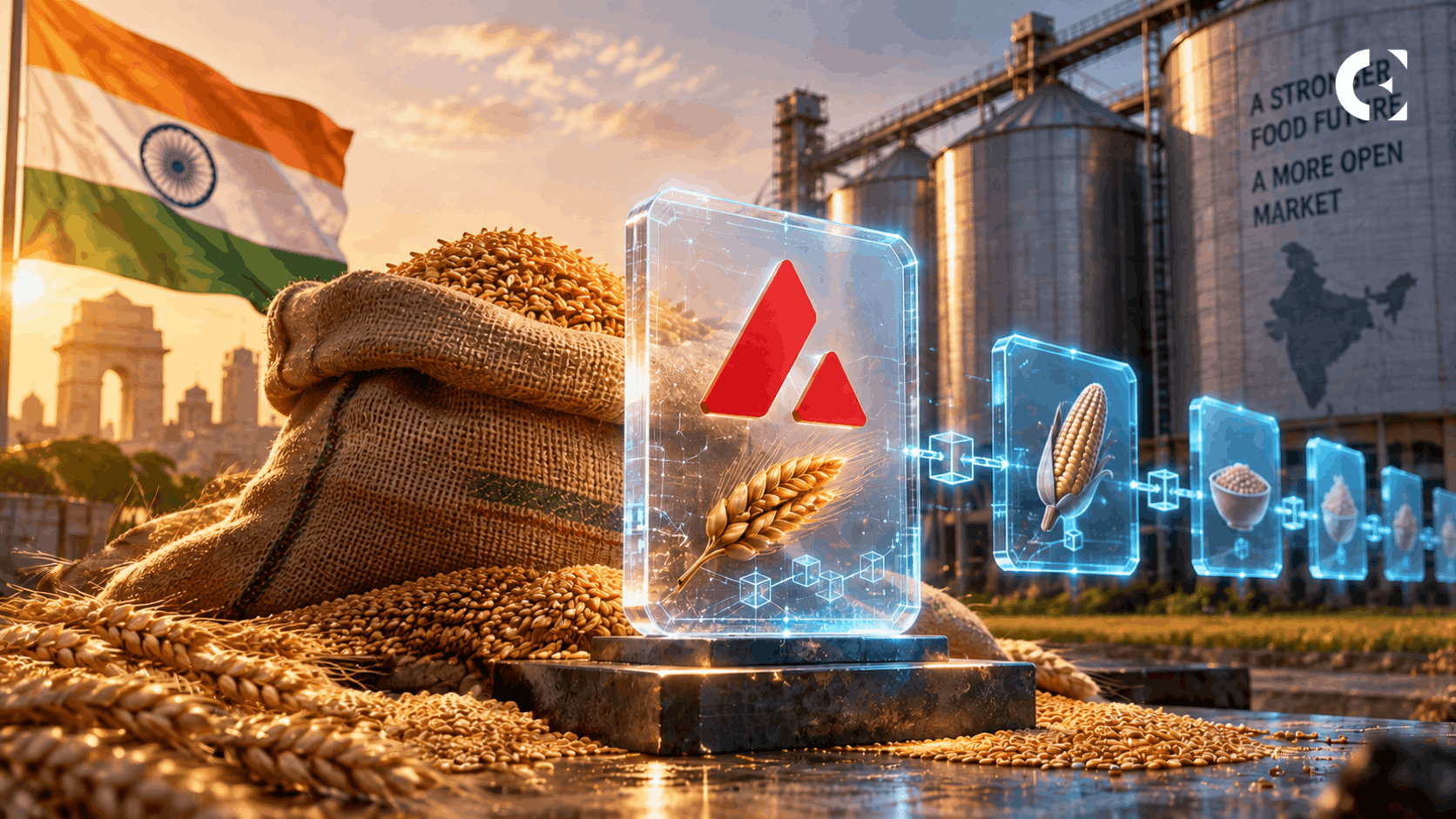

- Arya.ag is tokenizing $2 billion worth of grains on the Avalanche blockchain.
- Indian traders can now focus on an asset class within their domestic economy.
- Tokenized grain on Arya.ag’s platform can also serve as collateral for finance.
Real World Asset (RWA) tokenization may be securing a foothold in India as Arya.ag, the nation’s largest integrated grains commerce platform, plans to host $2 billion in crop-backed loans on the blockchain.
The company recently announced that it is using the Avalanche chain to put grain deposits, warehouse receipts, and loan details on-chain. The novel solution would allow banks to verify the crops backing a loan and check whether they have already been pledged, making agricultural lending faster, cheaper, and easier to verify.
Arya.ag’s Tokenized Commodities and the Problems it Solves
Arya.ag’s latest project is an entirely new approach for Indian traders and investors, who are more familiar with the regular crypto asset class with no warehousing systems for underlying commodities. The new product gives India’s RWA narrative a new face with a local use case. Indian traders can now focus on an asset class within their domestic economy rather than chasing tokenized US Treasuries or real estate.
Tokenized commodities by Arya.ag aim to resolve India’s deep-rooted farm credit issues by bringing structural transparency to agricultural lending. It would solve critical financial and logistical pain points at the grassroots level for farmers and traditional lenders. The blockchain system will prevent fraud and duplicate pledges, while boosting formal credit access.
The solution will create a composite token for risk assessment, bundling farmer identity, quality specifications, crop volume, and insurance status into one easily auditable digital asset for bank risk modeling. It will also speed up loan disbursal through smart contracts that allow participating lenders to verify records immediately.
What This Means for India’s RWA Market
Beyond creating opportunities for locals to trade commodities on the blockchain, Arya.ag’s tokenized grain can serve as collateral for finance. By turning physical grain sitting in a warehouse into a digital token on a blockchain, the firm transforms hard-to-verify physical assets into a highly liquid, fractionable, and verifiable financial security.
Arya.ag’s pilot marks a significant shift for India’s RWA tokenization market and steers the nation away from the conventional trend centering on tokenizing US Treasury bills, gold, or luxury real estate. It makes India a pioneer in tokenizing highly fragmented agricultural commodities at an institutional scale.
The Regulatory Question and What to Watch
While the blockchain industry celebrates Arya.ag’s step towards commodities tokenization, regulatory challenges still exist within India’s blockchain ecosystem. There is currently no clear legal definition for tokenized security, leaving platforms facing uncertain compliance requirements.
Other critical issues, such as the bankruptcy dilemma, state-level stamp duties, and digital transfers, need proper definitions, as their current states may hinder the smooth operation of solutions within the RWA ecosystem.
In the meantime, the Arya.ag pilot serves as a leading indicator for anyone looking to capitalize on the RWA expansion in emerging markets. The product’s development will provide immediate signals as to whether the model will achieve mainstream liquidity or remain a localized proof-of-concept.
Related: RWA Tokenization Should Move Offshore First as Regulatory Gaps Persist, Tiger Research Says
Disclaimer: The information presented in this article is for informational and educational purposes only. The article does not constitute financial advice or advice of any kind. Coin Edition is not responsible for any losses incurred as a result of the utilization of content, products, or services mentioned. Readers are advised to exercise caution before taking any action related to the company.