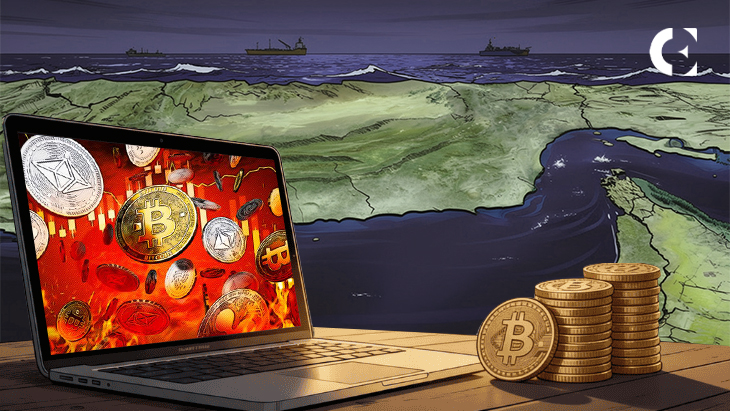

- Hormuz Safe would offer Bitcoin insurance cover for ships crossing the Strait of Hormuz.
- Iran’s plan faces sanctions risk as OFAC warns against payments for safe passage fees.
- Key policy details remain unclear, including pricing, underwriters, and claims rules.
Iran’s reported Hormuz Safe Bitcoin plan has turned the Strait of Hormuz into a test case for crypto, shipping risk, and sanctions pressure. The proposed service would offer Bitcoin-settled insurance for vessels crossing one of the world’s most sensitive energy corridors.
The Iran Bitcoin shipping insurance plan was reported by Fars News Agency and later covered by international outlets. It came during the U.S.-Israel war on Iran, which began on February 28, 2026.
The service is called Hormuz Safe. According to the report, it would provide cryptographically verifiable insurance policies for shipments moving through the Persian Gulf, the Strait of Hormuz, and surrounding waters. Payments would be settled in Bitcoin.
Fars reported that the Hormuz Safe model could generate more than $10 billion in revenue. However, the report did not explain how the figure was calculated, and no full policy terms have been publicly verified.
What Is Hormuz Safe Crypto?
The question, “What is Hormuz Safe crypto?” has gained attention because the plan sits between maritime insurance and digital payment rails. Hormuz Safe is presented as a crypto-linked insurance service for ships and cargo owners seeking coverage in the Gulf region.
The reported offer would allow insurance payments through Bitcoin instead of standard banking channels. This matters because Iran remains under strict financial sanctions and faces limited access to dollar-based systems. Outlook Business reported that the platform is aimed at ships operating through the Strait of Hormuz and nearby Persian Gulf waters. It also said the plan raises questions over sanctions, shipping, and global energy security.
The service has not yet shown the public structure of a standard marine insurance product. Standard coverage depends on large reserves, reinsurance support, trusted underwriters, and recognized claims systems. Hormuz Safe has not yet shown those features in public documents.
Iran Hormuz Bitcoin Plan Tests Global Shipping Rules
Iran’s Bitcoin Strait of Hormuz shows Tehran’s attempt to link ship passage with insurance coverage. It also connects Bitcoin settlement to a strategic maritime chokepoint.
The Strait of Hormuz links the Persian Gulf with the Gulf of Oman and the Arabian Sea. The U.S. Energy Information Administration describes it as one of the world’s most important oil transit chokepoints.
The International Energy Agency says about 20 million barrels per day, or around 25% of global seaborne oil trade, pass through the strait. It also says about 19% of global LNG trade moves through the route.
This makes the reported Strait of Hormuz crypto plan more than a payment experiment. It touches oil, LNG, sanctions, war-risk insurance, and the legal status of international waterways.
Hormuz Safe, How Does It Work?
Hormuz Safe how does it work remains unclear because no complete public framework has been released. Available reports say cargo coverage would begin after confirmation, with a signed receipt issued to the owner.
The reported structure suggests that a shipper or cargo owner applies for coverage, pays in Bitcoin, and receives a digitally verifiable policy or certificate. However, key details remain missing, including the underwriter, claims process, exclusions, payout funding, and legal venue.
CoinDesk reported that full policy terms, underwriters, exclusions, and claims procedures were not immediately available. It also said the platform’s operational use was not independently verified.
For global shipping firms, a digital receipt may not be enough. Ports, banks, charterers, and cargo owners usually require insurance documents enforceable across jurisdictions.
Iran Hormuz Bitcoin Plan Faces Legal Pressure
The Iran Hormuz Bitcoin plan also enters a wider legal dispute over possible transit charges. Al Jazeera reported that Iran has floated transit charges or security fees since the war began.
Some shipping firms may view Hormuz Safe as another form of toll if the service becomes linked to passage through the strait. Report highlighted that Iran appears to present the system as insurance instead of a direct transit charge.
The U.S. Treasury’s OFAC says payments to Iran or the IRGC for safe passage through the Strait of Hormuz are not authorized for U.S. persons. OFAC also warned that Iranian demands may involve fiat currency, digital assets, offsets, swaps, or other in-kind payments.
Can Iran Use Bitcoin to Evade Sanctions?
Iran may use Bitcoin to receive payments outside normal banking channels, but that does not remove sanctions risk for companies involved. Any crypto payment linked to sanctioned Iranian entities could still face scrutiny through wallet records, exchange activity, shipping documents, ownership trails, and port records.
This makes Iran sanctions Bitcoin risk central to the Hormuz Safe debate. Shipping is a highly regulated global industry, where tanker voyages involve owners, charterers, insurers, ports, cargo buyers, banks, and flag states.
Those links create several compliance checkpoints. Even if a vessel receives Iranian-issued coverage, lenders, ports, reinsurers, or regulators may still reject it because of sanctions exposure.
Iran’s Shipping Bitcoin Insurance Price Remains Unclear
Iran’s Bitcoin shipping insurance price has not been confirmed in public reports. Fars pointed to possible annual revenue above $10 billion, but that figure does not explain individual premiums or ship-level pricing.
Al Jazeera reported that Bloomberg had earlier described ad hoc transit fees reaching as much as $2 million per voyage. That report concerned transit charges, not a confirmed Hormuz Safe premium table.
This distinction is important. A toll, security fee, war-risk premium, and crypto insurance payment are separate charges. Reports do not yet show how Iran would separate them.
War-risk costs have already surged. Al Jazeera reported that insurance costs for vessels crossing the strait rose as much as fivefold in March after the first U.S.-Israeli strikes on Iran. Several leading insurers also cancelled war-risk coverage in the Gulf region soon after the war started. Some later returned with government-backed support, but shipowners remain cautious.
Iran Bitcoin 2026 Activity Meets Maritime Insurance Risks
Iran Bitcoin 2026 adoption provides another layer to the story. CoinShares analyst Chris Bendiksen, cited by Business Insider and Economic Times, said around 14 million Iranians use Bitcoin.
He also said annual transaction volumes were growing 11.8% year over year and represented about 2.2% of Iran’s GDP. That shows Bitcoin already has a notable domestic footprint. Still, domestic adoption does not prove that global shippers would use Hormuz Safe. Consumer crypto activity and maritime insurance are very different markets.
Marine insurance needs trust, scale, and enforceable claims. It also needs international acceptance. Experts cited by Al Jazeera said Iran would face serious financial, legal, and operational barriers.
Strait of Hormuz Crypto Risk Meets Energy Markets
The Strait of Hormuz crypto issue is now tied to global energy flows. The IEA says the route is central for oil and LNG exports from major Gulf producers.
The agency notes that LNG from Qatar and the UAE depends heavily on Hormuz transit. This makes Asian buyers highly exposed when the route is disrupted.
Reuters reported on May 20 that three supertankers carrying 6 million barrels of crude had transited the strait after being delayed for more than two months. The movement showed limited activity, not a full return to normal shipping.
Reuters also reported that daily traffic had fallen from around 125 to 140 vessels before the conflict to about 10 recently. Hundreds of vessels were still stranded.
That disruption explains why Hormuz Safe is attracting attention. It also explains why many shipping firms may avoid the route, even if insurance is offered.
Bitcoin Iran War 2026 Tests Hormuz Safe Limits
Bitcoin Iran war 2026 is now a geopolitical finance story. Iran is reportedly testing whether Bitcoin could support shipping-linked revenue at a time of conflict, sanctions, and disrupted trade.
The plan may help Tehran frame payments as insurance rather than tolls. Yet the legal and commercial barriers remain high. No country or shipping firm had announced support for the Iranian insurance offer as of Al Jazeera’s May 18 report. The U.S. and China have both opposed tolls for transit through the strait.
UN Secretary-General Antonio Guterres also called for the passage to open without tolls or discrimination. That position adds pressure against any system seen as a forced fee.
For now, Hormuz Safe looks like a high-risk, wartime proposal. It may attract limited interest from firms less exposed to Western sanctions. Most major shippers are likely to demand recognized cover, clear claims rules, and legal certainty.
The main test is not whether Bitcoin is able to move payment. The harder issue is whether Hormuz Safe could satisfy ports and banks, avoid sanctions exposure, and prove that claims would be paid after a major loss.
Related: Bitcoin’s Market Structure Is Flashing Warning Signs, Here’s Why
Disclaimer: The information presented in this article is for informational and educational purposes only. The article does not constitute financial advice or advice of any kind. Coin Edition is not responsible for any losses incurred as a result of the utilization of content, products, or services mentioned. Readers are advised to exercise caution before taking any action related to the company.