
- July CPI cools, with headline CPI up 3.4% YoY, core CPI up 2.5% YoY, while energy prices fell 1.5%.
- Prediction markets still favor a September Fed rate hold at 68.2% versus 17% cut as Fed seeks clearer proof.
- This raises the question of why softer inflation has not translated in expectations for a September rate cut.
On August 12, 2026, the Bureau of Labor Statistics (BLS) released its July Consumer Price Index (CPI) report, showing annual inflation cooling to 3.4% as energy prices fell 1.5%. Despite softer inflation, traders on prediction platforms like Kalshi still favor a Fed rate hold at the September 2026 Federal Open Market Committee (FOMC) meeting, with 68.2% pricing a hold versus 17% for a cut.
Inflation Cooled So Why Isn’t the Fed Cutting Rates?
July CPI data reflects a moderation of inflation, with headline CPI at 0.1% MoM and 3.4% YoY, and core CPI at 0.2% MoM and 2.5% YoY. Energy prices dropped 1.5% over the month, driven by a 2.9% dip in gasoline. However, energy remains up 14.7% year-over-year due to ongoing regional trade disruptions stemming from conflicts in the Middle East.
On the surface, this looks like progress toward the Federal Reserve’s 2% inflation target. A surprise loss of 23,000 jobs in the July employment report gave the Fed a compelling reason to avoid further tightening. Holding rates right now could overly stress a softening labor market where trailing 12-month wage growth of 3.2% is already lagging behind inflation at 3.4%.
Why Markets Still Price a September Fed Hold Despite Cooler Data
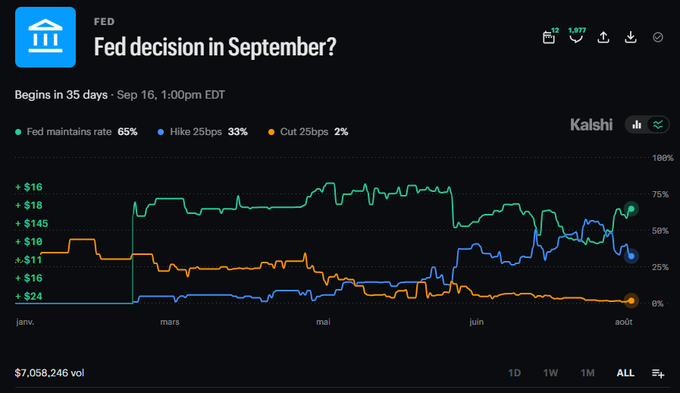
Despite softer CPI data in July, prediction markets and Fed funds futures still favor a rate hold in September. For instance, on platforms like Kalshi and Polymarket, the odds of the Fed holding the same target range are currently at 68.2%, compared with 17% for a 25-basis-point cut and 9.6% for a hike.
Source: X
This shows that traders still see a hold as the most likely outcome, while expectations for a rate cut remain limited despite cooler inflation. Policymakers under Chair Kevin Warsh have repeatedly stressed the need for sustained progress rather than one or two softer monthly prints.
What It Means for Markets, Loans and Investors
The cooler inflation print is good news, but the forecast for a September hold implies “higher for longer” in the short term. Mortgage rates, auto loans, credit-card APRs and other borrowing costs may not meaningfully decline in the upcoming weeks. Cash holders can still benefit from attractive savings, money-market, and CD yields.
Meanwhile, Wall Street equity futures surged following the release, while Treasury yields were lower as rate-hike worries eased. Crypto investors should expect volatility around upcoming inflation and employment data rather than a clear direction from this CPI report. Risk assets could benefit from cooler inflation, but there is still a lack of evidence of sustained disinflation.
Furthermore, the FOMC remains highly divided. In late July, members voted 9–3 to pause, with three regional presidents favoring a rate hike. Fed Chair Kevin Warsh also has shifted away from forward guidance, and the next employment report and August CPI data will be more significant heading into the September meeting.
Related: How the July CPI Report Might Impact Bitcoin and Market Outlook
Disclaimer: The information presented in this article is for informational and educational purposes only. The article does not constitute financial advice or advice of any kind. Coin Edition is not responsible for any losses incurred as a result of the utilization of content, products, or services mentioned. Readers are advised to exercise caution before taking any action related to the company.