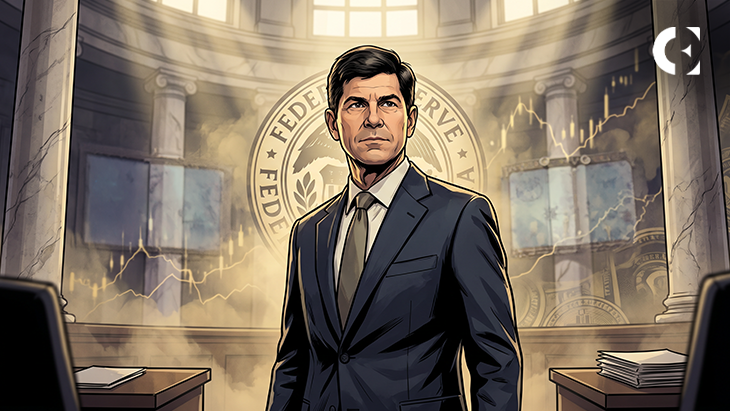

- Senate confirmed Kevin Warsh as Fed Chair in a 54 to 45 vote on Wednesday.
- Jerome Powell stays on the Fed board as governor with a minimal public role.
- Warsh could be sworn in as early as Saturday, pending ethics requirements.
The US Senate confirmed Kevin Warsh as the 17th Chair of the Federal Reserve Board of Governors on Wednesday in a 54–45 vote. Warsh replaces Jerome Powell, who will remain on the Fed board as a governor rather than departing entirely.
Democrat John Fetterman of Pennsylvania was the only member of his party to cross the aisle and support Warsh’s confirmation, joining Republicans in backing President Trump’s nominee.
Powell’s Exit and What Happens Next
Powell will step down as chair but stay on as a Fed governor. He remains the chair until Friday midnight. Warsh could be sworn in as early as Saturday once the Senate paperwork reaches the White House and Warsh completes initial requirements with the Office of Government Ethics, including beginning the divestiture of his investment portfolio.
President Trump has been publicly critical of Powell throughout his tenure, repeatedly accusing him of cutting rates too late and applying pressure for more aggressive monetary easing. Warsh’s confirmation ends that chapter.
What Kind of Fed Chair Warsh Will Be
The first major test comes on June 17 when Warsh presides over his first Federal Open Market Committee meeting. No rate cut is expected.
Warsh has previously said Fed officials talk too much and has expressed skepticism about forward guidance, the practice of signaling future rate decisions in advance. Analysts expect him to remove the forward guidance language from the post-meeting statement at his first opportunity. He has also expressed reservations about the quarterly dot plot projections, though changing that format may take longer.
On rates, Warsh’s publicly stated case for cutting, that AI-driven productivity gains would bring down inflation, is not yet supported by the data. With CPI running at 3.8% and the Iran war keeping oil elevated, the path to rate cuts remains unclear. Most economists do not expect inflation to roll over meaningfully until September at the earliest, even if a peace deal materialized today.
What the Confirmation Means for Markets
A new Fed chair at a moment of elevated inflation, a closed Strait of Hormuz, and a Trump-Xi summit creates genuine policy uncertainty. Markets have already priced out rate cuts for 2026 and assigned a 35% probability to a hike by December.
Warsh will need to build consensus among FOMC members who have their own views on the rate path. That process takes time. The drama at the June meeting, analysts say, will be less about rates and more about watching how Warsh commands the room and signals what kind of Fed he intends to run.
Related: David Sacks Calls CLARITY Act a Key Step for U.S. Crypto Policy
Disclaimer: The information presented in this article is for informational and educational purposes only. The article does not constitute financial advice or advice of any kind. Coin Edition is not responsible for any losses incurred as a result of the utilization of content, products, or services mentioned. Readers are advised to exercise caution before taking any action related to the company.