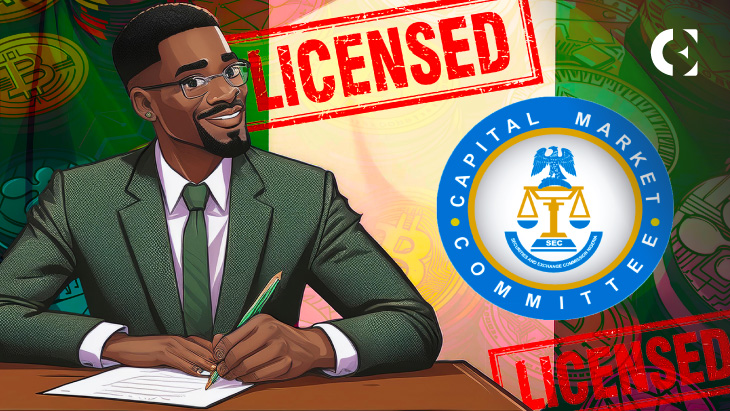

- Nigeria’s Investments and Securities Act 2025 (ISA 2025) legally classifies digital assets as securities under the SEC.
- All platforms serving Nigerian users must be licensed by the Securities and Exchange Commission (SEC).
- Using unlicensed exchanges risks restricted bank and naira‑fiat access, domain blocks, and loss of legal recourse.
Nigeria’s Crypto Regulatory Framework in 2026
Under the Investments and Securities Act 2025 (ISA 2025), the Nigerian government formally recognised digital assets, including cryptocurrencies, as securities under capital markets law. The Act was enacted by the National Assembly and signed into law in March 2025, giving the Securities and Exchange Commission (SEC) clear authority to regulate digital assets and platforms.
Prior to ISA 2025, Nigeria’s approach to crypto lacked legal clarity, leaving much of the market in ambiguity despite widespread crypto use. The new law brings digital assets into the capital markets regulatory perimeter, meaning exchange operations, custody, and offerings now require SEC licensing and oversight.
The SEC’s regulatory framework has been further shaped by the Amended Digital Assets Rules, which came into effect in 2025. These rules expand regulatory definitions, spelling out activities and entities that must be licensed, including Virtual Asset Service Providers (VASPs), digital asset exchanges (DAXs), custodians, and intermediaries.
The SEC’s official “Find a Registered Operator” portal lists crypto-related firms that have registered with the commission and emphasises that operators must be registered before beginning operations in Nigeria.
What SEC Licensing Means for Crypto Exchanges
When a crypto platform is SEC‑licensed and compliant, it means it has met regulatory requirements designed to protect users. These include:
- Capital Requirements: Licensed platforms must hold a minimum capital reserve to ensure they can meet financial obligations.
- AML and KYC Compliance: Strong anti-money-laundering procedures and customer due diligence must be implemented, aligned with internationally recognised standards.
- Cybersecurity and Custody Standards: Platforms must secure users’ digital assets and data, including encrypted storage and incident response planning.
- Investor Protection Mechanisms: Licensed platforms must provide transparent fees, dispute resolution processes, and clear user terms.
- Ongoing Reporting and Audits: Regular disclosures and compliance audits are required to maintain the license.
The SEC also uses the Accelerated Regulatory Incubation Programme (ARIP) to guide platforms towards full licensing, with limits and milestones designed to transition firms into fully approved operators under the Digital Assets Rules.
Examples of platforms that operate within the SEC regulatory framework include Monica Cash, Quidax, Busha, and Roqqu, which have either received approval or are aligned with regulatory requirements in 2026.
Monica Cash is a prominent example with a large user base and automatic crypto‑to‑naira conversion without peer‑to‑peer negotiation, while Quidax and Busha are locally founded exchanges offering trading pairs with naira. Users are advised to verify the current registration status on the SEC register before engaging with any platform.
Risks of Using Unlicensed Crypto Platforms in Nigeria
No Legal Recourse if Funds Are Lost
If a user trades on an unlicensed or offshore exchange that is not SEC‑registered, Nigerian law provides no guaranteed legal protection for those funds. This means that if the platform becomes insolvent, is hacked, or freezes assets, Nigerian authorities such as the SEC or the Economic and Financial Crimes Commission (EFCC) may have limited power to assist in recovery. Legal remedies and investor protections applicable to licensed operators do not extend to unlicensed platforms.
Restricted Bank Access and Naira Fiat Conversion
Unlicensed platforms often do not process local currency pairs. Commercial banks and the Central Bank of Nigeria (CBN) may block naira deposits or withdrawals when dealing with offshore or unregistered platforms, disrupting users’ ability to convert between fiat and crypto. This restriction reflects ongoing coordination between regulators and banking institutions to enforce compliance.
Domain Blocking by ISPs and Regulators
Regulatory authorities in Nigeria, such as the Nigerian Communications Commission (NCC), have the authority to direct local internet service providers to block access to unlicensed platforms’ websites or apps. This practice is part of the broader strategy to ensure market integrity and consumer protection.
Tax and AML Exposure
Licensed platforms are required to report transaction data above specific thresholds to anti-money-laundering systems, such as goAML. Using unregulated peer‑to‑peer systems or offshore platforms may bypass these procedures, potentially triggering AML or financial investigations. Users could face scrutiny for unverified capital outflows or non‑compliance with reporting rules.
Benefits of Using Licensed SEC‑Compliant Platforms
Consumer and Legal Protections
Users on SEC‑licensed platforms have defined legal protections and access to dispute resolution channels through the SEC if issues arise. Licensed status ensures that platforms meet minimum operational standards and investor confidence mechanisms.
Bank and Naira Support
Licensed VASPs integrate with local banking systems, enabling users to deposit and withdraw naira without arbitrary blocks by commercial banks or the CBN. This facilitates smoother fiat‑to‑crypto conversions and reduces payment friction for traders.
Regulatory Oversight and Reporting
Ongoing SEC oversight through reporting and audits ensures that licensed platforms uphold compliance continuously. This reduces the chances of rogue activities and enhances user protection, especially where capital requirements and cybersecurity standards are enforced.
Related: UK FCA Registered Crypto Exchanges: What Happens If Your Exchange Isn’t Approved
How to Verify an Exchange’s SEC Status
The SEC’s Find a Registered Operator portal is the authoritative source to confirm whether a crypto platform is licensed in Nigeria. Users should verify registration before depositing funds or trading, as names and statuses can change over time.
Conclusion
As of 2026, Nigeria’s crypto market operates under a structured regulatory framework that recognises digital assets as securities and places them under SEC oversight. Using unlicensed crypto platforms exposes users to significant legal and financial risks, including loss of legal protections, disrupted banking access, ISP blocks, and possible AML investigations.
Conversely, SEC‑licensed platforms provide defined access to legal recourse, regulated operations, and integration with local financial systems. It remains essential for Nigerian crypto users to verify platform licensing status before engaging in trading, custody, or conversion activities.
Disclaimer: The information presented in this article is for informational and educational purposes only. The article does not constitute financial advice or advice of any kind. Coin Edition is not responsible for any losses incurred as a result of the utilization of content, products, or services mentioned. Readers are advised to exercise caution before taking any action related to the company.