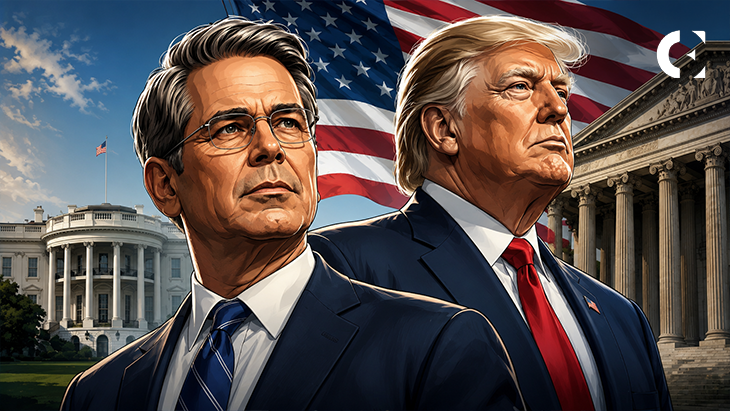

- Treasury Secretary Scott Bessent said the Trump administration will not allow a US CBDC.
- The House-backed CBDC ban expires in Dec 2030, raising concerns among Republicans.
- Bessent also asked Congress to pass the CLARITY Act to establish clear crypto rules.
US Treasury Secretary Scott Bessent said the Trump administration will not allow a central bank digital currency in the United States, repeating the White House position during a press briefing on Thursday.
According to Journalist Eleanor Terrett, Bessent said a CBDC was “off the table” and framed it as a possible tool for financial tracking and surveillance.
Instead, he said the administration wants digital asset businesses, stablecoin issuers, and crypto trading activity operating inside the US regulatory system instead of offshore markets.
CBDC Ban Faces a 2030 Deadline
While the administration continues to oppose a Federal Reserve-issued digital dollar, the current legislative setup is not permanent.
The House-passed ROAD to Housing Act includes a temporary ban on a Fed-issued CBDC, but that restriction expires in December 2030. Some Republican lawmakers have warned that the expiration could reopen the door for the Federal Reserve to revisit a digital dollar program later in the decade.
Former Fed Governor and current Fed Chair Kevin Warsh has also stated he would block movement toward a CBDC if it remained within his authority. However, Warsh’s current term is also scheduled to end in 2030, matching the sunset date attached to the proposed CBDC restriction.
White House Pushes Crypto Onshore
The administration is now tying its anti-CBDC stance directly to broader crypto regulation. Bessent said most of the fraud, failures, and instability seen across digital assets came from activity operating outside the United States.
His position is that stricter domestic rules would move trading, issuance, and custody activity back under US oversight. He specifically called on Congress to pass the CLARITY Act, which would establish federal rules for digital asset markets and define oversight responsibilities between regulators.
The bill already cleared the Senate Banking Committee earlier this month after weeks of negotiations involving banking groups, crypto firms, and lawmakers debating stablecoin rewards, ethics rules, and regulatory authority.
Several Democrats, including Senators Ruben Gallego and Angela Alsobrooks, supported the bill at the committee level alongside Republicans. Both senators later signaled that final support is not guaranteed unless changes are made before the full Senate vote.
Meanwhile, Senator Elizabeth Warren continues to oppose the legislation, arguing it does not properly address conflicts tied to crypto businesses connected to President Donald Trump and his family.
Related: Fed Confirms CBDC Pause While Expanding Digital Asset Oversight
Disclaimer: The information presented in this article is for informational and educational purposes only. The article does not constitute financial advice or advice of any kind. Coin Edition is not responsible for any losses incurred as a result of the utilization of content, products, or services mentioned. Readers are advised to exercise caution before taking any action related to the company.