

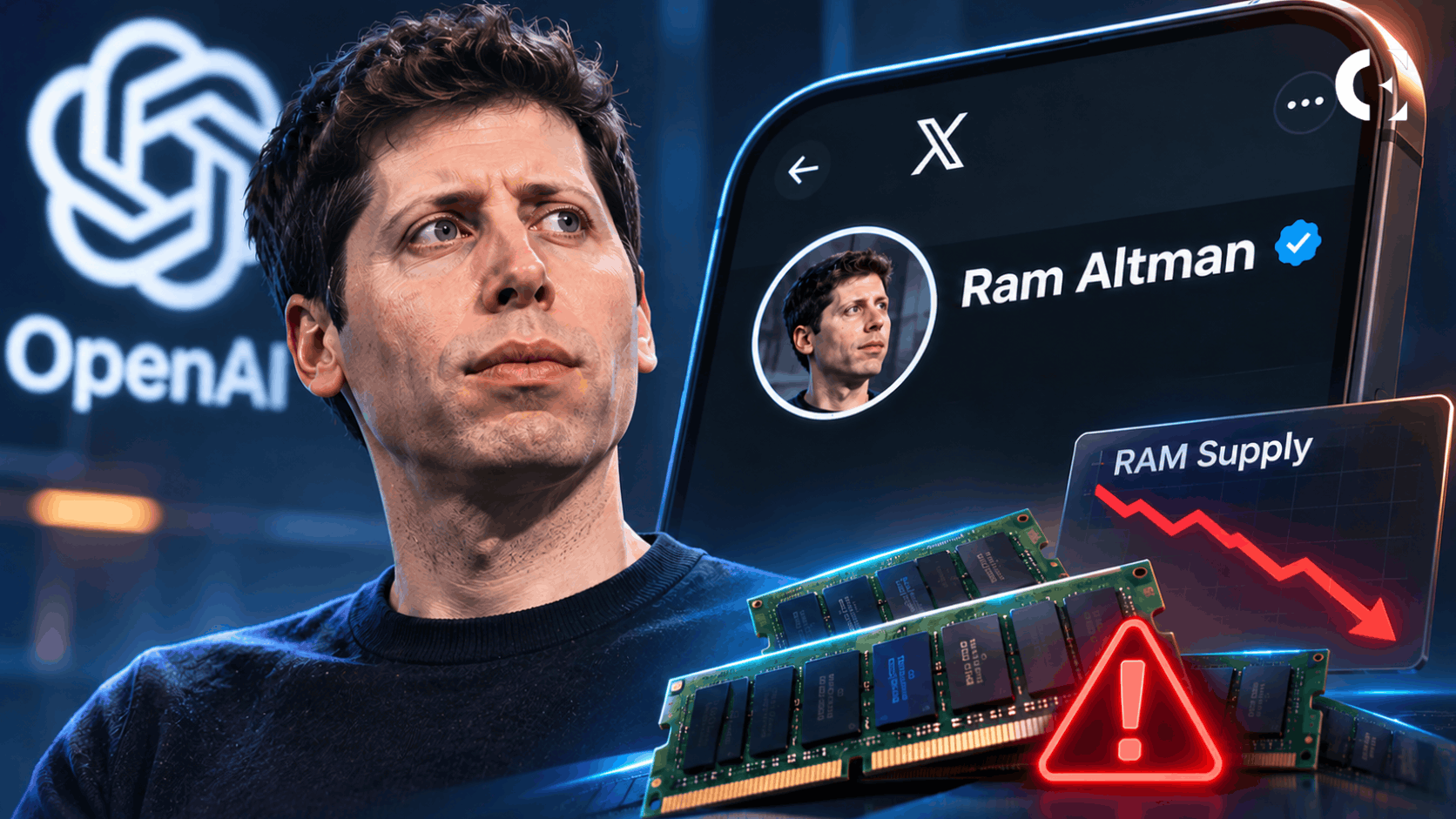

- Altman adopted the “Ram Altman” handle, later clarifying he wants memory output scaled.
- TrendForce predicts a 10-15% DRAM price jump by the end of 2026, tightening 2027 supply.
- AI demand diverts DRAM output from major chipmakers, shrinking consumer PC memory supply.
OpenAI CEO Sam Altman stirred up an industry debate about global computer memory shortages after temporarily changing his X handle to “Ram Altman.”
During an appearance on the Cheeky Pint podcast, Altman pointed out that most everyday PCs rarely use all the memory built into them, while large data centers can share that same memory across millions of users at once. Because of that gap, he argued that putting heavy amounts of RAM into individual home computers is a waste of the world’s limited memory supply.
Altman’s comments didn’t go over well with everyday PC users, many of whom feel that large AI companies are driving up hardware prices and causing memory shortages in the first place.
After a user joked that he should call himself “Ram Altman,” he played along and updated his X handle on November 4. Soon after, Altman clarified that his point had been misunderstood, explaining that he wants everyone to have plenty of memory and that tech manufacturers simply need to build more factories to keep up with demand.
Why Do AI Data Centers Require So Much Memory?
AI systems need considerable memory to handle tasks, store their core software data, and serve thousands of users at once. High-bandwidth memory (HBM) especially lets AI chips pull in huge amounts of data fast during training and inference.
However, HBM isn’t the same product as the DDR5 memory commonly installed in desktop computers. Both belong to the wider DRAM (Dynamic Random-Access Memory) market, but manufacturers have to split their production capacity between different products.
As such, chipmakers are shifting their focus to producing more profitable server memory and specialized HBM, which leaves less room to make standard computer RAM. Industry analysts at TrendForce predict that regular DRAM prices will jump by 10% to 15% by the end of 2026, and they warn that getting memory for home PCs could get even harder in 2027.
Because of this, AI companies are indirectly competing with regular consumers. Semiconductor manufacturers like Samsung, SK Hynix, and Micron supply both markets, and when they shift production toward AI products, there’s less capacity left for consumer memory.
Follow us on X for real-time crypto updates.
Can Production Keep Up, and Should Consumers Upgrade Now?
TrendForce’s analysts expect new chip factories to start boosting supply in late 2027, with big increases in production expected in 2028. Until those new facilities are fully up and running, memory shortages and tight supplies will likely continue.
Consumers who need more memory for work or gaming may benefit from upgrading sooner rather than holding out for lower prices.
That said, there’s no reason to panic buy RAM just because of Altman’s comments. Those with sufficient memory can monitor prices and wait for a better time to buy.
Subscribe to our YouTube channel for the latest crypto news.
Related: Sam Altman Warns Humanity Could “Lose Control” to AI
Disclaimer: The information presented in this article is for informational and educational purposes only. The article does not constitute financial advice or advice of any kind. Coin Edition is not responsible for any losses incurred as a result of the utilization of content, products, or services mentioned. Readers are advised to exercise caution before taking any action related to the company.