

- PayPal cut about 600 Indian jobs, reducing roughly 10% of its 6,000-plus workforce.
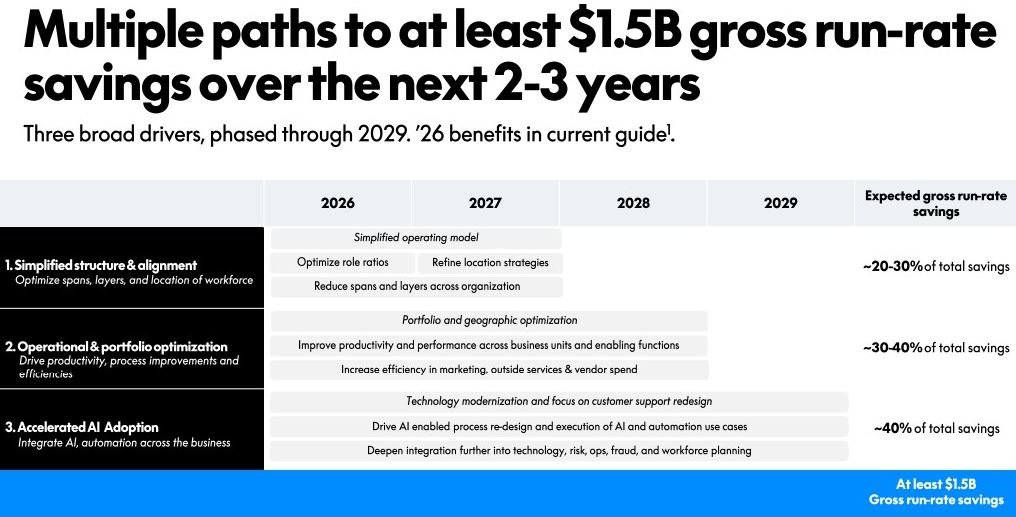
- PayPal targets $1.5B in run-rate savings, with about 40% tied to faster AI adoption.
- Block cut over 4,000 jobs, while Klarna swung from a $53M loss to a $9M profit.
PayPal has reportedly cut about 600 jobs in India, reducing roughly 10% of a workforce exceeding 6,000 employees. The reductions affect technology, engineering, operations, payments, and finance teams across Chennai, Bengaluru, and Hyderabad.
The move extends a restructuring built around simpler organizations, fewer duplicated roles, and heavier automation. It also shows that major technology hubs are no longer insulated from efficiency drives.
AI Drives PayPal’s $1.5B Cost-Savings Push
Despite those reductions, India remains central to PayPal’s global technology network. Chennai, which opened in 2008, is its largest technology center outside the United States, highlighting the country’s continued importance to the company’s operations.
Moreover, Bengaluru focuses on artificial intelligence, machine learning, and data science, while Hyderabad supports risk management, fraud prevention, and related data capabilities. Those functions sit inside the company’s automation push.
As part of that strategy, PayPal is targeting at least $1.5 billion in gross run-rate savings over the next two to three years. About 40% of those savings could come from increased AI adoption across technology, operations, risk, fraud, and workforce planning.
Notably, the restructuring is taking place even as payment activity continues to expand. PayPal’s second-quarter total payment volume increased 10% year over year to $486.4 billion, or 9% on a currency-neutral basis.
However, operating-margin pressure remains part of the company’s turnaround challenge. Consequently, PayPal is increasingly pairing transaction growth with tighter cost controls and higher productivity targets.
That approach is also emerging across the broader fintech industry. Block announced more than 4,000 job cuts in February, representing nearly half its workforce, while emphasizing the potential of smaller AI-enabled teams.
Block shares rose following the announcement, reflecting investor attention toward efficiency measures. Meanwhile, Klarna has faced similar pressure to convert rapid growth into stronger profitability.
Its second-quarter revenue increased 27% to $1.04 billion, while the company recorded a $9 million profit compared with a $53 million loss a year earlier. Together, these developments show how major fintech companies are increasingly combining growth with automation, leaner workforces, and stricter cost discipline.
Fintech Firms Shift From Growth to Leaner Payment Models
For investors, however, the shift is broader than payroll reduction. Fintech companies are judged on margins, organizational efficiency, and measurable productivity alongside transaction growth.
At the same time, PayPal’s strategy connects workforce restructuring with changes in payment technology. The company supports merchant acceptance of about 100 cryptocurrencies, including Bitcoin, Ethereum, and PYUSD.
Moreover, its agentic-commerce infrastructure allows AI assistants to initiate payments on behalf of users. Meanwhile, India is developing agentic-payment capabilities around UPI, demonstrating how automation is also moving deeper into payment infrastructure.
Together, those changes show cost discipline and payment automation advancing simultaneously. The emerging model combines higher transaction volumes with fewer organizational layers and more automated workflows.
Against this backdrop, PayPal’s restructuring reflects a broader pattern also visible at Block and Klarna. Growth remains important, but profitability, cost control, and measurable AI-driven efficiency are carrying greater weight across the fintech sector.
Related: India’s GDP Is Booming at 7.8%: So Why Aren’t Nifty and Sensex Rallying?
Disclaimer: The information presented in this article is for informational and educational purposes only. The article does not constitute financial advice or advice of any kind. Coin Edition is not responsible for any losses incurred as a result of the utilization of content, products, or services mentioned. Readers are advised to exercise caution before taking any action related to the company.