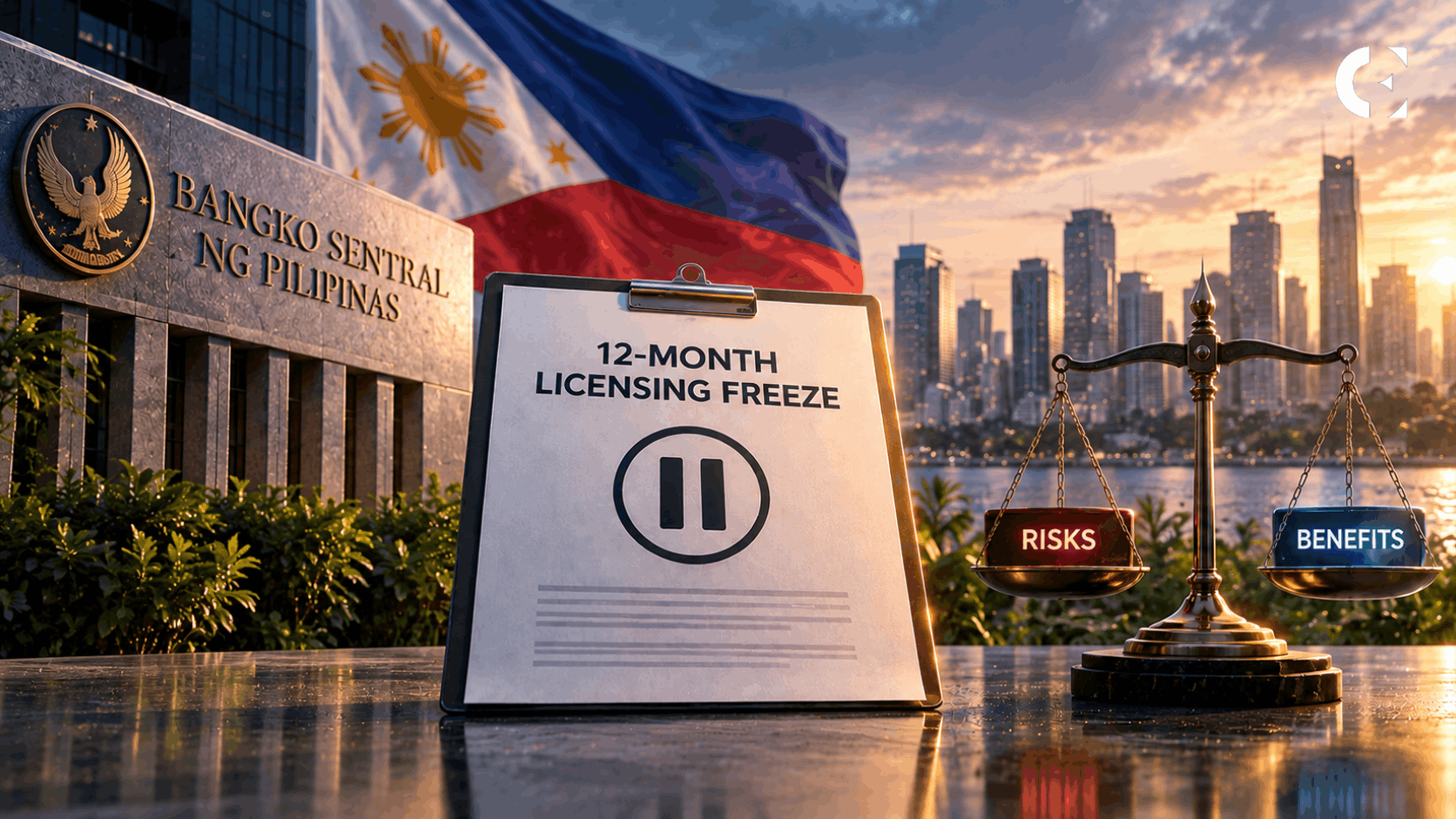

- The Philippines Central Bank plans to suspend issuing new crypto licenses for one year.
- Crypto businesses in the region could suffer temporary setbacks during the suspension.
- Tightened oversight could benefit fintech in the Philippines and improve security.
The Philippines’ financial regulator is proposing a one-year pause in the licensing of payment system operators. Bangko Sentral ng Pilipinas (BSP) Governor Eli M. Remolona Jr. said in a draft rule that the freeze will give the regulatory agency enough time to conduct a comprehensive review of its payment taxonomy, risk management rules, and supervisory structure.
Remolona Jr. noted that the licensing pause will cover all new requests for OPS registration, licensing, and related authorizations. As a result, entities without prior authorization would be prohibited from operating during the suspension period, while applications already submitted will remain under evaluation until the pause ends.
Potential Barriers for Crypto Business
As the regulatory policy tightens, the fintech and crypto ecosystem in the Philippines will undergo significant operational restructuring. This pause implies that new payment gateways, remittance channels, or e-wallets will face a strict regulatory standstill.
A crucial aspect of the BSP’s proposal involves banning “aggregator of aggregators,” a dominant segment of the Philippines fintech ecosystem. The regulator plans to initiate policies requiring payment intermediaries to stop outsourcing their merchant acquisition functions. A move that most people believe will restrict immediate growth in the region’s fintech sector.
Possible Long-Term benefits
Although the short-term effect of the proposed OPS licensing freeze could restrict fintech expansion in the Philippines, the accompanying tightening of oversight is designed to elevate the region’s standing as a secure digital finance hub.
Under the proposed regulatory structure, authorities will hold principal acquiring institutions directly accountable for the end merchants they support, eliminating regulatory blind spots. Institutions will be subject to mandatory reporting of material fraud, cyber breaches, unauthorized data access, and unlicensed merchant operations within 24 hours of detection.
Additionally, supervised institutions operating within the region will be required to perform a comprehensive audit of all existing merchant accounts within six months of the circular taking effect. This forms part of a holistic structure that aims to reduce systemic financial risks and strengthen trust in crypto and payments.
Related: Philippines Blocks Coinbase, Gemini as Crypto Licensing Rules Tighten
Disclaimer: The information presented in this article is for informational and educational purposes only. The article does not constitute financial advice or advice of any kind. Coin Edition is not responsible for any losses incurred as a result of the utilization of content, products, or services mentioned. Readers are advised to exercise caution before taking any action related to the company.