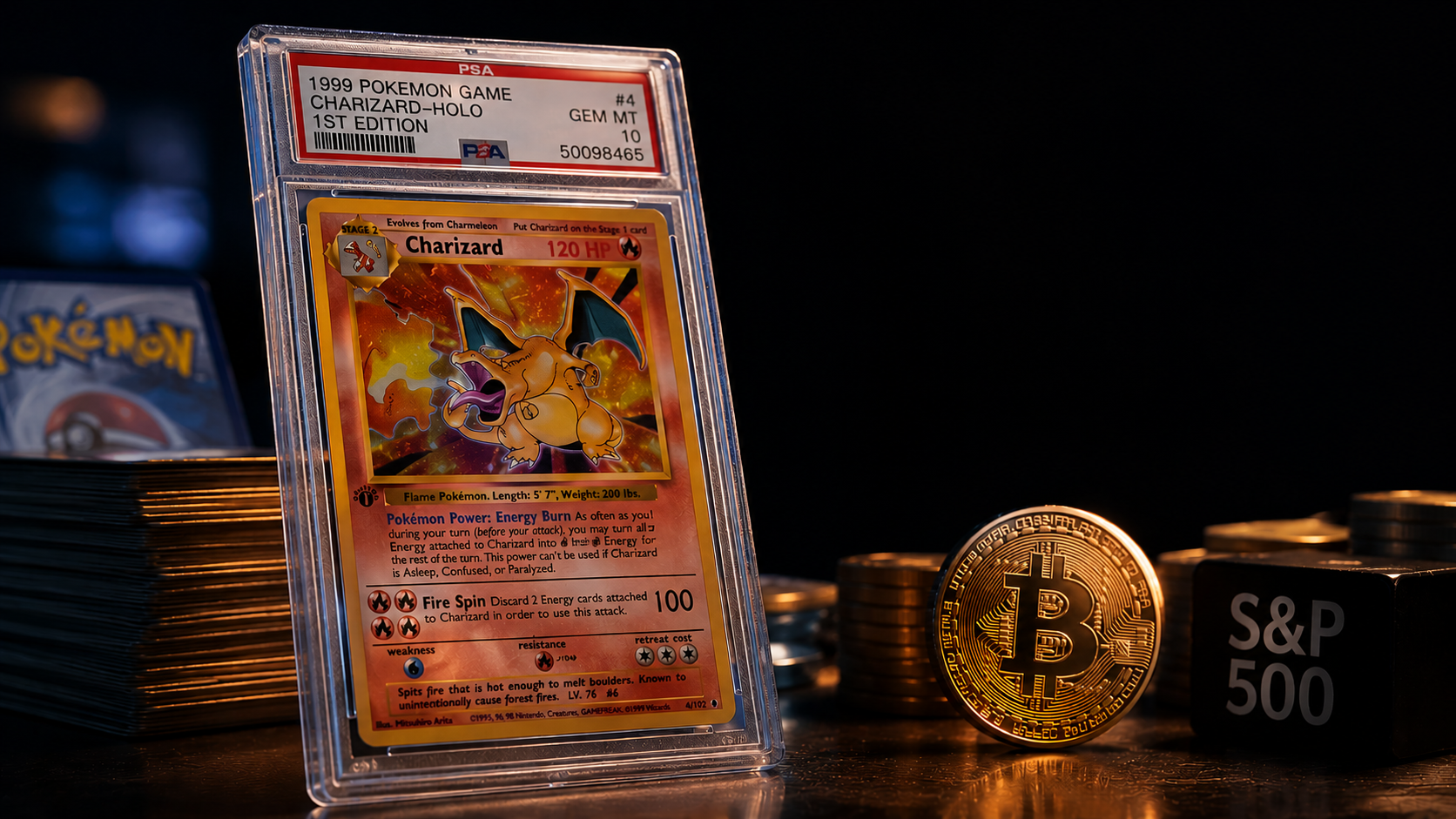

- Pokémon cards have outpaced stocks and Bitcoin over the past three months.
- Strong demand and scarcity are driving the Pokémon card market higher in 2026.
- Pokémon card gains come with risks including illiquidity, pricing bias, and authentication issues.
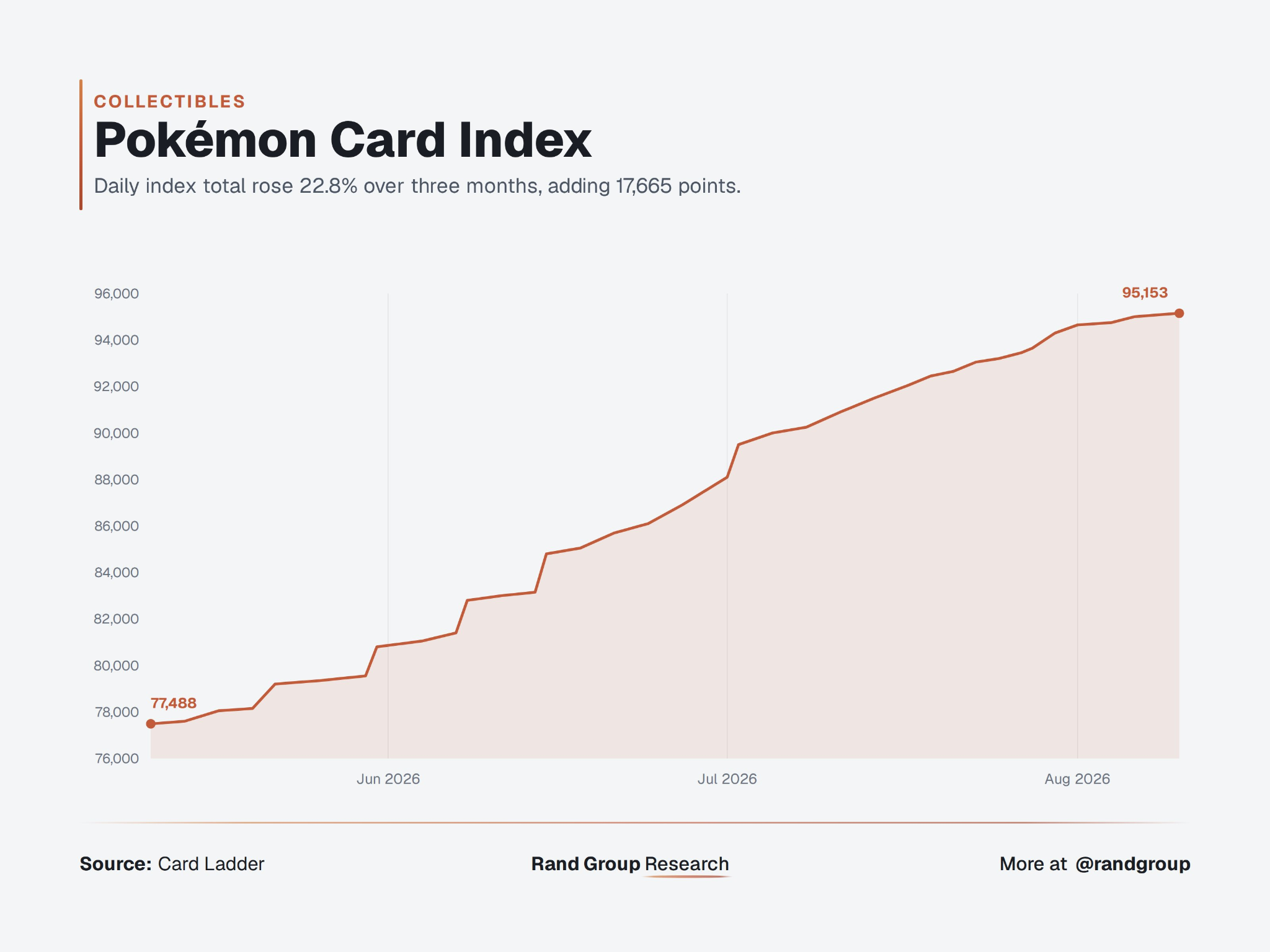
Pokémon trading cards have posted stronger returns than both the U.S. stock market and Bitcoin over the past three months.
The Pokémon Card Index rose 22.8% in the period while the S&P 500, the benchmark index of America’s 500 largest public companies, gained 4.7% over the same stretch. Meanwhile, Bitcoin fell 20.7%, amid a rough year for crypto.
A Longer-Running Trend
The three-month numbers extend a pattern that has held for most of 2026. Year-to-date, the Pokémon card index is up roughly 28%, versus about 13% for the S&P 500. Bitcoin, meanwhile, has dropped 29% for the year, trading in the low $60,000s.
Retail data backs up the demand behind the card index. Target has said its trading-card sales rose nearly 70% last year, putting the category on pace to top $1 billion, with Pokémon as the main driver. Walmart’s online marketplace reported similar growth, with Pokémon products seeing an especially steep jump in sales.
The demand has been visible in stores, too. In April, long lines formed outside a Costco in British Columbia before opening hours as shoppers sought Prismatic Evolutions booster boxes. Products that retail for around $100 have gone on to resell for several times that price on the secondary market.
Longer-term data shows an even wider gap. Analytics firm Card Ladder has tracked a cumulative return of more than 3,800% for Pokémon cards between 2004 and mid-2025.
Separately, sealed Pokémon booster boxes returned roughly 238% between 2021 and 2026, according to trading platform TCGinvest, compared with around 81% for the S&P 500 over the same window, though raw, ungraded single cards returned far less, closer to 38%.
Why It’s Happening Now
Two forces are driving the boom, according to analysts covering the space: nostalgia among millennials and Gen Z who grew up with the franchise, and genuine scarcity in high-grade vintage cards.
Crypto firms have also started building infrastructure to trade tokenized, vaulted cards on-chain, adding a new source of demand and liquidity to a market estimated at $10 billion to $15 billion.
The Caveats
Analysts covering the market flagged several risks alongside the gains:
- Illiquidity. Large card positions can take longer to sell than stocks or Bitcoin, especially at scale.
- Index composition. Card indices tend to track high-condition or sealed products, which have performed best. Average raw, played cards have lagged well behind the headline figures.
- Authentication risk. Counterfeits and subjective grading standards introduce complications not present in regulated securities markets.
- A short window. Three months is a brief comparison period, and Bitcoin has outperformed collectibles over some longer stretches. Rapid, hype-driven gains in the card market could reverse if collector interest cools.
In short, Pokémon cards are having a standout run, but the gains come with far more risk and uncertainty than the headline returns suggest.
Related: Bitcoin Price Prediction Drops to $63K as 228K BTC Floods Binance and ETFs Bleed $332M
Disclaimer: The information presented in this article is for informational and educational purposes only. The article does not constitute financial advice or advice of any kind. Coin Edition is not responsible for any losses incurred as a result of the utilization of content, products, or services mentioned. Readers are advised to exercise caution before taking any action related to the company.