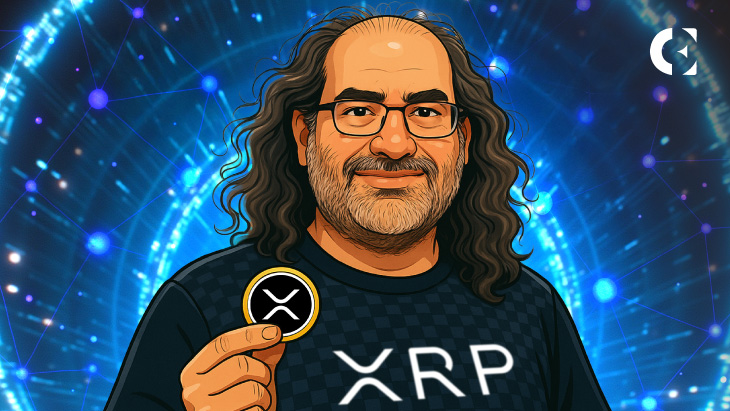

- David Schwartz says he was not awarded XRP at Ripple’s inception, challenging assumptions on early compensation.
- The longtime XRP Ledger developer clarified his role differed from Ripple’s founders and early stakeholders.
- Schwartz’s remarks have sparked renewed scrutiny over how XRP was distributed during the project’s early years.
Ripple CTO Emeritus David Schwartz said on X that he did not receive XRP compensation when Ripple was founded, reviving discussion about the company’s early structure and token distribution. He also said he is not generally considered a Ripple founder and only received XRP at a much later stage in his career.
The remarks come as users continue to question how early participants were rewarded during the formation of the XRP ecosystem.
The discussion began after X users referenced materials describing early Ripple contributors and their reported XRP allocations. In response, Schwartz wrote, “I’m not generally considered a founder of Ripple and did not receive any XRP as compensation until much, much later.”
He made the comment while addressing questions about why other early figures appeared to have disclosed holdings while his name was missing from similar records.
Early Ripple Roles and XRP Allocation Debate
The discussion on X widened as users referenced early Ripple contributors, including individuals described as co-founders and early technical staff. Some users claimed that early participants received large XRP allocations during the company’s formation, although those claims have not been independently verified.
Schwartz also joked about wearing a “CRYPTOGRAPHER-1” shirt, a reference that circulated among users following the discussion. Other community members raised questions about how early XRP distributions were structured and why roles differed among early contributors.
Founding History and XRP Ledger Development
David Schwartz is widely recognized as one of the early architects of the XRP Ledger, alongside Jed McCaleb and Arthur Britto. Development of the network began in 2011, and it launched in 2012. Chris Larsen joined later when the project evolved from NewCoin to OpenCoin and eventually became Ripple.
Schwartz has said his role at Ripple differed from that of a formal founder. He first joined as Chief Cryptographer and later became Chief Technology Officer in 2018. He stepped down from the role in late 2025 and now holds the position of CTO Emeritus.
Wider XRP Technical and Governance Debates
David Schwartz has also commented on several technical topics related to the XRP Ledger beyond the discussion on compensation. He recently addressed questions about staking taxation and said tax treatment would depend on how a staking system is designed and how rewards are distributed.
He also discussed governance on the XRP Ledger. Schwartz said node-based voting systems could be influenced if users create multiple nodes, raising concerns about how such systems measure consensus in practice.
Related: Charles Schwab Targets 2027 Launch of Crypto Spot Trading for Advisors
Disclaimer: The information presented in this article is for informational and educational purposes only. The article does not constitute financial advice or advice of any kind. Coin Edition is not responsible for any losses incurred as a result of the utilization of content, products, or services mentioned. Readers are advised to exercise caution before taking any action related to the company.