
- OFAC sanctioned Nobitex, Wallex, Bitpin, and Ramzinex, targeting most Iranian crypto inflows.
- Nobitex processed stablecoin transfers for Iran’s central bank to prop up the collapsing Iranian rial.
- Four Nobitex executives, including co-founders, are tied to Supreme Leader Khamenei’s inner circle.
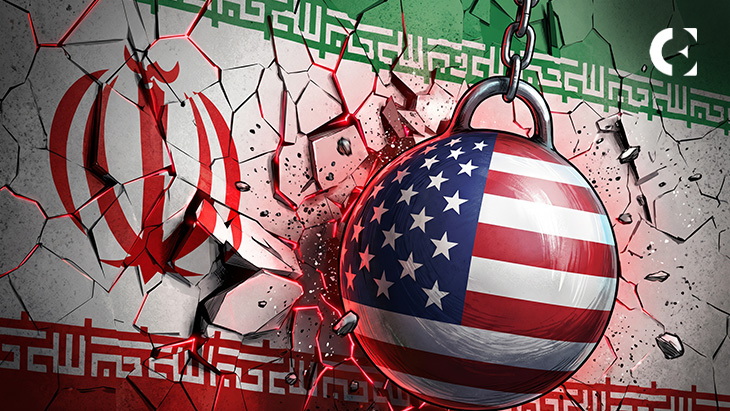
The US Department of the Treasury’s Office of Foreign Assets Control (OFAC) designated four Iranian cryptocurrency exchanges on June 2, representing the largest single enforcement action ever taken against Iran’s digital asset economy.
The exchanges sanctioned are:
- Nobitex: Iran’s largest crypto exchange, handling over 50% of all Iranian digital asset inflows in 2025
- Wallex: Iran’s second-largest exchange, accounting for 12% of Iranian crypto inflows
- Bitpin: Received 10% of Iranian digital asset inflows in 2025
- Ramzinex: Founded in 2018, processed over $2.45 billion in lifetime transactions
Four Nobitex executives were also personally designated, including chairman and former CEO Amir Hossein Rad, current CEO Seyed Ali Khoee, and two co-founders connected to Supreme Leader Khamenei’s inner circle through family ties to the Kharrazi family.
What These Exchanges Were Actually Doing
The Iranian crypto ecosystem reached $7.78 billion in 2025, according to Chainalysis data, growing despite domestic economic collapse and US military operations. Islamic Revolutionary Guard Corps (IRGC) affiliated addresses accounted for over 50% of the total value received by the Iranian crypto ecosystem in Q4 2025 alone.
The specific activities OFAC documented across these exchanges:
- Processing payments linked to IRGC-affiliated ransomware operators
- Facilitating hundreds of millions in stablecoin transfers for the Central Bank of Iran to prop up the collapsing Iranian rial
- Enabling regime insiders to access international exchanges during internet blackouts following US military operations
- Processing transactions connected to Hamas and other designated terrorist proxies
- Helping regime officials move assets offshore to shield wealth from seizure
“While Iran’s economy is in free fall, the regime has chosen to co-opt digital asset technologies for its own corrupt agenda,” said Treasury Secretary Scott Bessent.
Implications for Global Financial Institutions
The designation creates immediate compliance obligations for every crypto exchange, stablecoin issuer, and financial institution globally. Any foreign company that continues processing transactions for these four exchanges now risks being cut off from the US financial system entirely.
ZachXBT flagged an additional concern, calling for sanctions on Iranian OTC brokers operating in Canada, including Nia Nations Exchange and Million Exchange, citing their alleged use in recent violent home invasion and extortion cases to launder crypto proceeds.
The Broader Campaign
The Treasury confirmed the broader Economic Fury campaign has already frozen nearly half a billion dollars in regime-linked cryptocurrency. The campaign has simultaneously targeted Iran’s shadow banking networks, weapons supply chains, oil smuggling operations, and now its primary domestic crypto infrastructure.
Related: SA High Court Rules Bitcoin as Capital Under Exchange Control Laws
Disclaimer: The information presented in this article is for informational and educational purposes only. The article does not constitute financial advice or advice of any kind. Coin Edition is not responsible for any losses incurred as a result of the utilization of content, products, or services mentioned. Readers are advised to exercise caution before taking any action related to the company.