

- The U.S. 30-year Treasury yield has surged to 5.72%, marking a new 24-year high not seen since 2002.
- Bitcoin’s footprint is increasingly showing aggressive negative delta as price declines from the $86K area.
- BTC is approaching the $81.2K monthly 0.5 and 4H order block, putting the key support zone in focus.
The U.S. 30-year Treasury yield has pushed to around 5.72%, marking a sharp rise in long-term borrowing costs. At the same time, Bitcoin (BTC) is displaying more aggressive negative delta as it falls from the $86,000 level, signaling robust sell-side market activity.
The combination of rising yields and bearish order flow could draw BTC toward the $81,200 monthly 0.5 and 4H order block. A reaction at this confluence could be key to determining whether BTC finds support or the downside extends further.
US 30-Year Treasury Yield Hits 5.72% as BTC Price Falls
On October 7, 2026, the US 30-year Treasury yield jumped to approximately 5.72% for the first time since 2002. This marks a notable rise in long-term borrowing costs amid ongoing concerns over inflation and fiscal pressures.
Meanwhile, in 2002, when the yields were similarly high, inflation was low at around 1.6% on an annual basis, the Fed funds rate was at 1.75%, and equities were sharply lower from peaks during the dot-com bust. Today’s 3.4% inflation and all-time-high stocks present a stark contrast.
That said, higher long-term yields tend to cause financial conditions to shrink and risk appetite to diminish. In the current environment, the move provides a clear risk-off backdrop as BTC trades lower. Even though the yield growth is not a direct price mover in crypto, it creates macro pressure in a time when BTC is already showing signs of weakness.
Bitcoin Negative Delta Intensifies as Price Falls From $86K
Bitcoin’s order book footprint is showing aggressive negative delta as price declines from the $86K area. The move indicates stronger sell-side trading in the spot market as BTC pulls back from the recent resistance area. As negative delta grows with the falling price, the order movement becomes more and more indicative of the sellers gaining more control over the short-term movement, maintaining pressure on the Bitcoin as it trades lower.
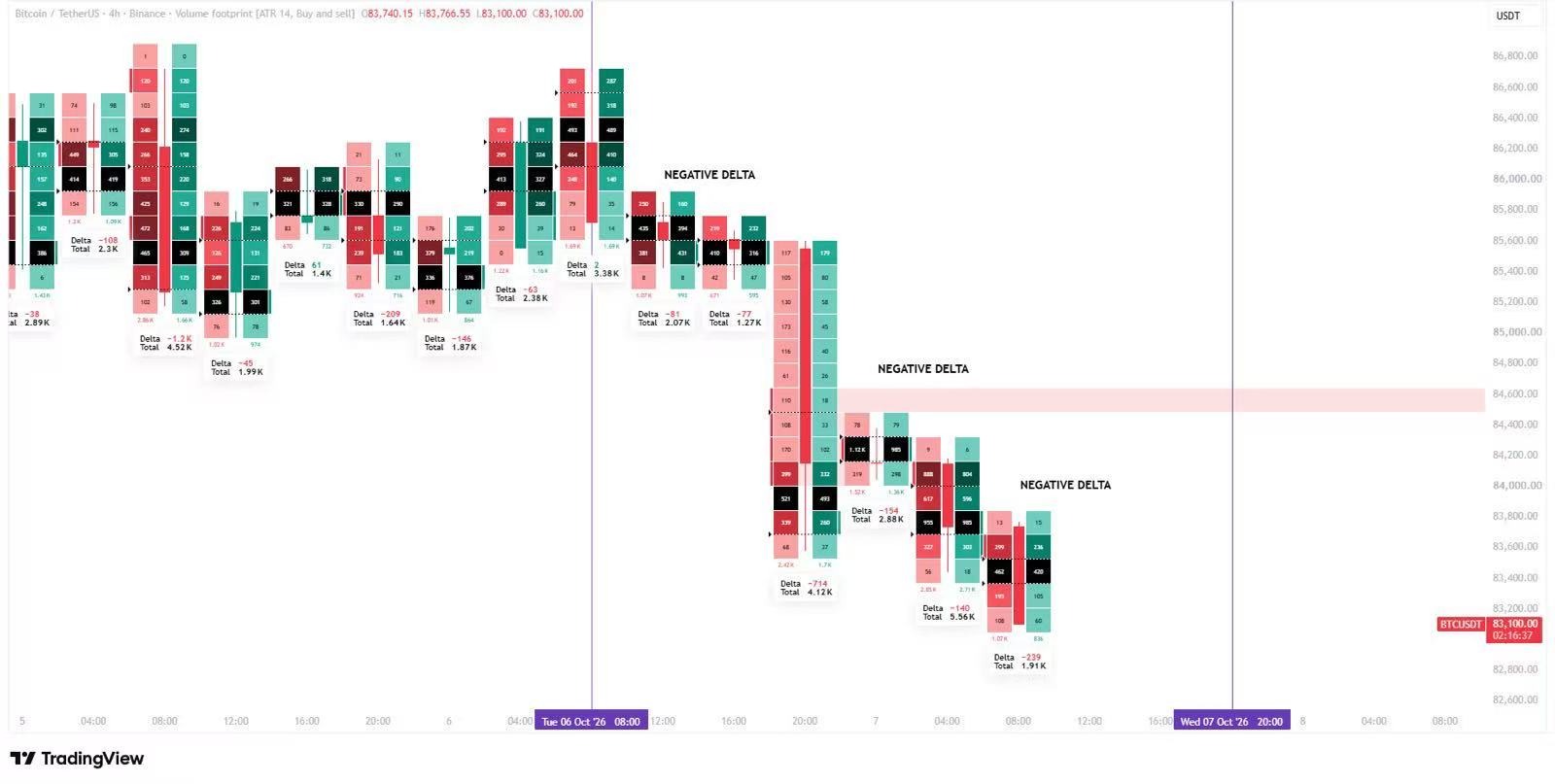
The widening negative delta shows that aggressive sellers are executing bids with high urgency, increasing sell-side pressure as BTC comes under renewed pressure. This increasing sell-side activity makes the downside move more notable as Bitcoin comes under renewed pressure.
At the same time, the concurrent surge in long-term Treasury yields also helps to develop the important macroeconomic context by suppressing the overall risk appetite. But, the yield move is a contextual element rather than a causal factor behind the fall of Bitcoin, with structural order book depletion at local peaks triggering the immediate fall.
Related: Why Rising Treasury Yields Are Keeping Bitcoin Below $67,000
Can Bitcoin Hold $81.2K Support as Yield Pressure Mounts?
At press time, BTC was trading at $83,294.67, down 3.9% over the past seven days. Bitcoin is fast approaching critical technical support at $81.2K, a confluence zone representing the monthly 0.5 Fibonacci retracement level and a major 4-hour bullish order block. This impending retest serves as a decisive line in the sand for macro market structure.
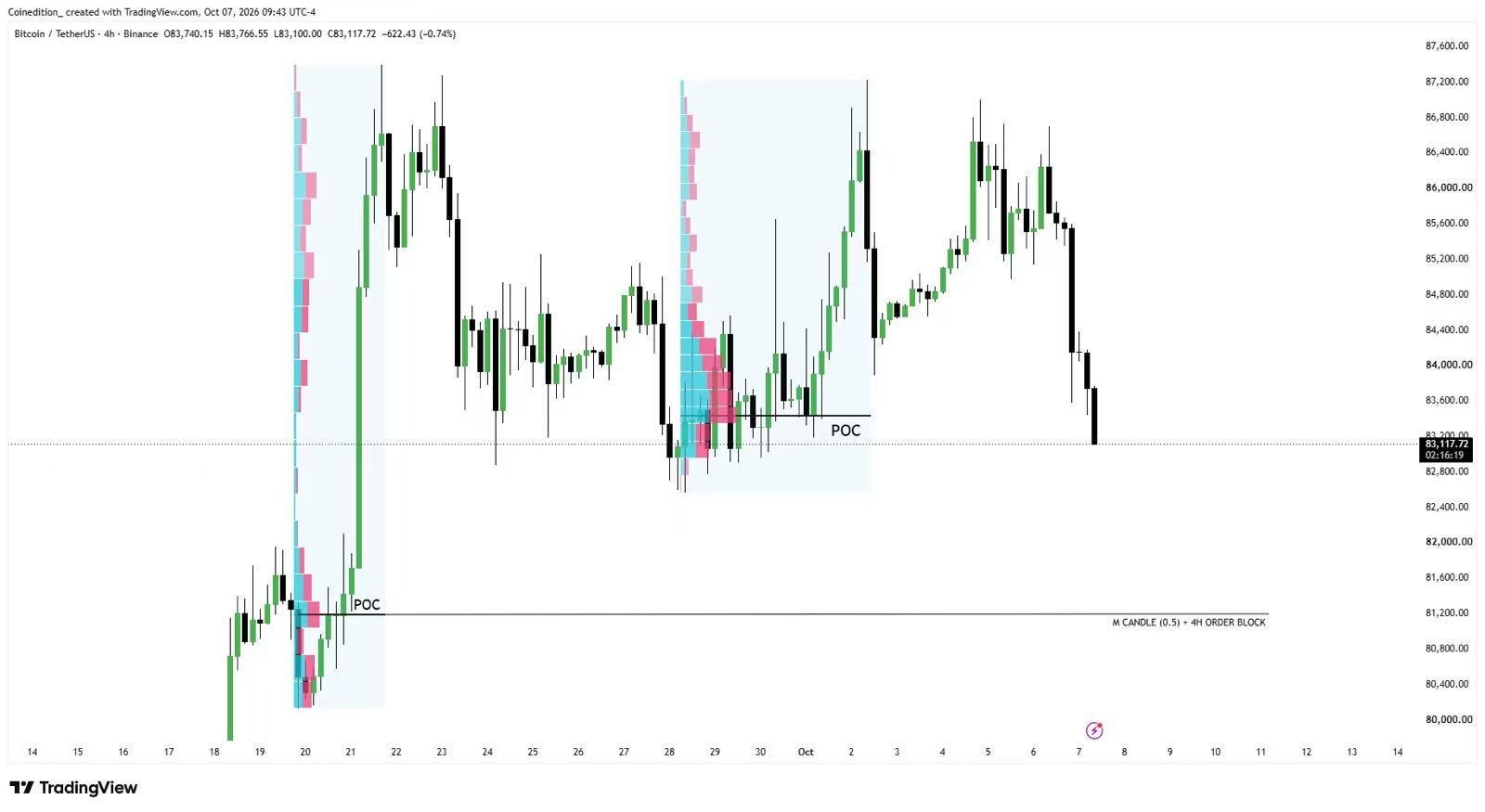
The $81.2K mark is also significant due to its short-term order block formation and high-time frame Fibonacci support. Defending this technical floor is very important. A solid response and rebound at $81.2K would indicate that buyers are intervening at the crossroads, whereas a failure below $81.2K would put additional structures of the psychological levels of 80,000 at risk.
Order blocks are generally significant price levels where institutional or significant buyers or sellers were identified, and as a result, they can be useful reference points for reaction analysis. At this zone, traders and analysts should closely watch the volume, alterations in the order-flow, and the pace of any response. The result at $81.2K could give better indications if the recent weakness is being capped or if it is continuing to spread under the current risk environment.
Related: Rising Treasury Yields Pressure the Fed: What Yield Control Means for Bitcoin
Disclaimer: The information presented in this article is for informational and educational purposes only. The article does not constitute financial advice or advice of any kind. Coin Edition is not responsible for any losses incurred as a result of the utilization of content, products, or services mentioned. Readers are advised to exercise caution before taking any action related to the company.