

- Bitcoin has been trapped between the $67,000 and $61,500 range for several weeks.
- Rising global Treasury Yields are the main catalysts suppressing Bitcoin’s price.
- BTC would need strong crypto-specific catalysts to break the $67,000 barrier.
Bitcoin has traded below the $67,000 milestone for the past six weeks, coinciding with a sharp rise in global government bond yields. The US 30-year Treasury reached its highest level in 20 years at 5.333%, while long-term yields in Japan, Germany, and France also surged to levels not seen in decades.
This coincidence has prompted several inquiries among crypto community members, with investors questioning the bond market’s influence on Bitcoin’s price. One of the most pressing questions is why and how surging Treasury yields can weigh on Bitcoin, and what needs to change for the cryptocurrency to break above the $67,000 resistance.
High Yields Are Suppressing Crypto
The current market dynamics show how elevated bond yields are heavily suppressing investor appetite for risk assets, such as Bitcoin. It dramatically increases the opportunity cost of holding non-yielding digital tokens. This dynamic plays out through key market mechanics, including rising risk-free benchmarks that reduce the incentive to gamble on highly volatile assets.
Leveraged cryptocurrency trading has become expensive, contracting significantly in 2026 and dropping by over $22.5 billion from its historical highs. Prevailing conditions have forced traders to unwind risk to systematically pay down high-interest debt. Additionally, Bitcoin’s implied volatility has compressed to multi-year lows as capital chases safer fixed-income payoffs.
Independent Catalysts That Could Trigger a BTC Breakout
Although elevated bond yields are adversely affecting Bitcoin’s price, the cryptocurrency still has the potential to push through barriers with the support of alternative catalysts. To break above $67,000 without a bond market reversal, Bitcoin may require strong, internal, crypto-specific catalysts to override the heavy macroeconomic headwinds.
Some non-macro indicators that could trigger a Bitcoin surge independent of a bond yield reversal include a sovereign debt panic that could lead to capital flight from bonds to Bitcoin, corporate treasury adoption that could spark a wave of institutional FOMO, global liquidity injections that push fresh capital into the crypto ecosystem, and a severe supply squeeze in the form of continued massive inflows into spot Bitcoin ETFs, with long-term holders refusing to sell.
Bitcoin’s Crucial Boundaries
The $67,000 and $61,500 price levels have become significant for Bitcoin traders in the current market situation. This is because these levels represent the boundaries of a multi-week consolidation range with massive clusters of leveraged order liquidations. Typical Bitcoin behavior suggests that breaking past either of these prices could dictate the digital asset’s market direction for the rest of the quarter.
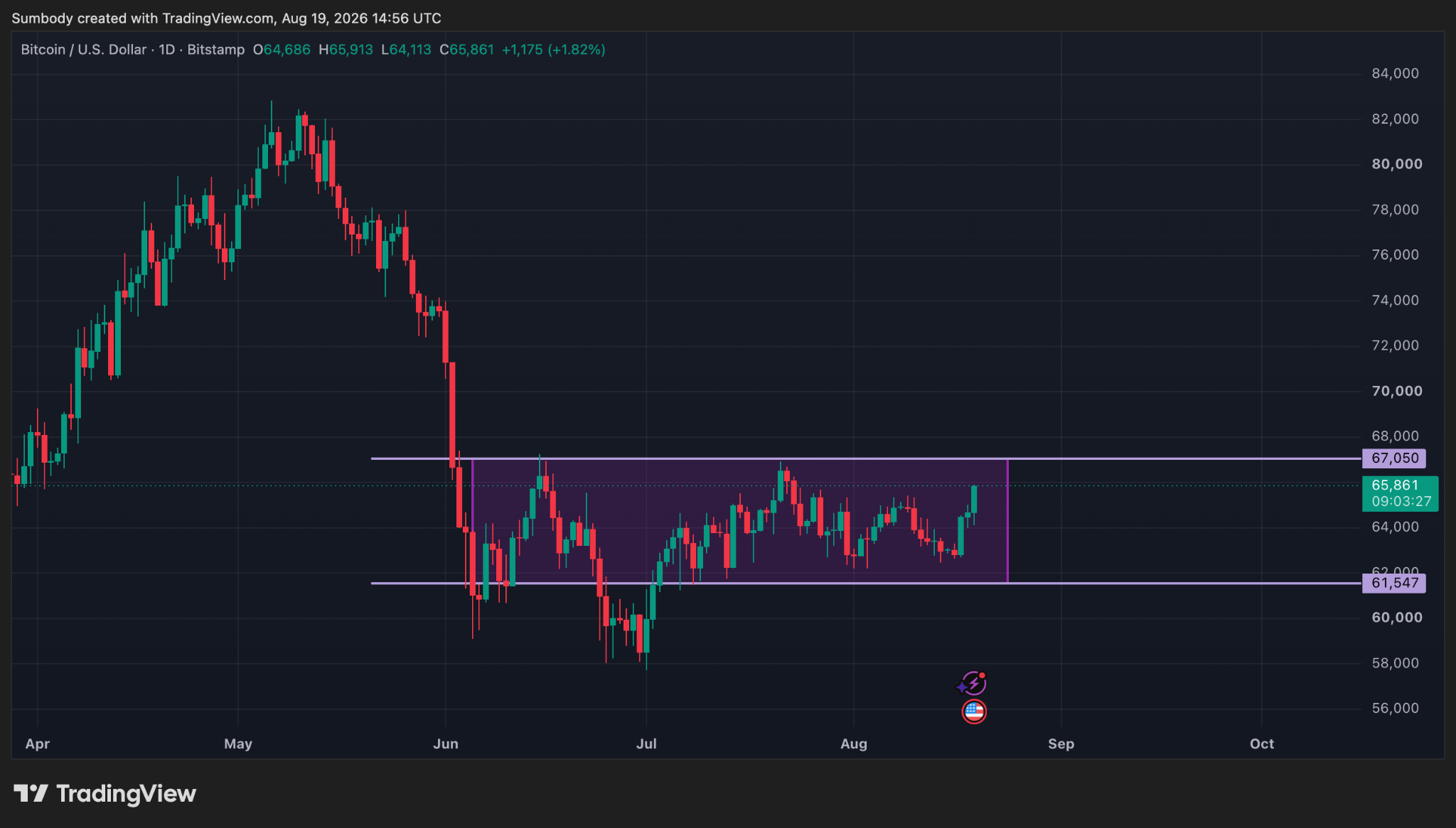
Market sentiment reveals that the $67,000 ceiling has rejected buyers’ attempts to escape. Bitcoin’s price climbing above this level will trigger a short squeeze, forcing those traders to buy back Bitcoin and rapidly driving the price higher. Clearing the $67,000 also invalidates the current bearish market structure, signaling to institutional momentum algorithms that it is safe to enter long positions again.
The opposite number, $61,500, serves as the primary floor that is currently preventing a deeper market correction. Falling below this floor would trigger forced selling, risking a price crash toward lower support at $58,000.
The Potential Effects of FOMC Minutes
Amid Treasury yield movements and their relationship with Bitcoin’s price, expectations around a potential US Federal Reserve rate cut and the broader policy outlook remain key factors shaping market direction. Insights into these expectations often come from the FOMC minutes, which provide a detailed record of the central bank’s most recent meeting and the economic conditions influencing its rate decisions.
Signals pointing toward potential rate cuts tend to push yields lower and support Bitcoin, while expectations of prolonged restrictive policy keep yields elevated and pressure risk assets. Lower interest rates also reduce borrowing costs and can bring fresh liquidity into crypto
Related: U.S. Treasury Yields Hit Multi-Year Highs as Inflation Pressure Intensifies
Disclaimer: The information presented in this article is for informational and educational purposes only. The article does not constitute financial advice or advice of any kind. Coin Edition is not responsible for any losses incurred as a result of the utilization of content, products, or services mentioned. Readers are advised to exercise caution before taking any action related to the company.