



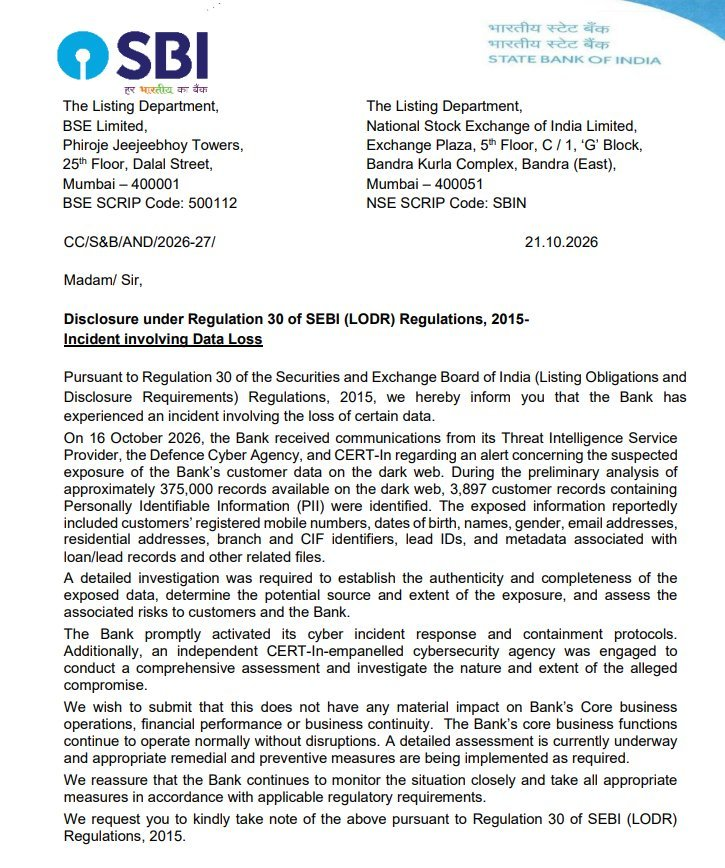
- SBI confirmed that 3,897 customer records containing personal information were found on the dark web.
- The report found around 375,000 records, exposing names, phone numbers, emails, and addresses.
- SBI has launched an investigation, but it raises concerns about banking privacy and why India needs crypto.
The State Bank of India (SBI) has confirmed a cyberattack involving a suspected leak of 3,897 customer records containing personally identifiable information (PII) on the dark web after receiving alerts on October 16, 2026.
With the source of the suspected leak still unknown, the incident has renewed concerns about data protection in centralized banking systems and raised questions about whether crypto and decentralized finance could offer alternative approaches to financial privacy.
SBI Data Leak: Can Indians Trust Banks With Their Most Sensitive Personal Information?
On October 21, 2026, SBI confirmed a cyberattack and data leak involving 3,897 customer records after customer data surfaced on the dark web. The bank submitted an exchange notification stating that an initial review of about 375,000 leaked records posted online disclosed close to 4,000 genuine customer records with sensitive PII.
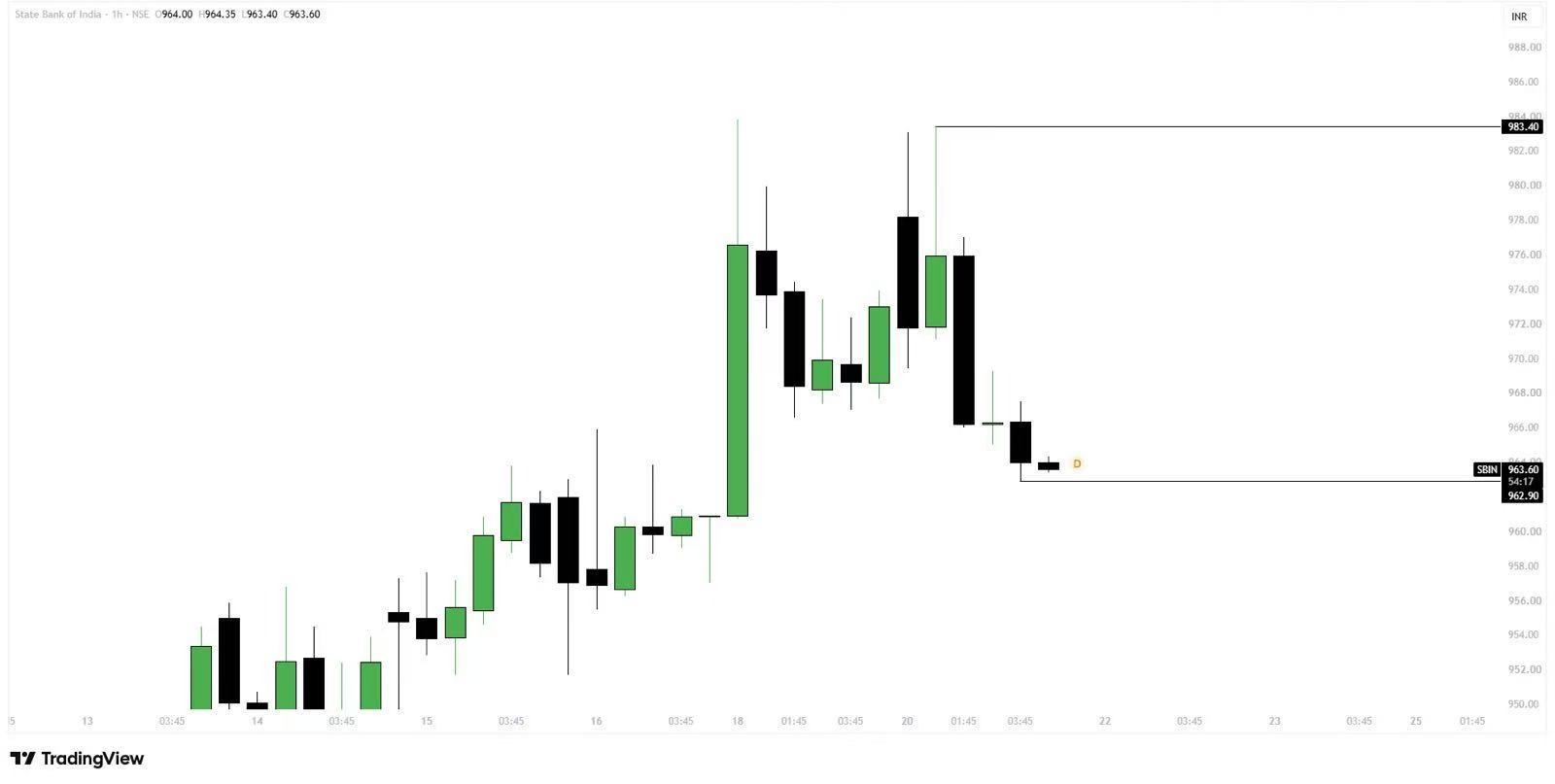
Following the disclosure of the dark web cyberattack, the share price of SBIN on the NSE experienced an immediate intra-day drop. After opening higher at ₹981.90 following a previous close of ₹973.70, the stock reversed course as investor sentiment reacted to the data leak news, plunging to an intra-day low of ₹961.60, dropping roughly 2% from its morning high.
The SBI data leak highlights the risks financial institutions face in protecting sensitive customer information. Stronger data protection measures, timely breach disclosures, and effective enforcement of India’s Digital Personal Data Protection (DPDP) Act will be important in strengthening customer trust.
Bitcoin vs Traditional Banking: Who Really Controls Your Money?
Choosing between Bitcoin and traditional banking is a fundamental shift from institutional trust to cryptographic math. Who controls your money depends entirely on where it resides.
A traditional bank retains ultimate custody and legal control of your account, but with Bitcoin you have sovereign custody, provided you control your private keys. Bitcoin was specifically created to be a peer-to-peer electronic cash system without financial intermediaries such as banks.
Can Decentralized Finance Reduce Dependence on Banks?
Decentralized Finance can greatly decrease reliance on traditional banks; however, it cannot completely replace them. DeFi replaces the institutional counterparts such as loan officers, tellers, and clearinghouses with automated smart contracts on public blockchains.
This means that a user can perform core banking activities like earning interest, borrowing capital, or switching assets peer-to-peer on a completely sovereign banking network.
Why Crypto Could Become More Important as Digital Privacy Risks Grow
As digital privacy threats grow, self-custodied cryptocurrency is becoming a popular alternative to conventional banking. Bank accounts expose customers’ personal information to centralized institutions, making them vulnerable to data breaches.
Meanwhile, the SBI data leak highlights these issues: even if account balances aren’t stolen, exposed customer records can still compromise personal information. Self-custody will enable users to manage their own digital assets without having to use centralized exchanges, which can reduce some data exposure risks.
That said, crypto also has its own risks, such as price fluctuations, non-reversible payments, and inadequate consumer protections. Thus, crypto can work alongside existing traditional banking systems, but it does not guarantee privacy or replace the security and ease of use of bank deposits.
Can India Embrace Crypto Without Compromising Financial Security?
India can embrace cryptocurrency without compromising financial security, but it requires effective regulation rather than purely restrictive policies. Strict FIU-IND compliance and TDS tracking can help improve transaction monitoring.
Regulating crypto risks faced by banks can shield traditional bank depositors from crypto market shocks. But adequate investor safeguards are also needed to prevent retail investors from being exposed to exchange failures.
Related: Revolut Data Breach Exposes 680 Customers After Fake Government Requests
Disclaimer: The information presented in this article is for informational and educational purposes only. The article does not constitute financial advice or advice of any kind. Coin Edition is not responsible for any losses incurred as a result of the utilization of content, products, or services mentioned. Readers are advised to exercise caution before taking any action related to the company.