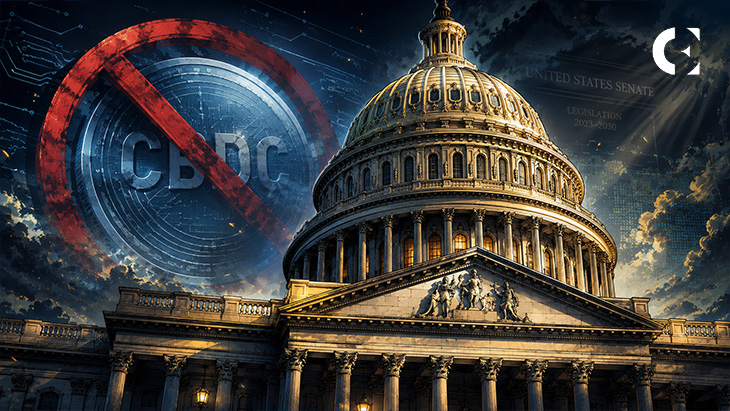

- Congress moves to block a Fed-issued digital dollar until December 2030.
- Stablecoin issuers gain room to grow as CBDC competition faces delays.
- Housing reform bill pairs affordability goals with major crypto policy shift.
The U.S. Congress has moved closer to blocking a Federal Reserve-issued central bank digital currency after lawmakers included an anti-CBDC provision in a major housing affordability package. The bipartisan legislation, known as the 21st Century ROAD to Housing Act, aims to address rising housing costs while also preventing the creation of a government-backed digital dollar until the end of the decade.
The provision represents one of the most significant congressional efforts to limit a potential U.S. CBDC.
Housing Reform Takes Center Stage
Lawmakers from both parties spent years developing the housing package, which focuses on increasing housing supply, reducing regulatory barriers, and improving affordability for American families. The updated legislation also contains measures designed to limit the influence of large institutional investors in the residential housing market.
Senate Banking Committee Chairman Tim Scott and Ranking Member Elizabeth Warren joined House Financial Services Committee leaders French Hill and Maxine Waters in unveiling the revised bill text. The legislation combines priorities from both chambers and reflects input from the White House.
Additionally, negotiators included a three-year sunset provision for a disaster recovery program to address concerns raised during House discussions. Lawmakers expect the bill to move through procedural votes before advancing to the House for final consideration.
Related: Lummis’ CLARITY Act Sets $150M Crypto Crime Fight
Digital Dollar Efforts Face Long Delay
While housing remains the bill’s primary focus, the inclusion of the CBDC restriction has drawn significant attention from financial markets and the digital asset industry. The provision would prohibit the Federal Reserve from issuing a central bank digital currency, or any substantially similar digital asset, until Dec. 31, 2030.
Consequently, the measure would delay any federal digital dollar initiative until at least 2030. Supporters argue that such a restriction protects financial privacy and prevents excessive government involvement in digital payments. Critics, however, contend that the delay could limit U.S. innovation in the rapidly evolving global payments sector.
Stablecoins Stand to Benefit
The proposed ban could strengthen the position of private stablecoin issuers over the coming years. Without direct competition from a government-backed digital dollar, some industry participants believe stablecoin providers could gain additional room.
Moreover, the policy aligns with the broader position of the Trump administration. Treasury Secretary Scott Bessent recently reaffirmed that the U.S. CBDC remains off the administration’s agenda. Instead, policymakers continue to prioritize digital asset legislation aimed at establishing clearer regulatory frameworks for the cryptocurrency industry.
If Congress approves the final package and President Donald Trump signs it into law, the United States could prevent the issuance of a Federal Reserve-backed CBDC through the remainder of the decade.
Related: Justin Bons Calls for Charles Hoskinson’s Removal as Cardano Governance Debate Intensifies
Disclaimer: The information presented in this article is for informational and educational purposes only. The article does not constitute financial advice or advice of any kind. Coin Edition is not responsible for any losses incurred as a result of the utilization of content, products, or services mentioned. Readers are advised to exercise caution before taking any action related to the company.