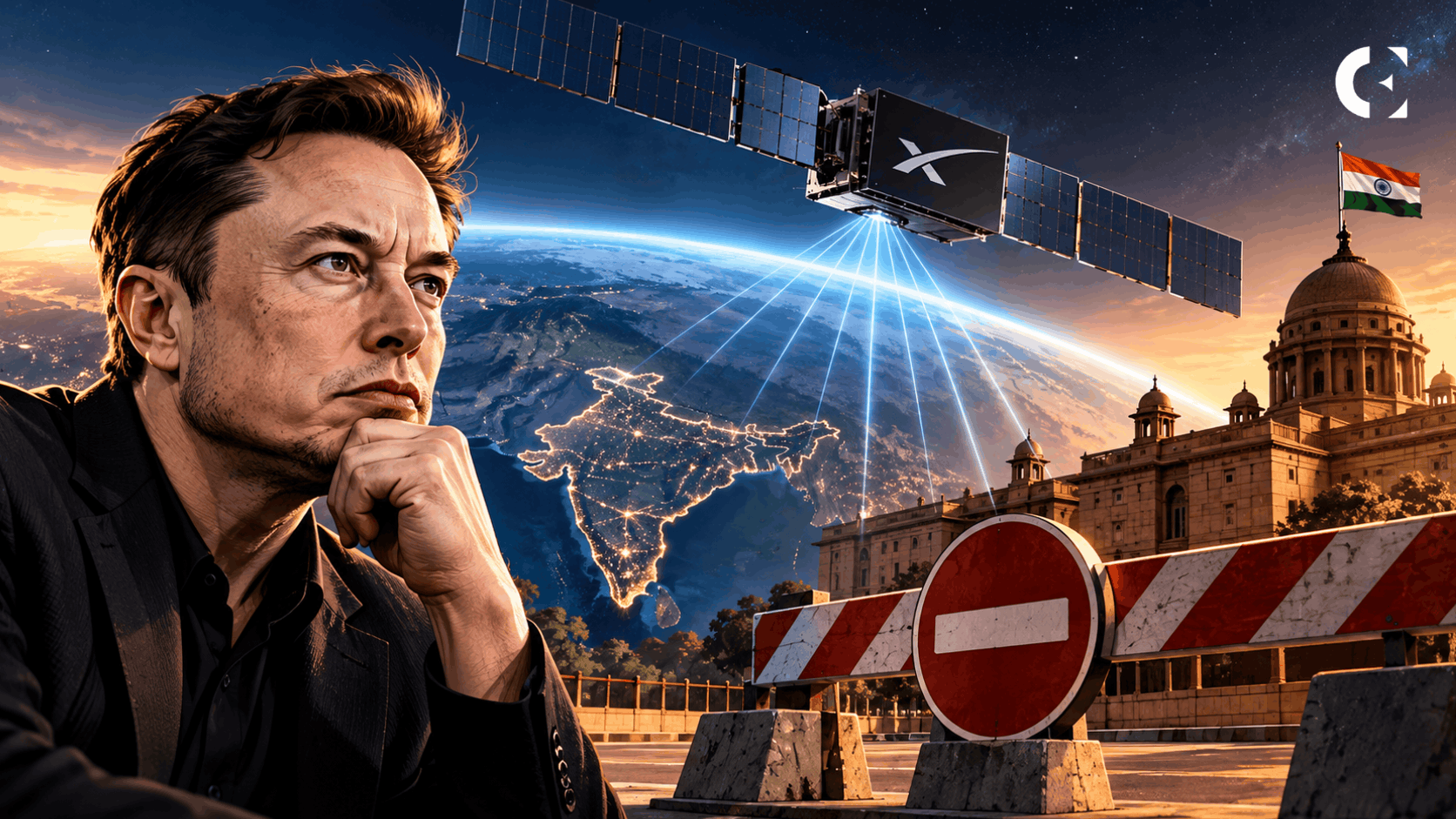

- Starlink says its beams remain off over India as security claims face renewed scrutiny.
- Musk says years of regulatory compliance have not cleared Starlink for commercial service.
- India says Starlink faces the same security and spectrum rules as other operators.
India’s connectivity debate is moving beyond coverage figures into a dispute over security, regulation, and competition. Rural internet density remains far below urban levels, while some remote communities still lack reliable mobile coverage. TRAI data for March 2026 showed rural internet subscriptions at 48.31 per 100 people, compared with 126.80 in urban areas.
Against that backdrop, Elon Musk has renewed pressure to launch Starlink commercially. His recent X posts have focused on underserved communities, regulatory delays, and claims that Starlink is being obstructed by powerful domestic interests. At the same time, India says Starlink faces the same security process as other licensed satellite operators.
Starlink Sees Opportunity in India’s Hardest-to-Reach Areas
Musk has argued that Starlink could help communities where conventional networks remain difficult to deploy. He said the service could support areas with poor or no internet and mobile coverage, while another post said Starlink could give high-speed access to people who cannot afford existing options.
Recent posts also pointed to education, remote healthcare, and disaster response as potential uses. Starlink’s Vice President of Business Operations Lauren Dreyer said at India Mobile Congress that the company had already built 20 gateway sites in India, with hundreds of antennas, and had established India-specific security controls. She also said Indian user data would remain within the country.
Musk Challenges India’s Delayed Approval Process
Separately, Musk has disputed claims that Starlink terminals could have supported militants in India. He said Starlink’s satellite beams are turned off over India, meaning the service cannot connect there. His comments followed reports that security forces had recovered Starlink equipment near the Myanmar border in Manipur.
Musk has also questioned why Starlink still can’t begin commercial operations after years of regulatory work. He said Starlink is licensed in more than 165 countries and claimed SpaceX had spent five years meeting India’s requirements. He then questioned whether Reliance Industries Chairman Mukesh Ambani had influence over the process.
He accused unnamed “oligarchs” of blocking Starlink to preserve a “monopolistic chokehold” over Indian consumers. His remarks were widely linked to Reliance Jio and Bharti Airtel, which dominate India’s telecom market.
India Defends Equal Rules for Satellite Operators
On Thursday, India’s Ministry of Communications rejected suggestions that Starlink was being treated differently. The ministry said its satellite communications framework is fair and non-discriminatory.
According to the government, licenses have been granted to three satellite communications operators, with security assessments still underway for all three. Once those assessments are completed, an operator can proceed to seek spectrum assignment. The ministry said the companies are broadly at the same regulatory stage.
Therefore, Starlink’s commercial delay currently involves more than a single license. Security clearance and spectrum assignment remain necessary before service can begin. Bharti Airtel Chairman Sunil Bharti Mittal has also said satellite operators are awaiting the remaining approvals, including spectrum and security clearance.
India’s Connectivity Test Extends Beyond Starlink
Ultimately, the dispute places two priorities alongside each other: expanding access and maintaining national security controls. India has made substantial progress in mobile and broadband coverage, but rural internet density remains considerably lower than urban levels.
Starlink has identified India as a challenging market to reach with terrestrial networks, with mountains and islands making satellite connectivity necessary. But for New Delhi, security evaluations and spectrum management are still prerequisites for commercial use.
Musk said India’s lag is significant given the market’s size and the lack of connectivity. Whether Starlink would meet Indian security standards and gain access to the spectrum won’t be up for public debate, but it’s the next step.
Related: Elon Musk Says Starlink Will Help Close India’s Internet Coverage Gaps
Disclaimer: The information presented in this article is for informational and educational purposes only. The article does not constitute financial advice or advice of any kind. Coin Edition is not responsible for any losses incurred as a result of the utilization of content, products, or services mentioned. Readers are advised to exercise caution before taking any action related to the company.