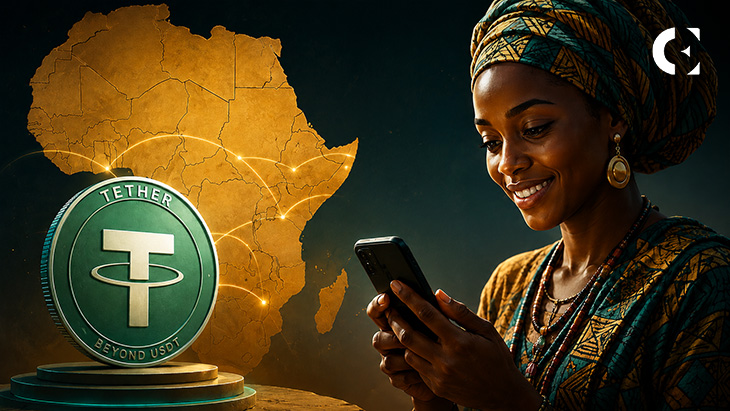

- Tether AI translation models support 19 African languages on phones, laptops, and edge devices.
- Local processing allows offline translation while keeping submitted text on the user’s device.
- Tether’s QVAC strategy expands its work beyond USDT into local AI and payment tools.
Tether AI translation models now support 19 African languages without requiring a constant internet connection. The USDT issuer released the open-source tools on September 2 for phones, laptops, and other edge devices.
The launch takes Tether further beyond its stablecoin business. It also tests whether smaller, local models can serve communities poorly covered by cloud-based AI services.
Tether AI Translation Models Work Offline
The TranslatePsy-AfriSLM family supports languages including Hausa, Swahili, Yoruba, Amharic, Zulu, Somali, and Wolof. Three model sizes are available through Hugging Face, starting at 800 million parameters.
Local processing lets users translate text where mobile data is costly, weak, or unavailable. It also keeps submitted text on the device instead of sending it to a cloud provider.
The accompanying research paper reports that the smallest model beat much larger systems across three translation benchmarks. The researchers removed up to 96% of low-quality training data through a new filtering method.
Offline Access Opens Practical Uses
Schools could translate lessons, science material, and public information into local languages. Farmers could also receive crop guidance or weather instructions without depending on continuous connectivity.
Health groups could adapt basic health information for local audiences. Still, translation errors create risks, so these tools require testing before any clinical use.
Humanitarian teams could use offline translation during disasters, displacement, or network outages. The models may also support cross-border communication between communities using different languages.
Why Tether Is Expanding Beyond USDT
Tether has presented local AI as part of its wider QVAC strategy. The company previously released an on-device AI software kit.
It also introduced a developer grants program covering local AI and payment systems. This strategy connects private computing with Tether’s existing digital payment operations.
The open-source release allows developers to inspect and adapt the models. Independent field testing must now assess dialects, noisy speech, and urgent communication settings.
Related: SEC Proposes Rule Update to Recognize Blockchain in Securities Records
Disclaimer: The information presented in this article is for informational and educational purposes only. The article does not constitute financial advice or advice of any kind. Coin Edition is not responsible for any losses incurred as a result of the utilization of content, products, or services mentioned. Readers are advised to exercise caution before taking any action related to the company.