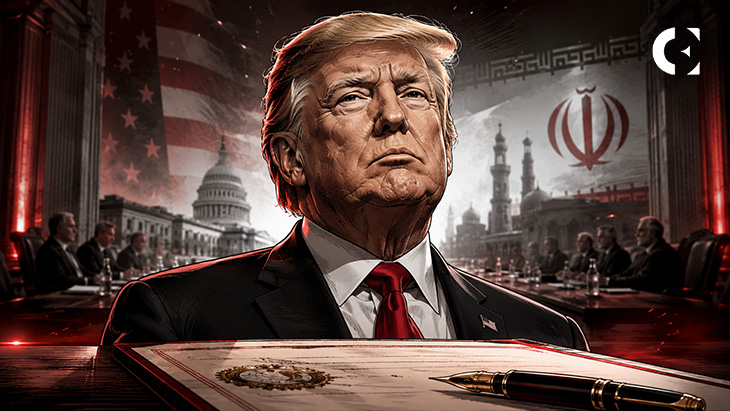

- Trump weighs ending the Iran war, a move that may ease pressure on oil and markets.
- Lower oil prices can cool inflation and give the Fed more room to cut rates.
- Bitcoin may gain if oil falls, yields drop, and investors return to riskier assets.
President Donald Trump is reportedly discussing with senior aides whether to declare the Iran war over. Such a move would mark a major shift for global markets, including Bitcoin and crypto.
According to sources, aides are working to prevent the conflict from escalating before the November midterm elections, as rising energy costs threaten Republicans. Meanwhile, the bigger question is what an end to the conflict means for oil prices, inflation, interest rates, stocks and Bitcoin.
Oil Prices Face Pressure
Oil has been one of the biggest economic effects of the Iran conflict. Brent crude traded around $95.20 a barrel on Thursday, while WTI was near $90.77.
An end to the fighting would remove much of the geopolitical risk premium from oil prices. The International Monetary Fund has warned that disruption around the Strait of Hormuz represents a major energy shock. The waterway normally carries about one-fifth of global oil consumption.
If shipping through the strait returns to normal, supply fears will ease, and oil prices will face downward pressure. Lower oil prices would also reduce one of the biggest sources of inflation.
Inflation and the Fed
Energy prices affect transportation, manufacturing, and household costs. When oil rises, inflation rises with it, making it harder for the Federal Reserve to cut interest rates.
A lasting de-escalation would reverse some of that pressure. Falling oil prices would help cool inflation expectations and give the Fed more room to ease monetary policy.
Lower interest rates and Treasury yields would improve financial conditions and create a more favorable environment for stocks, cryptocurrencies and other risk assets.
The key issue is whether the end of the conflict leads to a real improvement in oil supply. A political declaration alone will not solve the problem if disruptions around the Strait of Hormuz continue.
Bitcoin to Get a Boost
Bitcoin has recently traded more like a risk asset than a traditional geopolitical hedge. At press time, CoinMarketCap data show BTC is trading at $77,885. Bitcoin is down 1.21% over the past week but remains up 22.36% over the past month.
The main bullish path for Bitcoin is:
Iran de-escalation → lower oil prices → lower inflation → lower rate expectations → better liquidity → stronger demand for Bitcoin and other risk assets.
In sum, easing geopolitical tensions could support risk assets like stocks and crypto, particularly if it leads to lower oil prices, softer inflation, and more favorable liquidity conditions.
But a declaration that the war is over does not automatically mean lasting peace, normal oil flows, or lower inflation. If oil stays high and inflation keeps interest rates restrictive, the market’s relief rally will be much weaker.
Related: Bitcoin Tests Crucial $80K-$81K Resistance: Will BTC Hit $100K or Fall to $70K?
Disclaimer: The information presented in this article is for informational and educational purposes only. The article does not constitute financial advice or advice of any kind. Coin Edition is not responsible for any losses incurred as a result of the utilization of content, products, or services mentioned. Readers are advised to exercise caution before taking any action related to the company.