
- Trump’s new tariffs now cover nearly all US imports, raising questions about prices, trade and global markets.
- The White House cites forced labor concerns, but critics argue the tariffs serve a broader trade strategy.
- Higher import costs could fuel inflation, influence Fed policy and shape sentiment across stock and crypto markets.
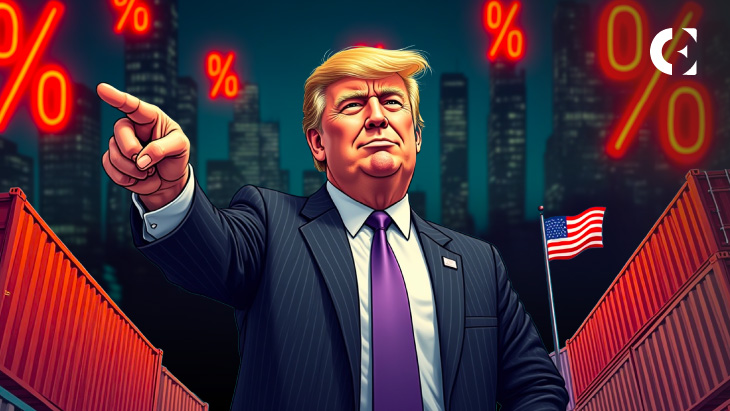
President Donald Trump’s new tariffs took effect Friday, expanding US import duties to goods from 60 trading partners and covering about 99.4% of all imports into the country after a temporary global levy expired. The administration said the measures target countries that failed to curb imports made with forced labor, though critics argue Trump is using the policy to pursue broader trade goals.
The new duties range from 10% to 12.5% and affect some of the United States’ largest trading partners. The policy could raise import costs, reshape global supply chains and influence inflation, financial markets and cryptocurrency prices.
Why Is Trump Imposing These Tariffs?
The tariffs replace a temporary 10% levy that expired Friday after the Supreme Court struck down many of Trump’s earlier global tariffs, ruling that he had exceeded his emergency powers. The decision forced the administration to find another legal basis to keep broad import duties in place.
The administration then launched a Section 301 trade investigation, a process US law allows Washington to use when it believes foreign trade practices unfairly harm American interests. Officials concluded that the 60 trading partners had failed to meet US standards aimed at preventing goods produced with forced labor from entering supply chains.
US Trade Representative Jamieson Greer said the tariffs would address “a human rights abuse and distortive trade practice.”
Trade experts questioned that explanation. Caroline Freund told BBC that the policy “is not about forced labour,” adding that officials were looking for “a legal reason to put the tariffs in.”
Which Countries Are Affected?
Governments responded differently to the new tariffs. The UK faces a 10% baseline tariff alongside duties on some specific goods, while Brazil called its 12.5% rate “unjustified.” Japan expressed regret over the new duties, and Australia described the measures as “completely unjustified.”
Related: EU Strikes Russia’s War Economy with New Crypto Bans and Banking Sanctions
China rejected Washington’s allegations over forced labor. Foreign Ministry spokesperson Mao Ning said, “There is no so-called forced labour in China.”
Human rights organizations and United Nations experts have reported forced labor involving minority communities in China’s Xinjiang region, allegations that Beijing has repeatedly denied.
What Could the Tariffs Mean for Markets?
Higher import costs could eventually push up prices for businesses and consumers. If US demand slows, some trading partners may also shift exports to other markets. Moreover, escalating trade tensions could pressure stocks and cryptocurrencies by reducing risk appetite.
Oil prices remain another key factor. Goldman Sachs expects Brent crude to reach $120 a barrel by year-end, a move that could keep inflation elevated and delay Federal Reserve interest rate cuts.
However, a potential US-Iran peace agreement could ease oil prices. Progress on the CLARITY Act could also improve sentiment in cryptocurrency markets.
Related: Crypto Market Faces Pressure as Strong US Jobs Data Weakens Rate Cut Expectations
Disclaimer: The information presented in this article is for informational and educational purposes only. The article does not constitute financial advice or advice of any kind. Coin Edition is not responsible for any losses incurred as a result of the utilization of content, products, or services mentioned. Readers are advised to exercise caution before taking any action related to the company.