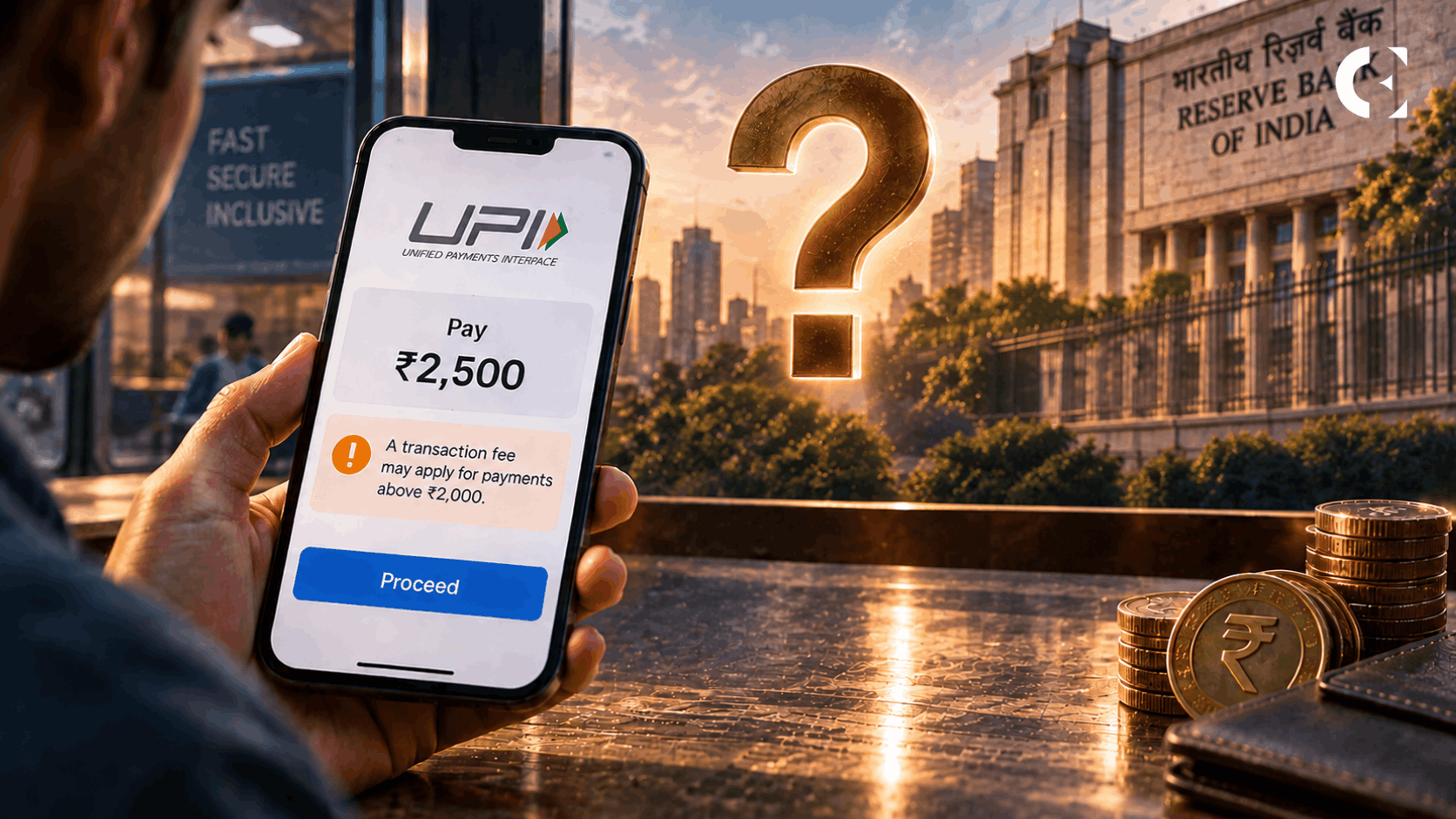

- UPI charges above ₹2,000 remain under discussion, with no confirmed rate yet.
- Merchants, not consumers, are expected to bear any future MDR costs.
- A survey found 53% would shift from higher-value UPI payments if fees reached them.
India’s move to allow possible fees on UPI payments above ₹2,000 has raised questions about the future of free digital transactions.
While Congress alleges a 0.5% charge will hit consumers, the finance ministry’s notification sets no such rate. The gap matters for shoppers, merchants, and investors trying to determine who ultimately bears the extra payment costs.
What Is the Proposed UPI Charge?
The notification protects UPI transactions up to ₹2,000 and RuPay debit card payments from bank or payment-provider charges. However, it leaves room for a Merchant Discount Rate, or MDR, on selected larger merchant transactions. Discussions have included a 0.3%–0.5% range, although authorities have not finalized the charge.
The government says possible changes aim to support a stable and competitive digital payments ecosystem. The funding debate comes as UPI expands. In August, the network processed 24.51 billion transactions worth ₹29.82 trillion, with PhonePe and Google Pay handling roughly three-fourths of transaction volume.
Who Would Actually Pay the 0.5% Charge?
Government officials have said merchants would pay any future MDR, while consumers and person-to-person transfers would remain free. A 0.5% merchant fee would equal ₹25 on ₹5,000 or ₹50 on ₹10,000. Those calculations do not establish that shoppers must pay those amounts at checkout.
In addition, for merchants, an MDR would add an expense to covered transactions. The consumer impact would depend partly on whether businesses absorb that expense or seek to recover it. That possibility has drawn opposition. A LocalCircles survey found 41% of merchant respondents unwilling to bear MDR on payments above ₹2,000.
Would Users Shift From UPI to Cards?
The same survey found 53% of consumer respondents would move away from higher-value UPI payments if merchants passed fees on. Credit cards attracted 27% of respondents, while 12% favored cash. These findings correspond to conditional preferences, rather than an observed change in payment volumes.
For investors, the proposal links potential payment-provider revenue to higher merchant expenses. Jefferies estimates merchant fees could generate ₹5,000 crore–₹10,000 crore annually for payment infrastructure.
Higher costs also raise questions about stablecoins and alternative payment methods. However, a resulting shift toward crypto remains unproven, as do claims of new exchange-deposit charges.
Related: India Launches Demat 2.0 Pilot to Tokenize Bonds Using Digital Rupee
Disclaimer: The information presented in this article is for informational and educational purposes only. The article does not constitute financial advice or advice of any kind. Coin Edition is not responsible for any losses incurred as a result of the utilization of content, products, or services mentioned. Readers are advised to exercise caution before taking any action related to the company.