

- Visa and Dunamu are exploring stablecoin payments and cross-border transactions.
- India received $150.7B in remittances in 2025, creating a major potential use case.
- RBI’s cautious stance remains a key barrier to stablecoin adoption in India.
Payment giant Visa’s latest partnership in South Korea has once again brought stablecoins into the spotlight. But now, the focus is shifting to its potential impact in countries like India. While the collaboration between Visa and Dunamu intends to explore stablecoin payments and cross-border transactions, it also raises questions about whether similar payment rails could eventually find a place in India.
The use of stablecoins for cross-border remittances could be more relevant in countries like India where millions of people receive money abroad every year. However, India’s cautious approach towards cryptocurrencies makes such an initiative in the near-term challenging.
Visa and Upbit Operator Dunamu Are Exploring Stablecoin Payments
Local reports revealed that South Korea’s Dunamu has partnered with Visa to bring stablecoin payments in the country’s cross-border settlement system. Both companies are also exploring the potential use cases of blockchain and AI in financial services. With this partnership, stable tokens could be brought closer to Visa’s existing payment network.
However, the companies haven’t yet officially announced the launch date or other specific product details. As of now, the companies are exploring how stable tokens could be used for cross-border payments and remittances.
Why This Is Bigger Than Another Crypto Partnership
Interestingly, the Visa-Dunamu partnership stands out. This is because it brings a major traditional payments company closer to the stablecoin market. Stablecoins were initially used by crypto traders to move funds between exchanges. But now, their use cases are being expanded across platforms for payments, remittances, and settlement.
This evolution of stable crypto is something important to watch in India. If more companies are embracing stable token payment systems, it could create new ways to move money across borders. As India is a country largely involved in cross-border remittances, such a development could make bigger changes.
The Cross-Border Payment Use Case That Matters for India
Stablecoins could prove to be the most useful in India, especially considering the country’s large remittance market. According to World Bank data, India received around $150.7 billion in remittances in 2025. This makes the country at the top of the global list of remittance recipients.
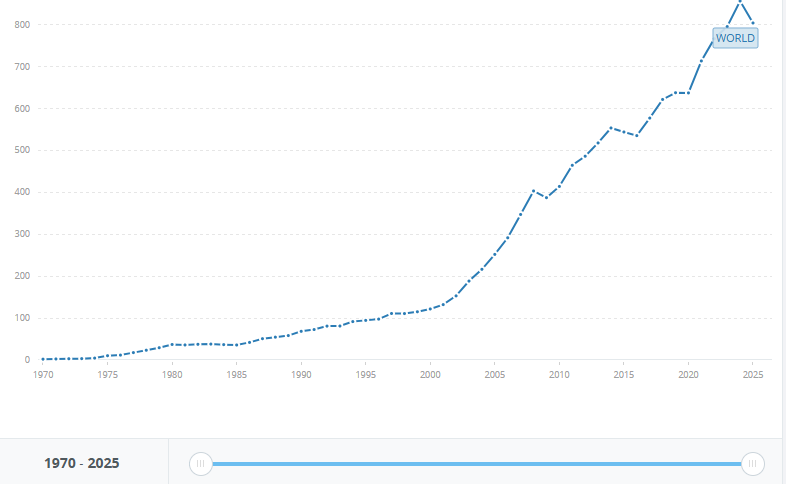
Source: World Bank data
This makes the latest Visa-Dunamu partnership a key development to watch. As stablecoins move beyond trading to payments and settlements, India could explore more opportunities to fulfil regulatory requirements.
India’s Stablecoin Position Looks Very Different
Despite the global acceptance of stablecoins, India takes a cautious stance. The country does not currently have a regulatory framework for private stablecoins. Regulators also remain cautious about their impact on financial stability and monetary policy.
The Reserve Bank of India has also highlighted the digital rupee as a regulated alternative for digital payments. This puts India in a different position from markets where stablecoins are increasingly being explored by banks, exchanges and payment companies. “Stablecoins do not serve any purpose fiat money cannot,” stated RBI Deputy Governor T. Rabi Sankar.
Could Dollar Stablecoins Gain Ground Among Indian Users?
Dollar stablecoins find a significant position among Indian investors as they offer a way to hold and move dollar-linked value without relying entirely on traditional banking options. USD-backed stablecoins could be used in remittances and cross-border payments, making them particularly relevant in India.
However, the RBI’s restrictive approach remains a major challenge here as well. This stance could limit how Indians could easily access dollar-backed stablecoins. Thus, for India, the key issue is not demand, but more about regulations.
(adsbygoogle = window.adsbygoogle || []).push({});The Regulatory Barrier India Would Have to Resolve
Significantly, India would need to address several key regulatory concerns before the country could adopt stablecoins in its mainstream cross-border payments space. These include stablecoin issuance, reserves, taxation, foreign exchange, KYC, and AML requirements.
Banks and payment companies also play a major role. Their involvement could determine how easily stablecoins are integrated into existing payment systems. But the most important thing is regulatory clarity. Regulations should define how institutions could work with crypto providers and process transactions.
Following the Visa development in South Korea, Indian investors are keenly watching similar updates in the country. They are also looking forward to the government’s potential approach to crypto and stablecoins.
Related: India’s Crypto Law Delayed Again: What the Latest VDA Hearing Cancellation Means for Investors
Disclaimer: The information presented in this article is for informational and educational purposes only. The article does not constitute financial advice or advice of any kind. Coin Edition is not responsible for any losses incurred as a result of the utilization of content, products, or services mentioned. Readers are advised to exercise caution before taking any action related to the company.