
- Wall Street banks tightened prediction market rules as insider trading concerns drew greater regulatory scrutiny.
- Goldman banned employee prediction market trading, while rivals strengthened compliance and monitoring policies.
- Banks and prediction platforms are expanding oversight as prediction market activity continues to grow rapidly.
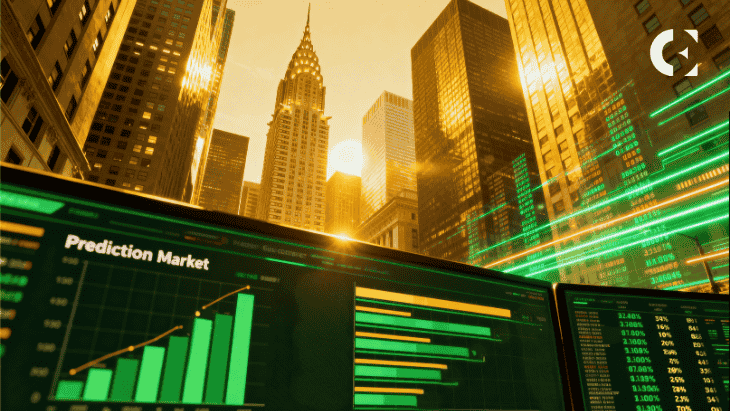
Wall Street banks are tightening rules on employees’ use of prediction market platforms as regulators pay closer attention to the fast-growing sector. Goldman Sachs, JPMorgan Chase, Morgan Stanley, and Bank of America have updated their internal policies to limit or monitor trading on contracts tied to political, financial, and corporate events.
The changes follow a series of investigations into alleged insider trading and the misuse of confidential information. They also come as prediction market trading has grown sharply ahead of the U.S. midterm elections, prompting regulators and lawmakers to take a closer look at the industry. For major banks, these platforms are increasingly being treated as a compliance risk rather than a niche form of trading.
Banks Expand Compliance Controls
Goldman Sachs has one of the strictest stances among major Wall Street banks. It has banned the company’s employees from making trades in prediction market contracts relating to financial and political developments due to potential conflicts of interest. Employees who violate this policy are subject to disciplinary measures which can lead to dismissal and forfeiture of their gains through trading.
JPMorgan Chase has chosen another path of dealing with prediction market trading. Instead of prohibiting such trading, JPMorgan has restricted access to the usage of confidential information by its employees. Employees are not allowed to use non-public information while trading contracts related to companies, financial and other corporate events.
Bank of America has also implemented new regulations on prediction market trading regarding companies, the economy and financial markets. Morgan Stanley has done the same.
Criminal Case Changed Industry Thinking
A more strict approach by the banks comes on the heels of an enforcement action that created concerns on Wall Street.
Federal authorities filed charges of wire fraud and commodities manipulation against Google software engineer Michele Spagnuolo in May 2026. As per the charges, the software engineer traded prediction markets worth $2.75 million using insider information, earning profits worth more than $1.2 million.
There is now fear that insider trading might be possible in the prediction markets, which has led to banks tightening their controls over employee trading behavior.
Platforms Strengthen Oversight
Prediction market platforms have also stepped up their supervision. Kalshi is now working with Solidus Labs on improving its market surveillance and setting up an independent panel that will oversee trading activities.
Employer disclosures and risk scoring tools for more sensitive contracts have also been implemented by the platform, which includes contracts related to company performance, national security, and political events.
Related: Russia Moves to Monitor Every Crypto Transaction Above 60,000 Rubles
Disclaimer: The information presented in this article is for informational and educational purposes only. The article does not constitute financial advice or advice of any kind. Coin Edition is not responsible for any losses incurred as a result of the utilization of content, products, or services mentioned. Readers are advised to exercise caution before taking any action related to the company.