

- Bitcoin is under pressure as investors move capital into booming AI stocks and away from crypto assets.
- U.S. spot Bitcoin ETFs have seen billions in outflows, adding to recent weakness in BTC prices.
- Analysts remain divided, with some expecting a crypto rebound while others see further downside ahead.
Bitcoin has been struggling even as U.S. stocks continue hitting new highs. This has left many investors wondering whether Bitcoin is simply lagging behind the stock market or facing a bigger correction.
At the time of writing, Bitcoin was trading around $69,400, down more than 4% in the past 24 hours. Meanwhile, the S&P 500 continues to trade near record highs.
Stocks Are Rising, But Bitcoin Is Not
In a tweet, Bitcoin analyst Dennis Liu, better known as VirtualBacon, says this kind of divergence is not unusual.
According to him, crypto markets often move in cycles and can fall behind other risk assets before eventually catching up. He believes the current weakness does not necessarily mean Bitcoin is entering a long-term downtrend.
Liu also warned investors against waiting for clear signs of a rebound before buying. By the time the market looks safe again, prices may already be much higher.
Money to Flow Back Into Crypto
Despite Bitcoin’s recent weakness, some market watchers remain bullish. Michael Nadeau, founder of The DeFi Report, believes a shift of capital into cryptocurrencies will happen in the future.
While he does not know exactly when it will happen, he thinks many investors could be caught by surprise. Nadeau noted that some investors are currently leaving crypto to chase opportunities in fast-rising sectors such as artificial intelligence. In his words:
“Sad part is many crypto natives are rotating out and chasing the ‘latest thing’ at the precise moment to double down.”
More Downside Still Possible
Meanwhile, not everyone is optimistic. Market commentator paulhendriks believes Bitcoin could fall below $60,000 before the year ends. He argues that Bitcoin still looks weak and that a stock market correction could cause an even larger drop in crypto.
VirtualBacon responded by noting that the $61,000-$63,000 range is close to Bitcoin’s 200-week moving average. This level has often served as a major bottom in previous market cycles.
AI Boom Driving Stocks Higher
While Bitcoin struggles, AI-related stocks remain one of the hottest areas in the market.
Investors are pouring money into companies involved in artificial intelligence, including chipmakers, cloud computing firms, and data center operators. Optimism around technology earnings and hopes for easing geopolitical tensions have also pushed stock markets higher.
The AI boom has added trillions of dollars to stock market values and has become one of the main reasons behind the S&P 500’s strong rally.
However, trader Kevin Muir argues that some AI growth expectations are overly optimistic. He noted that rising AI usage does not automatically translate into long-term profits for companies.
Heavy Outflows from Bitcoin ETFs
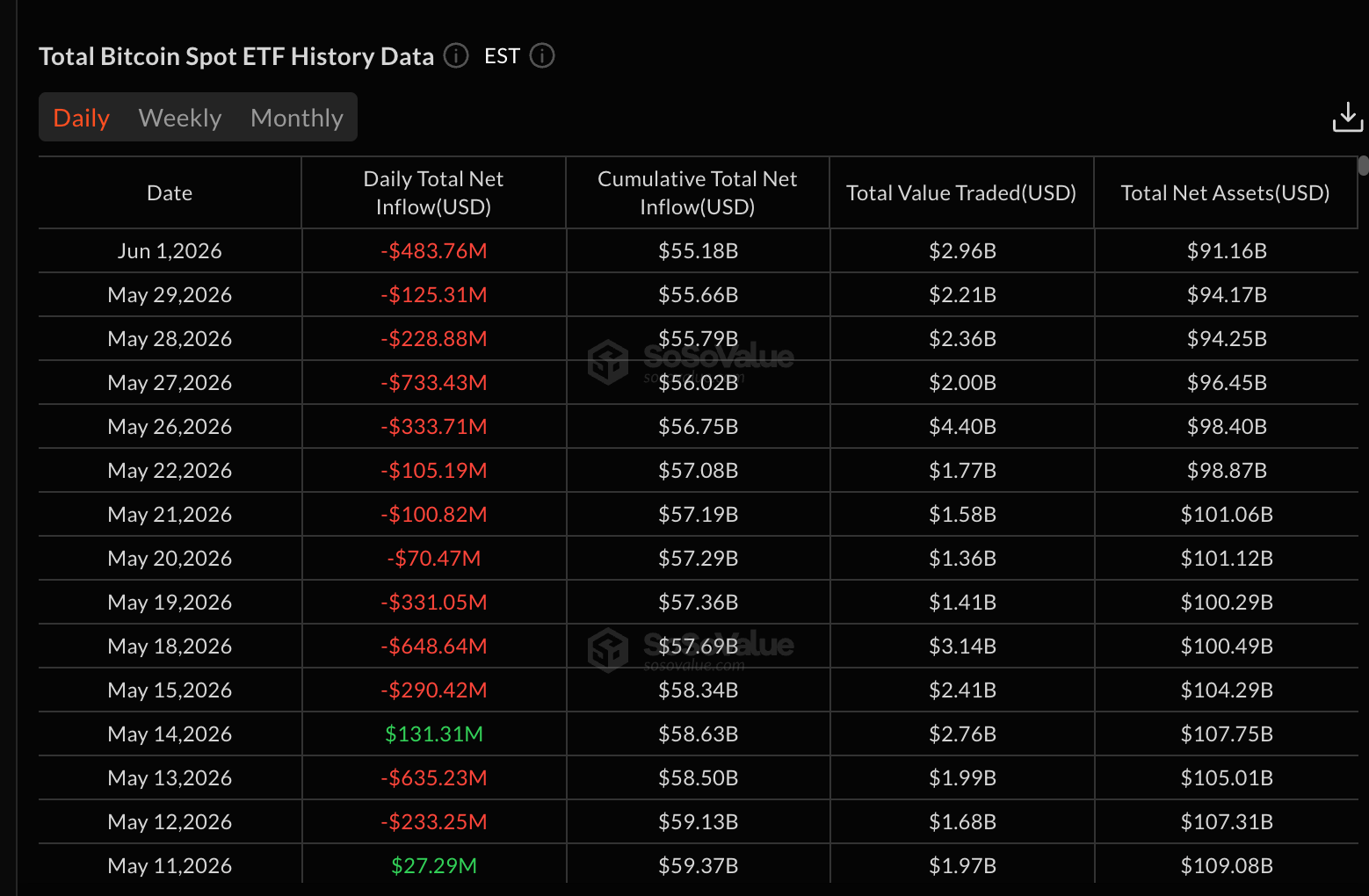
Another major reason for Bitcoin’s weakness is the outflows from spot Bitcoin ETFs. On Monday alone, U.S. spot Bitcoin ETFs saw $484 million leave the market. BlackRock’s IBIT fund accounted for most of the withdrawals.
Over the past 11 trading days, investors have pulled about $3.45 billion from Bitcoin ETFs, showing that institutional demand has weakened recently.
According to Bitrue Research Institute analyst Andri Fauzan Adziima, higher inflation, rising Treasury yields, and reduced expectations for interest-rate cuts have pushed some institutions away from crypto and toward other investments, including AI-related stocks.
Macro Concerns Are Also Hurting Bitcoin
Other external factors weighing on the market include ongoing geopolitical tensions, particularly in the Middle East, as well as oil prices. Negative sentiment following Strategy’s recent Bitcoin sale announcement has also contributed.
Adziima believes the sale damaged the narrative that major corporations are continuously accumulating Bitcoin, adding further pressure to an already weak market.
What’s Next for Bitcoin?
Analysts expect Bitcoin to remain in a consolidation phase. While some believe money will rotate back into crypto, others note Bitcoin may test lower support levels first. Much will depend on institutional demand, broader economic conditions, and whether investors continue favoring AI stocks over cryptocurrencies.
Related: Bitcoin Price Prediction: June Starts With a Broken Chart and the Biggest ETF Exit in Months
Disclaimer: The information presented in this article is for informational and educational purposes only. The article does not constitute financial advice or advice of any kind. Coin Edition is not responsible for any losses incurred as a result of the utilization of content, products, or services mentioned. Readers are advised to exercise caution before taking any action related to the company.