
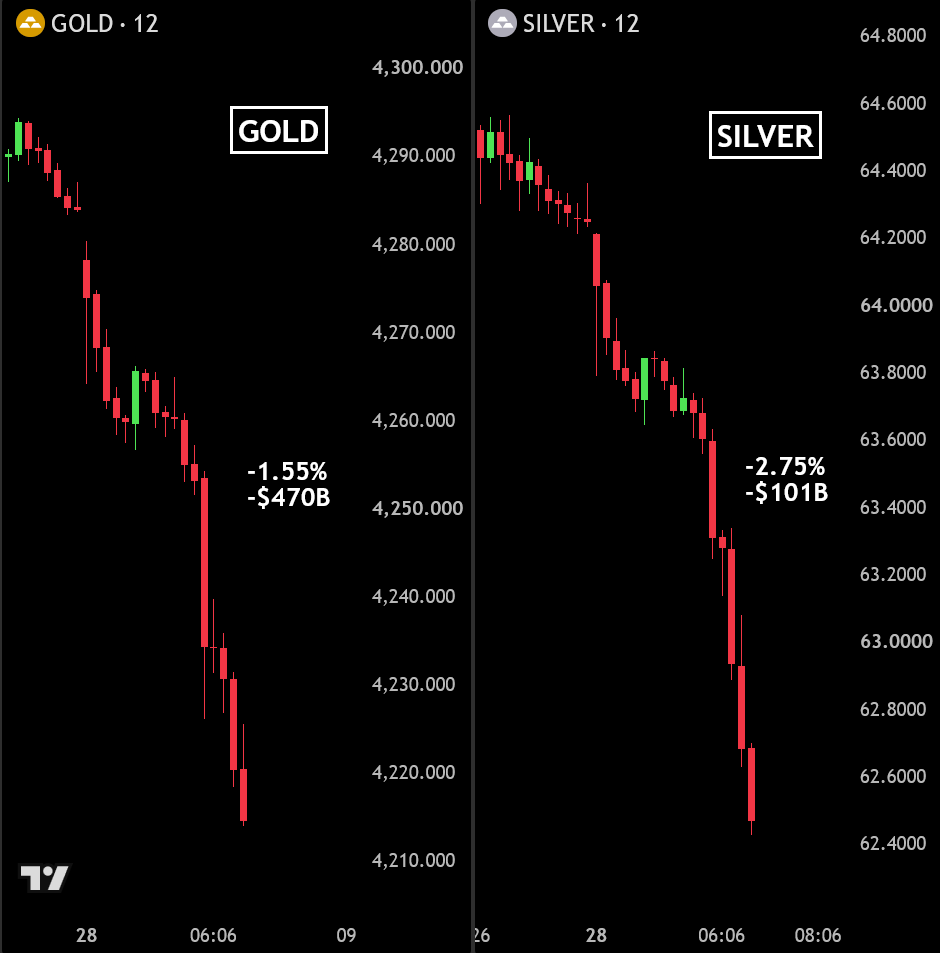
- Gold and silver shed an estimated $571B in value, with gold accounting for the bulk of the losses.
- Rising Treasury yields and a stronger dollar added pressure to gold and silver.
- Silver fell more sharply than gold due to its higher volatility and industrial exposure.
Gold and silver prices declined as reports linked the drop to rising Treasury yields, a stronger U.S. dollar and renewed interest-rate concerns. According to sources, the metals lost more than $550 billion in market value within three hours, with gold’s estimated valuation loss at $470 billion and silver’s at $101 billion.
Higher Yields and Dollar Strength Pressure Metals
The strongest documented backdrop involves mounting competition from interest-bearing assets. Reporting ahead of Monday’s decline showed Treasury yields climbing alongside a firmer dollar, while expectations of further Federal Reserve tightening weighed on precious metals.
Higher yields increase the opportunity cost of owning gold and silver because neither pays interest. Meanwhile, dollar strength makes both metals more expensive for buyers using other currencies.
Oil and Fed Expectations Add Pressure
Reports also linked the sell-off to renewed oil-price gains amid stalled U.S.-Iran talks and tensions around the Strait of Hormuz. Higher energy costs featured prominently in the inflation concerns behind tighter-policy expectations. Earlier reporting had already connected persistent inflation and further Fed tightening bets with weaker bullion demand.
Against this backdrop, concerns about further Fed tightening help explain the selling pressure, though they do not pinpoint the trigger for the three-hour decline.
Why Silver Recorded the Larger Decline
Silver declined more sharply than gold, reflecting its higher volatility and dual role as both an industrial and investment asset. While gold is primarily driven by macro factors such as yields and currency strength, silver tends to react more aggressively to shifts in both economic expectations and risk sentiment.
The larger drop suggests the selloff extended beyond traditional safe-haven flows, with investors reducing exposure to assets more sensitive to growth and industrial demand. This dynamic often amplifies silver’s downside during periods of tightening financial conditions.
This divergence highlights how tightening financial conditions can weigh more heavily on assets with both industrial and monetary exposure.
Related: Gold and Silver Rally Ahead of Fed Decision, All Eyes on Warsh’s Guidance
Disclaimer: The information presented in this article is for informational and educational purposes only. The article does not constitute financial advice or advice of any kind. Coin Edition is not responsible for any losses incurred as a result of the utilization of content, products, or services mentioned. Readers are advised to exercise caution before taking any action related to the company.