
- A record 60-day Coinbase discount suggests U.S. institutional Bitcoin demand has yet to regain momentum.
- Bitcoin’s weak Coinbase premium contrasts with analysts’ view that ETF adoption could echo gold’s long-term rise.
- Markets remain cautious as Bitcoin tests key price levels amid fading institutional demand and global uncertainty.
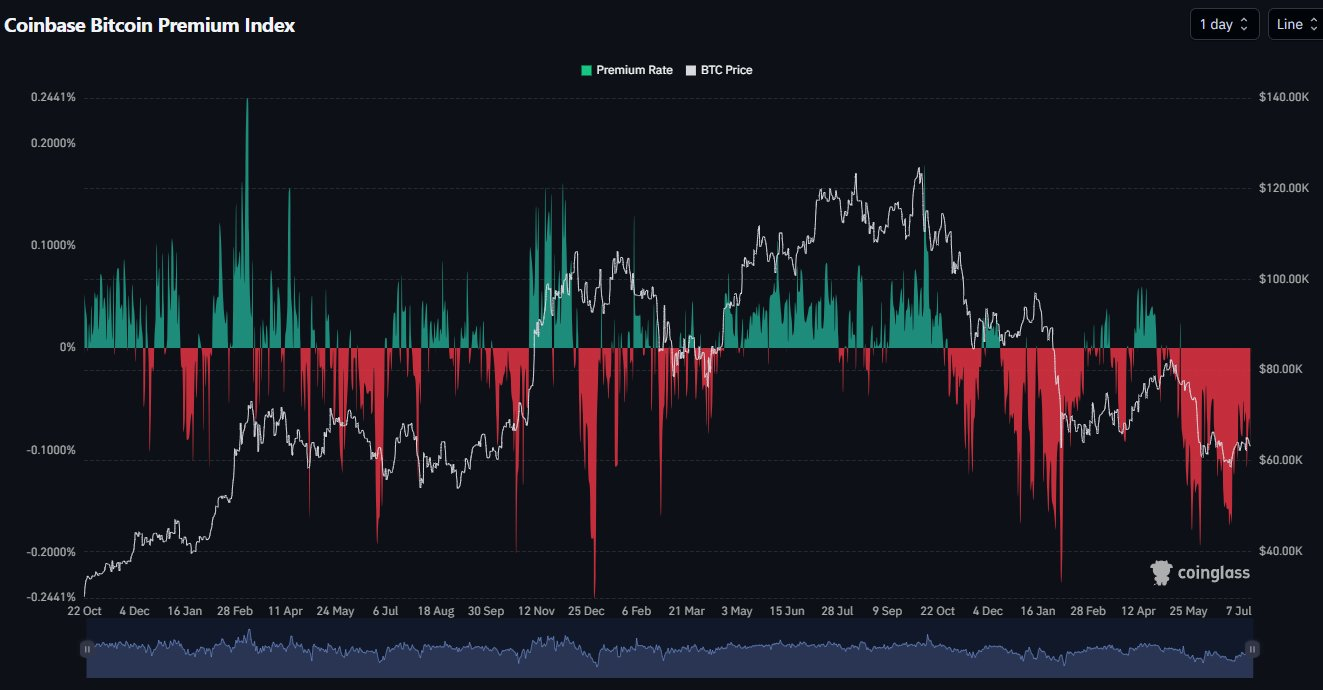
Bitcoin is showing signs of weaker demand from U.S. investors after the Coinbase Bitcoin Premium Index remained negative for a record 60 straight days, according to data shared by Wu Blockchain.
The index compares Bitcoin’s price on Coinbase with Binance, and a negative reading indicates that Bitcoin is trading at a discount on Coinbase, suggesting softer buying interest from U.S.-based investors.
Coinglass data showed the index most recently stood at -0.1025%, extending the longest negative streak on record. The previous record lasted 40 days between January and February, while the October market sell-off saw a negative stretch of about 30 days.
Coinbase Discount Raises Market Questions
A negative Coinbase premium means Bitcoin is trading at a lower price on Coinbase than on Binance. Because many U.S. institutional investors buy and sell Bitcoin through Coinbase, the metric is widely used to gauge demand from that group. A prolonged negative premium suggests buyers on Coinbase are paying less than those on Binance.
The discount has remained in place even as Bitcoin recovered several times in recent months. That indicates demand on Coinbase has stayed relatively subdued compared with other exchanges. While the metric does not predict where Bitcoin will trade next, it can offer insight into how institutional investors are positioning themselves.
Gold ETF History Offers Bitcoin Clues
Despite the weaker Coinbase premium, some analysts believe the trend does not necessarily signal the end of Bitcoin’s longer-term rally.
Bloomberg ETF analyst Eric Balchunas said Bitcoin exchange-traded funds could follow a path similar to gold ETFs, arguing that gold’s history offers one of the best guides for how Bitcoin investment products may perform over time.
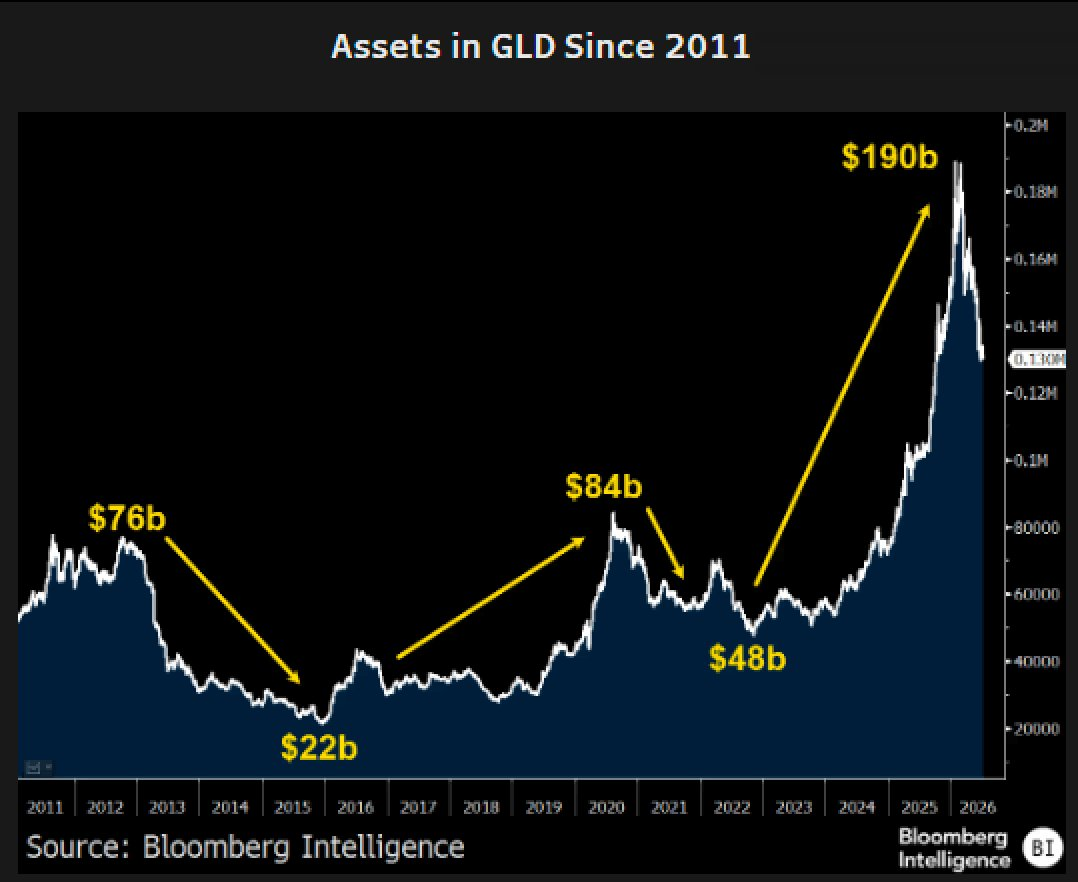
“Bitcoin ETFs likely to mirror gold’s history of triumph and pain,” Balchunas said in a post on X. He said both assets rely largely on investor sentiment rather than generating income like stocks or bonds.
Balchunas pointed to the performance of SPDR Gold Shares (GLD), the world’s largest gold ETF. Its assets under management dropped from about $76 billion in 2011 to roughly $22 billion by 2015 before rebounding. Investor demand later returned, helping the fund grow to a record $190 billion between 2023 and 2025.
Analysts Watch Key Bitcoin Levels
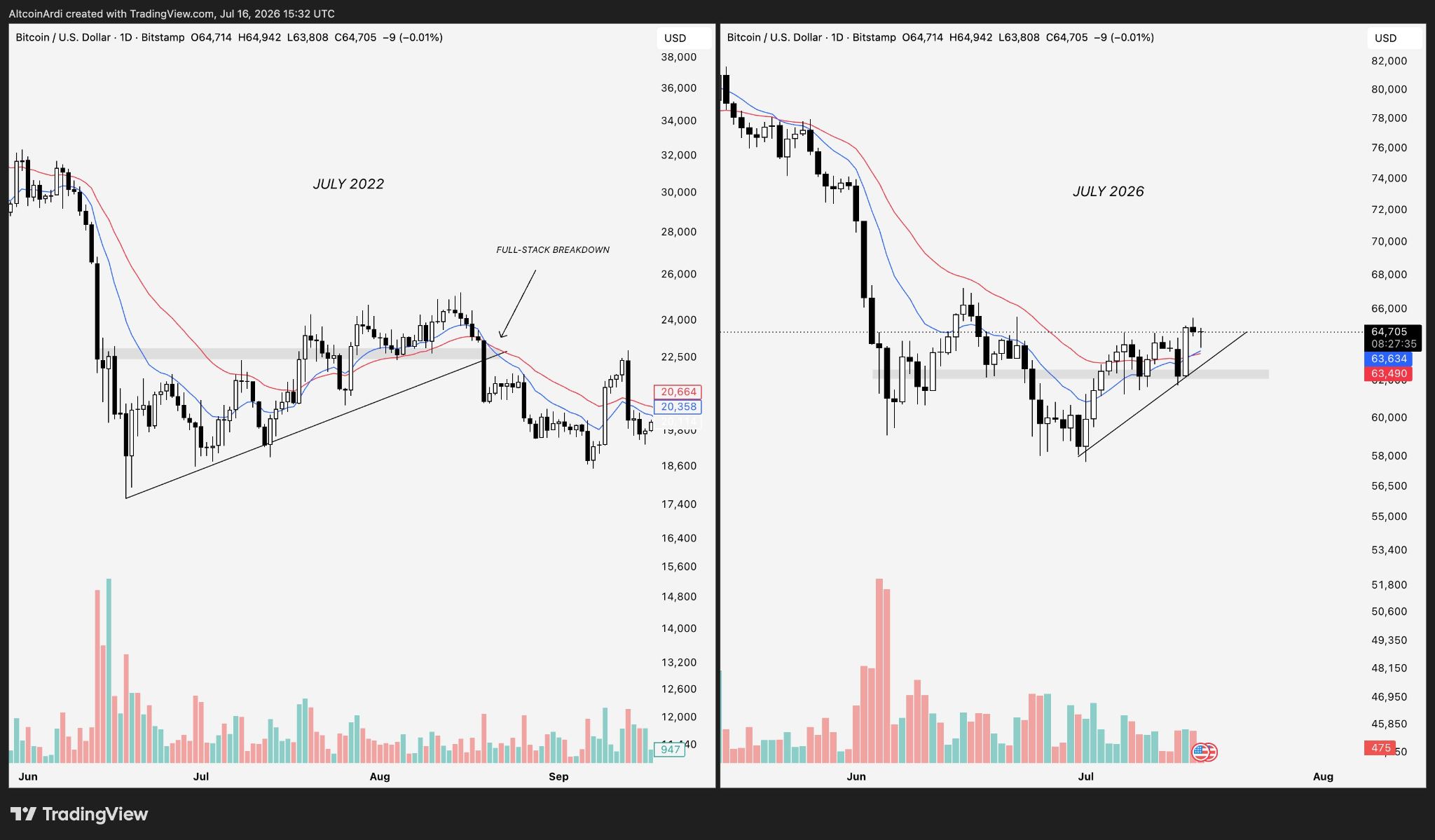
While institutional demand remains subdued, traders are also watching key technical levels for signs of Bitcoin’s next move. Crypto analyst Michaël van de Poppe said a move above $65,000 could signal stronger upside momentum. Ardi, another market analyst, said support remains between $63,300 and $62,200.
The broader market also came under pressure, with stocks across Asia and North America falling as investors weighed weakness in technology shares and renewed tensions in the Middle East.
“The market is ending the week with two bruises: AI fatigue and Hormuz heat,” Patrick Munnelly of Tickmill Group said, referring to concerns over technology stocks and geopolitical risks.
Related: Crypto Market Hits Lowest Level Since 2024, CoinGecko Reports
Disclaimer: The information presented in this article is for informational and educational purposes only. The article does not constitute financial advice or advice of any kind. Coin Edition is not responsible for any losses incurred as a result of the utilization of content, products, or services mentioned. Readers are advised to exercise caution before taking any action related to the company.