
- ESMA added 14 firms, lifting Europe’s MiCA-authorized provider total to 294.
- Bank participation is expanding as MiCA licensing becomes a cross-border asset.
- Binance, Bitget, MEXC, and HTX remain outside full MiCA authorization in Europe.
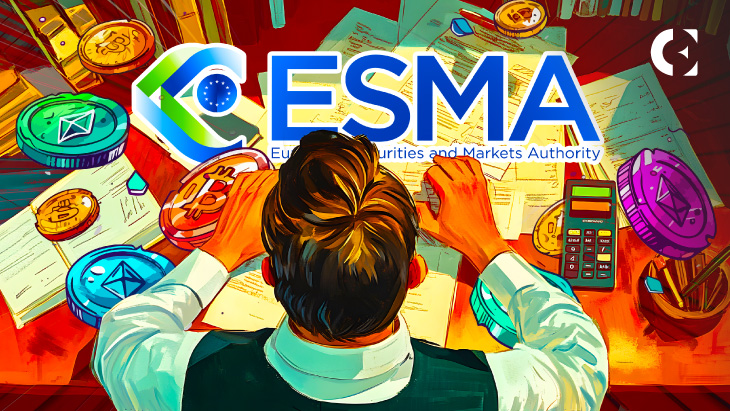
The European crypto market shifted after ESMA added 14 crypto-asset service providers to its register on July 16. The additions raised the authorized total under MiCA to 294, expanding participation beyond specialist digital-asset companies.
The group includes Ripple Payments Europe, Portugal’s Bison Bank, Croatia’s Hrvatska poštanska banka, two German cooperative banks, and Liechtenstein’s Kaiser Partner Privatbank. Their inclusion reflects how banks are entering custody, execution, and digital-asset payment services across Europe.
MiCA Licensing Becomes a Cross-Border Commercial Advantage
Notably, MiCA replaces national registrations with one authorization that firms can passport throughout the European Union. In return, approved providers must meet requirements covering capital, governance, client-asset protection, reporting, and operational controls.
Since the grandfathering period ended on July 1, unauthorized providers cannot onboard or market to new EU customers. Instead, their activities are limited to withdrawals, transfers, and orderly position closures for existing users.
Consequently, licensing carries commercial value alongside regulatory compliance. Authorized firms can maintain customer access, market across the bloc, and present verified permissions to institutional counterparties.
Banks also hold the advantage as they can connect crypto services with payment accounts, custody infrastructure, and established compliance teams. At the same time, licensed exchanges are better positioned to attract customers leaving platforms that face operating restrictions.
This shift is already visible in ESMA’s register. The total stood at 244 authorized firms on June 26, but another 50 providers joined by July 16, raising the number to 294.
Nevertheless, the wider market remains far from fully licensed. According to reports, 1,738 firms lacked approval at the July 1 deadline. Consequently, that gap illustrates the scale of the regulatory restructuring underway across Europe’s crypto sector.
Major Crypto Platforms Remain Outside Europe’s MiCA Framework
Meanwhile, Binance remains the most prominent platform without bloc-wide approval. As Coin Edition previously reported, the exchange withdrew its Greek application in June and said it would seek authorization elsewhere in the EU.
Other major platforms also remain outside the authorized register. Bitget was absent from the list on July 17, while MEXC appeared on ESMA’s non-compliant register. Reports also indicated that HTX had not secured MiCA authorization.
For smaller brokers and wallet providers, obtaining an independent license may prove more demanding in light of the associated capital, governance, and reporting requirements. Consequently, some firms may instead outsource regulated custody or execution services to authorized providers.
However, securing approval does not remove every regulatory concern. ESMA’s review of Malta found that material issues remained unresolved and that certain risks had not been adequately assessed before one provider received authorization.
Therefore, MiCA licensing now creates a clearer distinction between firms with bloc-wide market access and providers operating under restrictions. Even so, long-term competitiveness will continue to depend on effective supervision, sufficient liquidity, reliable products, and sustained customer trust.
Related: Europe’s ESMA Launches CSA to Increase Crypto Compliance
Disclaimer: The information presented in this article is for informational and educational purposes only. The article does not constitute financial advice or advice of any kind. Coin Edition is not responsible for any losses incurred as a result of the utilization of content, products, or services mentioned. Readers are advised to exercise caution before taking any action related to the company.