

- Over $215 billion in long positions was liquidated from the crypto market over 48 hours.
- Experts identified multiple catalysts behind the latest decline in cryptocurrency prices.
- The cryptocurrency market already showed signs of weakness before the latest decline.
Bitcoin fell 7.74% between October 5 and October 8, dropping below $81,000 for the first time since September 20 before rebounding on October 9. The sell-off extended to Ethereum, which fell below $2,450, while more than $215 billion was wiped from the crypto market over 48 hours, according to the cited report. Market experts said the decline came as the market was already showing weakness.
Surging Bitcoin Realized Cap
Analysts identified multiple triggers for the crypto market pullback, including a $12.8 billion 30-day surge in Bitcoin’s realized cap, with less than 40% of that coming from new money. Glassnode data revealed short-term profit-taking peaked at its highest level in 2026, with prices rising faster than new buyers arrived, while holders were already selling into strength.

The Russian Plague Scare
Amid weakening market signals, analysts identified “the Russian plague scare” as the initial trigger for the latest crypto market crash. A lab worker at a plague research institute in Irkutsk, Siberia, died of suspected pneumonic plague. Nearly 200 people were placed under medical observation. Russia’s health watchdog said it was pneumonia of unknown cause, not plague. However, the US State Department said it is monitoring the case with the CDC.
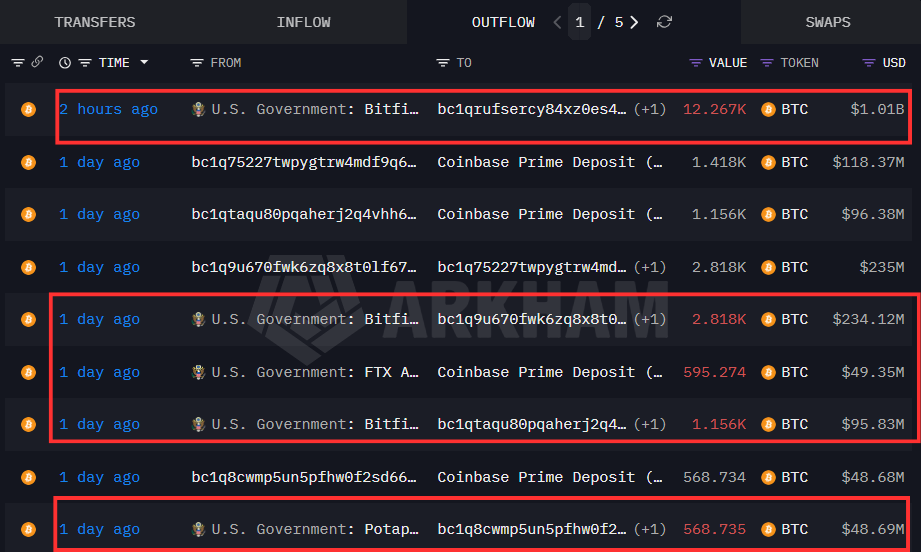
News of a possible outbreak triggered fear, leading traders to cut risks before any clarification. That incident was enough to start a sell-off that lasted a couple of days. Amid traders’ response to the Russian plague scare, the US government moved a large amount of seized Bitcoin—12,267 BTC worth approximately $1.01 billion. The government transferred the funds from a wallet holding assets seized in the 2016 Bitfinex hack to new unlabelled addresses.
US Government BTC Transfers
A day before moving the seized funds, the government transferred about 3,200 BTC, equivalent to $264 million, and $119 million in USDT to Coinbase Prime deposit addresses. Traders observing the move interpreted it as preparation to sell those assets. No further action has been taken on those cryptos as of the time of writing.
AI Vulnerability Threat to Cryptography
Concerns raised by Justin Drake, a researcher at the Ethereum Foundation, formed the basis of the third trigger leading to this week’s crypto market crash. Drake’s report highlighted AI vulnerability concerns about the cryptography that protects Bitcoin and Ethereum wallets. Although the threat is not immediate, traders typically react to such reports before conducting further analysis.
Potential Fed Interest Rates Hike
Details from the September 15-16 FOMC meeting minutes compounded things for Bitcoin and other cryptos. The minutes showed that the Fed voted 12-0 to raise interest rates, as most officials expect another hike by year-end. Typically, higher rates for longer affect Bitcoin and other risk assets negatively.
Escalation of US-Iran War
The final trigger behind the latest Bitcoin decline is the US-Iran war and its potential effect on oil prices. The Pentagon reportedly told US Central Command to finish preparations for resuming major combat operations in Iran. Although US President Donald Trump has yet to make a final decision, resuming strikes against Iran would likely include heavy bombing of Iranian energy, infrastructure, and nuclear targets. The news pushed Brent crude above $105, and higher oil prices mean higher inflation, which does not favor risk assets.
Related: Fed’s $3.89B Treasury Purchase: What Indian Bitcoin and Gold Traders Should Watch
Disclaimer: The information presented in this article is for informational and educational purposes only. The article does not constitute financial advice or advice of any kind. Coin Edition is not responsible for any losses incurred as a result of the utilization of content, products, or services mentioned. Readers are advised to exercise caution before taking any action related to the company.